

Tuesday April 14, 2026

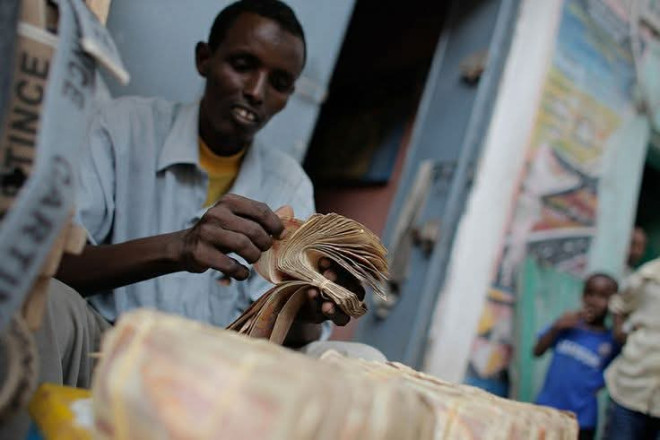
Mogadishu (HOL) — Traders across Mogadishu on Monday stopped accepting the Somali shilling, effectively sidelining the national currency in one of the last major markets where it was still used in limited circulation.
The decision was implemented swiftly in major markets, on public transport and in small retail shops, leaving many residents, particularly low-income earners who rely on cash transactions, struggling to pay for basic goods and services.
Some commuters said they were turned away from public transport after attempting to pay in Somali shillings.
“I stopped at a public transport vehicle this morning, but the driver told me the currency was not accepted. I am stuck,” one passenger said.
Merchants defended the move, citing the deteriorating condition and declining value of the currency.
“The notes are torn and worn out, and their value has fallen,” one trader said. “There is no system to replace them, so we cannot continue accepting them.”
Another added: “Today, if you bring shillings, you will not be sold anything. You cannot even ride in public transport. People want dollars or mobile money.”
The Somali economy has long been heavily dollarized, with the U.S. dollar and mobile money platforms dominating transactions in urban centers. However, Mogadishu had remained one of the few places where small-denomination Somali shilling notes were still used, particularly by poorer residents.
Economic analysts say the shift reflects mounting inflation, lack of confidence in the currency and the absence of newly issued banknotes to replace deteriorating ones in circulation. Somalia has not conducted a comprehensive currency reform in decades, and most existing notes are older print runs that have significantly depreciated in purchasing power.
The Federal Government of Somalia and the Banadir Regional Administration have not yet issued an official statement on the development. The move is expected to increase pressure on authorities to clarify monetary policy and address the status of the national currency.
The widespread rejection of the Somali shilling underscores broader questions about economic governance, currency reform and financial inclusion in a country where electronic payments and foreign currency increasingly dominate daily life.







Leave a comment