
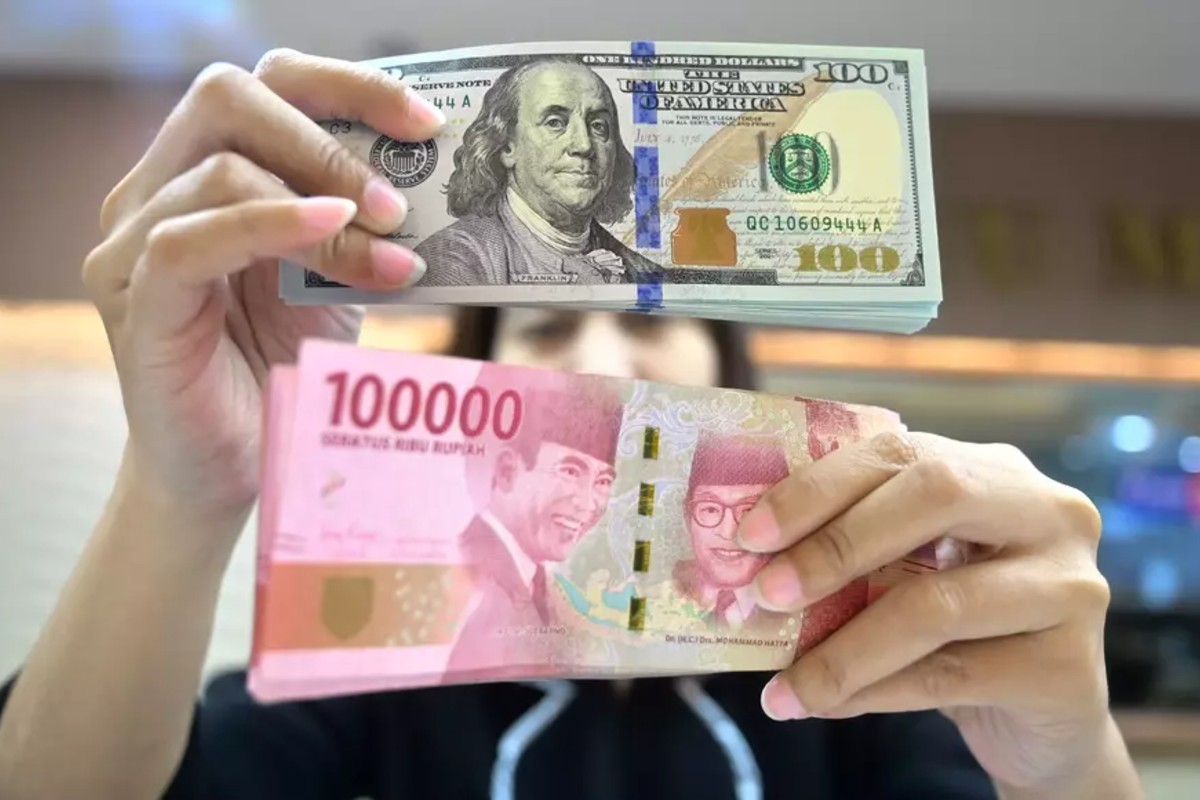
De-dollarization is naturally rising on the ground level in Indonesia, as the usage of local currency, the rupiah, has risen by 163% year-over-year. The efforts to curb the usage of the US dollar are expanding across cross-border transactions in 2026. The development indicates that developing countries are considering boosting their local currency and not depending on foreign handouts. The move can also strengthen the GDP of Indonesia and boost consumerism.
Data shows that under the local currency transaction (LCT) framework, the overall payments have reached $8.45 billion in January–February 2026. This is up sharply from $3.21 billion in the same period a year ago. The growth is also supported by the rising number of users, which reached 14,621 in February 2026. The average monthly users have reached 16,030, which is much higher than the previous year of 9,720. This shows that de-dollarization is not forced but is growing organically.
Also Read: The Move From Dollars to Gold Is Accelerating Faster Than Expected
Indonesia’s Planned De-Dollarization Initiative Experiences a Surge in Usage

Ferry Irawan, deputy for coordination of state-owned enterprise management and development at the Coordinating Ministry for Economic Affairs, said in a statement that LTC is growing in all key financial sectors across Indonesia. “LCT utilization has broadened across key sectors, including manufacturing, electricity and gas, transportation, trade, and services. This demonstrates LCT’s role as a concrete instrument to strengthen the rupiah and support real-sector activity,” he said. Indonesia launched LTC to promote the rupiah and aid de-dollarization in 2018.
The efforts are now paying off, and the payments in local currencies are moving to six countries. They include trading partners Malaysia, Thailand, Japan, China, South Korea, and the United Arab Emirates (UAE). This strengthens bilateral arrangements and fosters regional commitments in trade and finance. Trading partners are operating outside the dollar zone, giving way for de-dollarization to gain a grip.
De-dollarization is being promoted through the LTC, particularly in export-import activities. “Through LCT, the government is committed to providing facilities, incentives, and simplified processes for businesses to improve efficiency, reduce transaction costs, and expand the use of local currencies in international trade,” Ferry said.










Leave a comment