
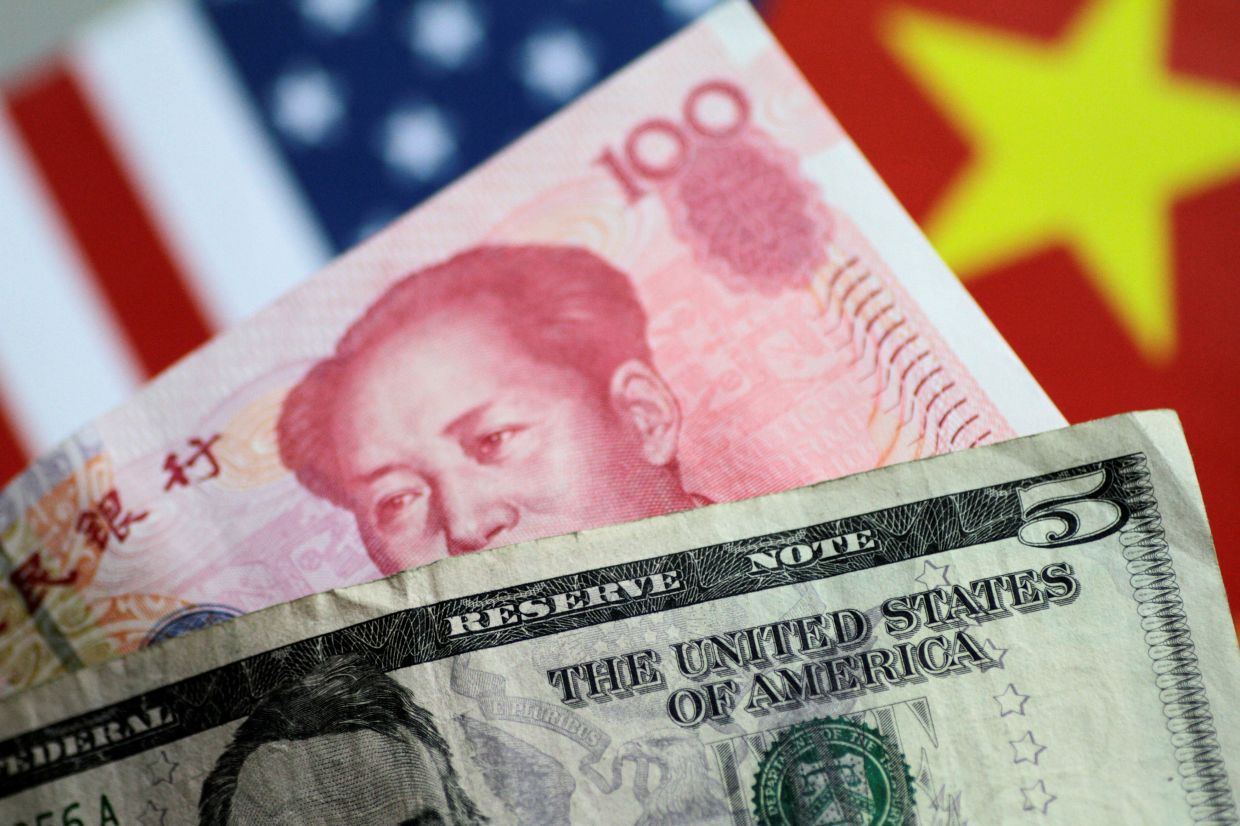
China has a unique window to internationalise its currency by deepening domestic financial markets, according to a former senior US central bank official who pointed to the evolution of the US dollar and the euro for lessons to be gleaned.
The comments from Charles Evans, former president of the Federal Reserve Bank of Chicago, provide a fresh perspective in the growing discussion over whether and how the world’s second-largest economy can transform the yuan into a global currency.
Speaking on the sidelines of the UBS Asian Investment Conference in Hong Kong, Evans highlighted the enduring advantages of the US dollar. His comments came amid growing criticism over the currency’s weaponisation, US debt sustainability, and policies from the administration of US President Donald Trump.
“One reason why the US dollar plays such a strong role in financial market transactions, and also trade transactions, is the vibrancy of financial markets, the depth of capital markets, Treasury debt, and the fact that it’s traded and it’s useful for financial activities,” he said on Wednesday. He also noted how internationalisation typically requires a currency to be fully convertible.
“Those are big issues for a country like China,” he said.

Beijing has been steadily promoting the yuan’s use overseas since introducing cross-border trade transactions in 2009.
The pace has accelerated in recent years amid growing concerns regarding US dollar weaponisation, with sentiment influenced by Washington’s asset freezes and financial sanctions imposed on Russia.
Chinese authorities are now boosting overseas use of the yuan on multiple fronts, including bilateral currency swaps; yuan-denominated investment and commodity trading; and cross-border yuan payment infrastructure.
Total cross-border yuan transactions surged from 9 trillion yuan (US$1.33 trillion) in 2017 to 64 trillion yuan in 2024, according to a Goldman Sachs note this week.
The US investment bank’s analysts said the yuan’s usage worldwide still lagged the country’s relative weight in the global economy, implying “solid potential to grow in the future”.
Evans also acknowledged that China’s economy, which accounts for about 17 per cent of the world’s total and contributes to about 30 per cent of the global economic growth annually, had “the strength that would be sympathetic towards stronger yuan movements”.
He also acknowledged the potential of central bank digital currencies to accelerate currency internationalisation, provided that “there weren’t somehow hidden controls”.
While the US Fed once explored the possibility of a digital dollar, Evans said the idea was shelved over concerns surrounding commercial bank deposits.
In February 2025, Jerome Powell, as Federal Reserve chairman, said the US would not have a central bank digital currency as long as he was in charge.
Powell had also said that the Fed had no interest in establishing accounts for individuals that would compete with the banking system. This month, the Senate confirmed Kevin Warsh as the next chair.
Meanwhile, China is a pioneer among major economies in piloting a central bank digital currency and is active in promoting cross-border trade through mBridge, a multi-country digital currency platform involving several central banks.
Evans, who once worked alongside Warsh, warned that surging energy and material costs would continue to haunt policymakers at the US central bank.
Such factors “are likely to hit the US inflation data a bit harder and perhaps longer than most would have expected”, Evans said. — SOUTH CHINA MORNING POST











Leave a comment