
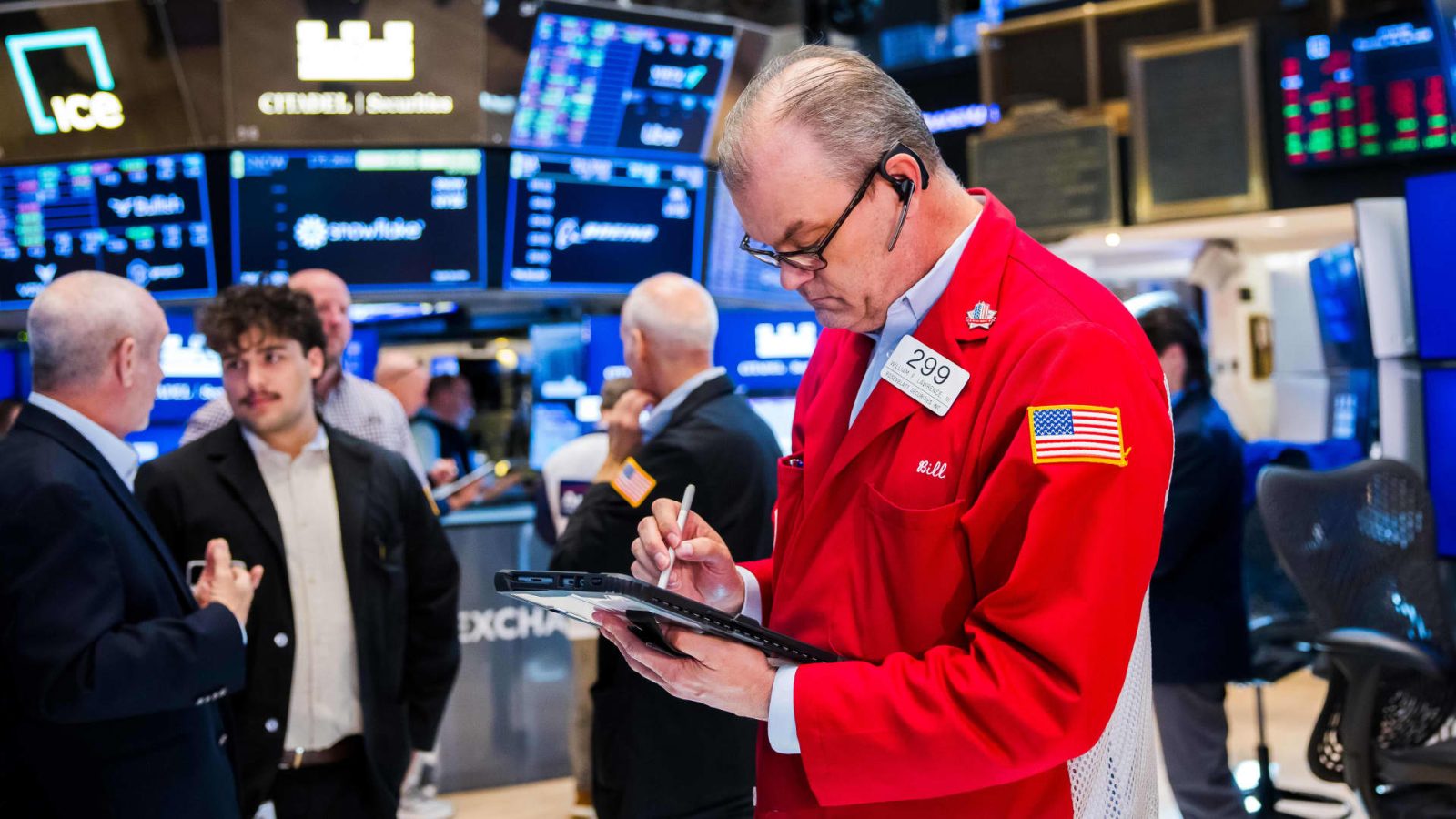
Traders work at the New York Stock Exchange on May 28, 2026.
NYSE
U.S. stock futures were little changed on Tuesday night after all three major indexes closed at fresh records during the regular session.
S&P 500 futures and Nasdaq 100 futures traded near the flatline. Futures tied to the Dow Jones Industrial Average added about 2 points.
Late Tuesday, the Kuwait army said in a social media post that air defense systems were “intercepting hostile targets.” U.S. Central Command later said that American forces defeated Iranian ballistic missiles and drones, and they also carried out “self-defense strikes” on Qeshm Island “in response to attempted attacks by Iran across the Middle East.”
The major averages notched new record closes on Tuesday. The broad-based S&P 500 rose 0.13% to end above 7,600 for the first time ever, while the Dow added 228.91 points, or 0.45%. The Nasdaq Composite eked out a gain of 0.03%.
Meghan Shue, head of investment strategy at Wilmington Trust, noted that if the S&P 500 ends this week higher, it would mark the 10th straight positive week in a row, the longest positive streak since 1985. She believes that as summer begins, stocks could be due for a bit of a breather ahead.
“The momentum has been incredibly strong. It’s for a lot of good reasons, and a lot of optimism, as well as really strong demand around the AI investment cycles. But still we are moving into a period, sort of moving past earning season, which has been a tremendously positive catalyst for the markets,” she said on CNBC’s “Closing Bell” on Tuesday afternoon. “Now we are left with kind of the summer lull. Trading activity might slow a little bit, and we still have a lot of geopolitical risk on the horizon.”
Shue added: “I’m not necessarily calling for a sharp reversion in the market, but I think it makes a lot of sense to see it pause here, or even pull back slightly and introduce a little bit more volatility as we move into the summer months.”
Medtronic and Macy’s will report earnings before Wednesday’s opening bell. On the economic front, traders will also watch for the ADP private payrolls report for May, as well as April’s final durable goods and factory orders on Wednesday morning.










Leave a comment