
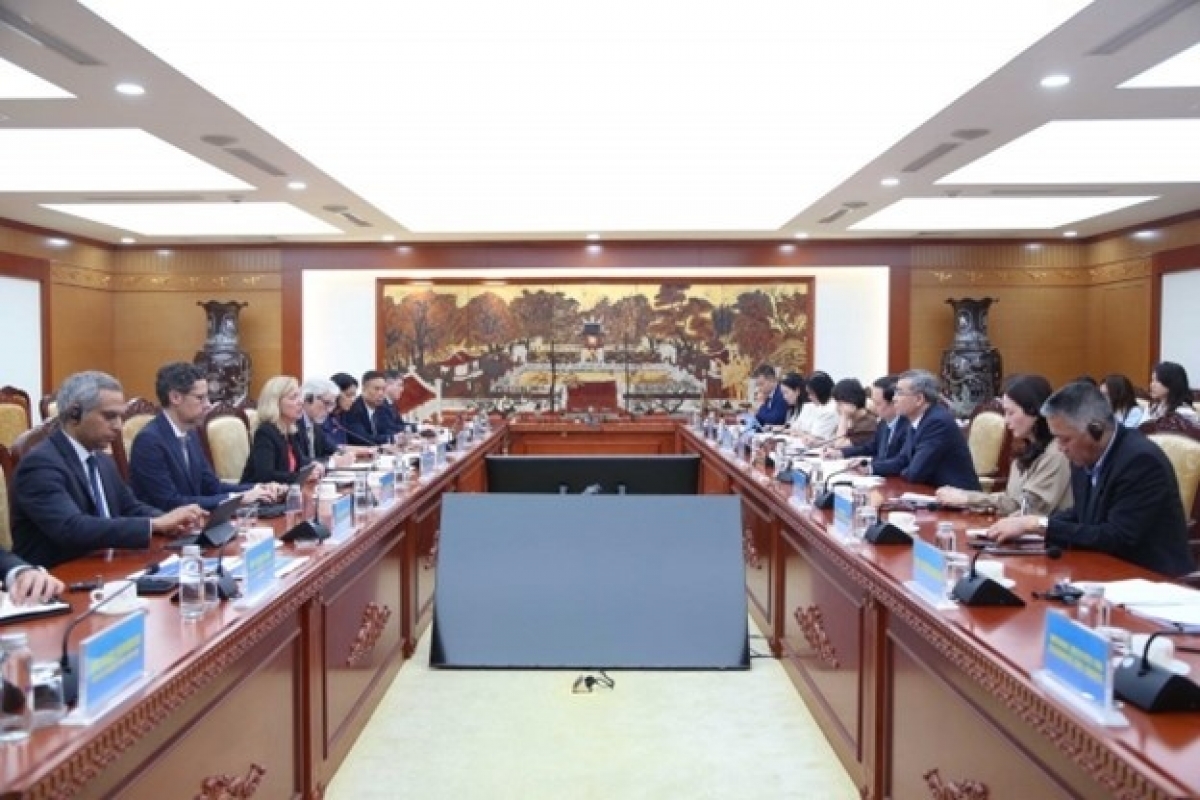
The Ministry of Finance has called on the World Bank to expand a state budget lending mechanism to accelerate public investment, as both sides prepare a new framework to guide cooperation over the next five years.
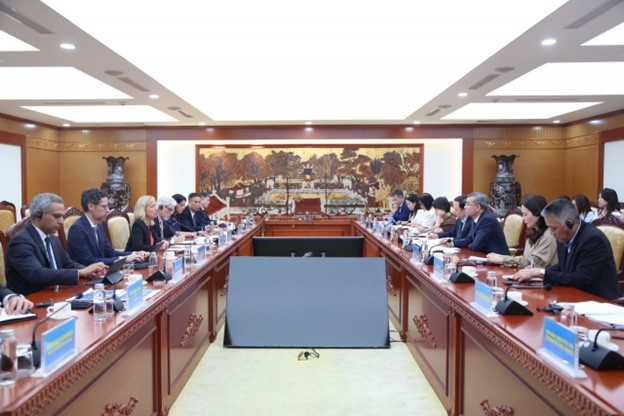
Minister of Finance Ngo Van Tuan met World Bank and International Finance Corporation representatives in Hanoi on May 18 to discuss establishing a new Country Partnership Framework, aiming to align the bank’s financial resources and technical assistance with national development goals for 2026-2030.
 |
The meeting took place against the backdrop of National Assembly Resolution No.27/2026/QH16 on the medium-term public investment plan for 2026-2030, signed in early May.
This sets out a framework for public investment as a key double-digit growth driver, with total state capital deployment reaching around $312 billion over the period and development investment making up roughly 40 per cent of that figure.
“To secure the financing needed for public investment, the Ministry of Finance hopes the World Bank will provide effective capital support through two channels: traditional project loans and direct budget support lending paired with technical assistance,” Minister Tuan said.
The World Bank’s Development Policy Financing instrument, one of its three financing instruments offered, provides rapidly disbursing, non-earmarked financing that goes directly into the state budget rather than being tied to a specific project.
According to the bank documents, it is specifically designed to support policy and institutional framework reforms, which include strengthening public financial management, improving the investment climate, addressing delays to service delivery, diversifying the economy, and supporting climate action.
Mariam J. Sherman, World Bank’s country director for Vietnam, Cambodia, and Laos, highlighted the importance of establishing a clear roadmap to effectively deploy these financial resources, asserting that the World Bank will have financing solutions at a higher level, as Vietnam is now in a different position with recent structural reforms introduced.
“Looking at the next five-year plan, the total capital World Bank expects to provide is around $11 billion, sitting within Vietnam’s broader official development assistance framework for massive public investment programmes. The World Bank is ready to meet this need, but closer coordination is required to strategically identify areas with the greatest transformative impact,” Sherman said.
The bank stands ready to offer International Bank for Reconstruction and Development loan products with maturities of 15 to 50 years, targeting transport infrastructure, including roads and railways, urban development, water management, and high-technology workforce training.
Regarding subsequent loans, Minister Tuan expressed strong agreement with the World Bank’s proposal, emphasising the need to thoroughly discuss the project portfolio to ensure feasibility and guarantee that the scale of the loans is large enough to create a spillover effect.
Minister Tuan requested that technical teams from the two sides carefully calculate overall borrowing costs to ensure they remain at a level the economy can sustain.
“Going forward, capital deployment will focus on three main areas: firstly, logistics infrastructure, particularly roads and railways; secondly, power infrastructure to sustain growth; and thirdly, climate change adaptation schemes,” Minister Tuan said. “We are working hard to cut red tape and amend Vietnam’s project receipt procedures to align with international standards.”
 |
Finance ministry proposes lower tax rate for micro and small enterprises
To support micro and small enterprises to accumulate capital and develop business, the Ministry of Finance (MoF) has proposed lowering the corporate income tax rate to 15-17 per cent for those with a total revenue of no more than 50 billion VND (1.99 million USD), instead of the current flat rate of 20 per cent. |
 |
Finance ministry urges SOEs to lead tech drive for growth
Chairing a conference on March 19 to outline priorities for the months ahead, Minister Nguyen Van Thang underscored the pivotal role of state-owned enterprises under the Ministry of Finance’s purview. |
 |
Finance ministry to remove bottlenecks for private businesses
The Ministry of Finance is rushing to review and evaluate the implementation of legal documents to eliminate unnecessary business conditions, overlapping regulations, and inappropriate provisions that hinder the development of private enterprises. |













Leave a comment