
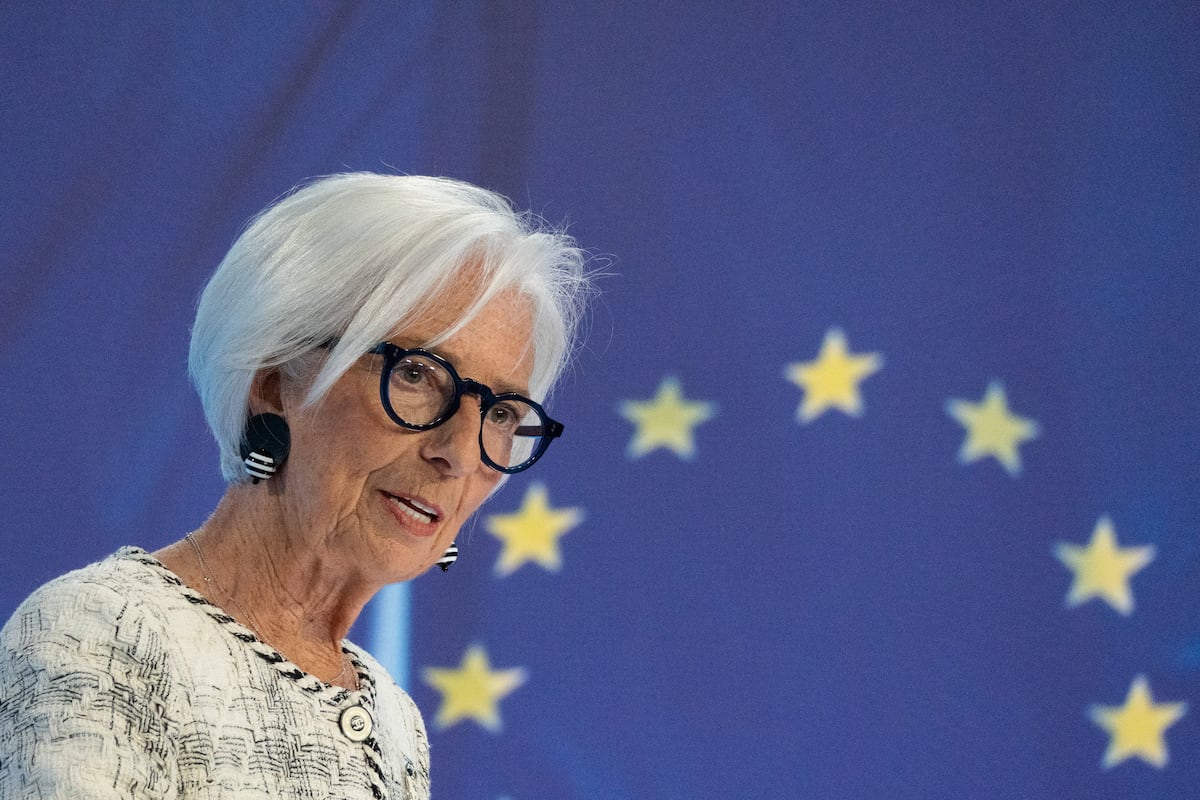
When Christine Lagarde addressed a central bank conference late last year, her frustration was clear. Europe had been debating a digital euro for years, but it was still nowhere close to being done.
Progress was so slow that it was likely her eight-year term would be up before the project saw the light of day. “This is too long,” she said. “We don’t want to be left in the dust.”
In the months since, the sense of urgency has increased among European officials. But with the first issuance of a digital central bank currency expected only in 2029, and delays still cropping up, so have fears that the bloc may have already fallen behind.
The European Central Bank president’s push is about far more than jumping on the digital currency bandwagon or creating a new crypto toy for speculators. It’s part of a broader geopolitical effort for independence and autonomy, where the bloc is less reliant on others and can reduce exposure to major economies like the U.S. and China.
It also aligns with the ambition of some euro-area officials to strengthen the global role of the euro. In Donald Trump’s unpredictable policies, they see a threat to faith in dollar stability and a chance for the single currency.
The slow headway so far is to the benefit of the U.S. and so-called dollar hegemony. In Washington, Trump’s pro-crypto administration has thrown its weight behind stablecoins, a type of cryptocurrency typically pegged to a fiat currency and backed by reserves of liquid assets. The dollar is by far the dominant force in that world.
Banks in Europe have also started to wake up to the threat of America taking an unassailable lead in the race to control the future of money. Some argue that the digital euro isn’t the only solution, and are pushing their own euro-denominated stablecoins. They also say they can be up and running faster than the ECB.
“We are here now and stablecoins are ready to go,” said Jan-Oliver Sell, chief executive of Qivalis, a consortium including big-name banks like ING Groep and UniCredit SpA, which plans to issue a coin later this year.
Europe is already vulnerable on multiple fronts, from energy to critical minerals to weaponry, which hands others leverage to exert influence. It’s also heavily dependent on US companies for its payments systems, yet another worry.
“If we lose control of our money, we lose control of our economic destiny,” ECB Executive Board member Piero Cipollone, who leads the institution’s digital project, said earlier this year. “We surrender a key attribute of sovereignty.”
Warnings
The blunt warnings about sovereignty look to be getting through to politicians, who have begun to push the digital euro topic up the priority list.
But it’s still a slog through European Union bureaucracy, disagreements over regulation, and battles between competing national interests. A European Parliament committee vote expected to take place this month has been postponed until at least June.
Banks have also lobbied against the digital central bank euro, fearing an erosion of their deposit bases.
Now, many lenders are pushing harder into stablecoins. Societe Generale SA was among the first, launching EUR CoinVertible through its digital asset unit in 2023, while another is backed by asset manager DWS Group, market maker Flow Traders, and crypto firm Galaxy. Qivalis emerged in late 2025, and participants now include BBVA SA and BNP Paribas SA.
While such private initiatives in one sense rival a central bank-backed digital euro, Qivalis sees it differently. It’s all part of a so-called payment stack ranging from central bank currencies to digital tokens to stablecoins, with the ultimate aim being independence.
“We see ourselves solving that problem,” Sell said. “The European answer to that digital dollar dominance problem.”
Unease about dollar dominance is being inflamed by Trump’s confrontational approach to international relations.
This isn’t an abstract fear. Europe’s leaders have seen firsthand how weak a position they are in when it comes to key resources. Late last year, it was Nexperia and China’s restrictions on computer chip supplies vital for carmakers. Right now, it’s the disruption to oil and gas because of the conflict in Iran, an echo of the inflation shock that followed Russia’s invasion of Ukraine in 2022.
The euro is the world’s second-largest reserve currency, though it trails well behind the dollar. A meeting of euro-area finance ministers late last year featured a heated debate around whether stablecoins would increase the greenback’s dominance, and what, if anything, Europe should do in response.
The ECB, favoring a digital central bank currency, had already fired a pre-emptive strike, pushing to ban so-called multi-issuance stablecoins. These are issued in multiple jurisdictions, which the ECB says raises concerns around supervision and contagion risks. At the meeting, some countries argued against this ban, claiming that Europe was fighting a battle it had already lost.
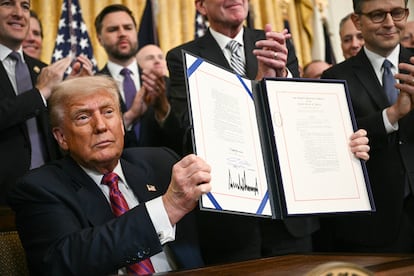
The US’s stablecoin push was formalized through last year’s GENIUS Act, legislation for dollar-linked tokens aimed at providing a framework for the new form of money.
“The U.S. is using regulation to shape innovation in ways that reinforce existing monetary arrangements,” Barry Eichengreen, an economist at the University of California Berkeley, wrote recently in Intereconomics, a European policy journal.
Stablecoins offer what’s effectively a 24/7, low-cost and instant dollar-based banking for anyone, anywhere in the world. As they spread beyond crypto markets into real-world payments, Trump sees them as a way to extend the U.S. currency’s influence. Of the $322 billion in stablecoins in circulation, roughly 99% are pegged to the greenback.
That’s also created demand for U.S. government debt. Figures from El Salvador-based Tether, which issues the world’s largest stablecoin, USDT, show it holds about $117 billion worth of Treasuries.
Last month, French Finance Minister Roland Lescure said the stablecoin market has been “overwhelmingly dollarized,” and spoke of strengthening sovereignty “and the role of the euro in the global economy.”
In February, European Parliament lawmakers gave their backing to the ECB’s project, saying it’s “essential to strengthening EU monetary sovereignty.” Spain has since pushed for a faster rollout than the 2029 date, saying the advance of U.S. stablecoins means there’s a greater urgency.
A delicate relationship
Europe is already heavily dependent on US firms for the plumbing behind the payments people make in their daily lives. That ranges from card transactions processed by Visa Inc. and Mastercard Inc. to mobile wallets provided by Apple Inc. and Google.
Currently, nearly two-thirds of euro-area card-based transactions are processed by non-European companies. As cash usage continues to decline, growth of stablecoins could add a new layer of reliance.
“You need to think about stablecoins as the payments rails of the world of the future,” said Marieke Flament, co-founder of Currency of Power, which advises governments and financial firms on digital money. “If you are not building the rails for the euro to be on in the future, then the euro might not exist.”
China, Russia, and Iran are also pushing ahead with versions of digital money or taking advantage of existing crypto assets to bypass traditional banking rails and controls, further underscoring the broader geopolitical contest taking place.
Russia has firsthand experience of being shut out of the global payments infrastructure. Its access was restricted after the invasion of Ukraine in 2022, inflicting an instant blow to the country’s economy.
“The rapid weaponization of SWIFT and card payment networks against Russia, as well as the growing use of geoeconomic tools by the Trump administration, helped raise awareness of the EU’s dependencies in financial markets,” said Nicola Bilotta, coordinator of the EU Supervisory Digital Finance Academy. “If systems such as Visa and Mastercard were to be weaponized, the EU would need an alternative infrastructure that is readily available and usable.”
Visa and Mastercard both said they have made long-term investments in Europe and are committed to the region.
Meanwhile, Lagarde keeps pushing. Last week, she repeated that the digital euro “will enhance Europe’s strategic autonomy.”
Conscious of the ticking clock, the ECB has also launched a wholesale digital currency initiative designed to modernize interbank settlement and support tokenised money for use between large financial institutions.
But it’s playing catch-up. At the signing of the GENIUS Act, Trump said it would “secure the dollar’s status as the world’s reserve currency for generations.”
“There has to be a realization that digital money isn’t about crypto libertarians trying to bend financial regulation or overtake banks,” said Andrew Whitworth, founder of fintech and crypto consultancy Global Policy. “It’s actually about the sovereignty of your economy. It’s a geopolitical issue.”
Sign up for our weekly newsletter to get more English-language news coverage from EL PAÍS USA Edition











Leave a comment