
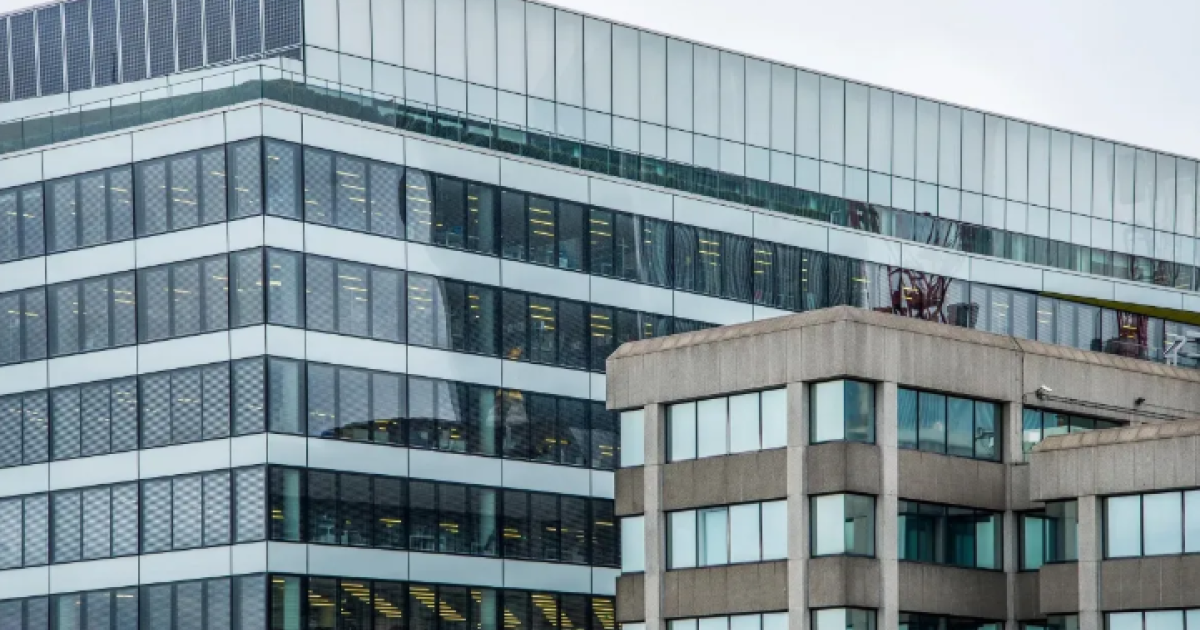
Core office vacancy could fall below 6% by 2030.
Hong Kong’s plan to channel global private capital into commercial property through the Hong Kong Investment Corporation (HKIC) is drawing concern over transparency, with analysts warning that unclear project selection rules could weaken investor confidence.
“We are not really seeing any comparable transparency, and if you have to compare this model with the traditional land tender process, the latter is basically more open,” Jack Tong, director of research and consultancy at Savills Hong Kong, told Hong Kong Business via Zoom.
He said HKIC operates under a discretionary disclosure model, announcing partnerships only when projects reach a certain stage of maturity.
“The HKIC will collaborate with regional and international long-term capital to channel funds into quality commercial property projects that align with Hong Kong’s industrial positioning and match them with enterprises from target industries,” the company said in an emailed reply to questions.
It declined to answer further questions.
The concern comes as Hong Kong’s office market shows signs of tightening after years of oversupply.
Tong said grade A vacancy in core districts is already falling, with Central rents rising more than 5% in the first quarter. He expects the overall vacancy to drop below 6% in three to four years.
HKIC evaluates projects based on industrial alignment, partner track record, and expected returns, but the specific standards behind those assessments have not been disclosed, Tong said.
He said some developments could later be framed as aligned with industrial policy based mainly on tenant mix rather than a clear planning strategy.
HKIC’s portfolio includes more than 109 companies across sectors, including hard technology, life sciences, and green technology, with 10 already listed in Hong Kong.
Tong said the corporation might identify properties with suitable tenants already in place before positioning them as aligned with government priorities. “They would just go out and find a partner and invest in those properties,” he said.
Hannah Jeong, head of valuation and advisory services at CBRE Hong Kong, said the government has yet to publish a detailed execution plan following the February budget announcement.
“The Development Bureau’s master planning role remained broadly defined and the overall approach highly conceptual,” she said.
Both analysts said uncertainty over what qualifies as an industry-aligned project adds to governance concerns.
Jeong said likely targets include industrial parks in the Northern Metropolis focused on biotech and fintech.
Tong said HKIC is unlikely to develop projects directly and would instead partner with developers to secure anchor tenants for commercial projects in the Northern Metropolis.
He added that universities could become key partners, citing the University of Hong Kong’s acquisition of an office tower in Tseung Kwan O for more than $4b, and City University’s purchase of the entire Festival Walk office tower for $1.9b late last year.
Tong warned that institutional investors accustomed to stricter governance frameworks might view the process as too opaque.
Jeong added that Hong Kong also faces stronger regional competition for long-term capital, with rival jurisdictions offering tax breaks, housing support, and relocation incentives alongside property opportunities. “That cannot simply rely on land prices anymore,” she said.
Both analysts said the next budget cycle would be critical for the commercial property market.
Tong said lifting the moratorium on commercial land sales too late could trigger a supply shortage within several years if demand continues to recover.
“If the government is still only seeing selective recovery—same time next year maybe in one or two districts, but still with an overall vacancy rate of around 12% to 15%—and decides against lifting the moratorium, then we may very well see a supply crunch in the next three to four years,” he added.









Leave a comment