


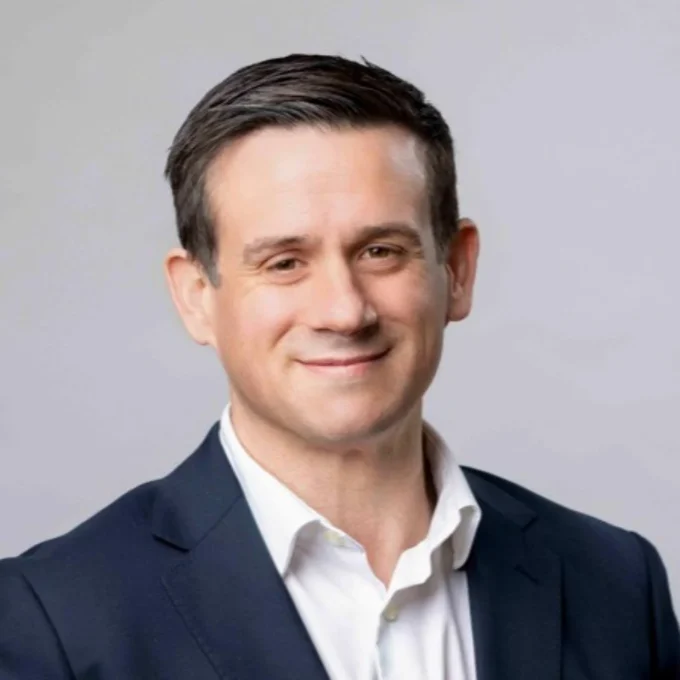
By Mark Pearson
As the startup market matures, investors are prioritising disciplined growth, resilient founders and scalable business models over hype-driven expansion.
The venture capital market of 2026 looks very different from the environment many founders became used to during the rapid-growth years of the pandemic tech boom. Investor expectations have shifted, fundraising timelines have lengthened and the “growth at all costs” mindset that once dominated startup culture is steadily being replaced by a more sustainable and disciplined approach.
Early-Stage Investment Has Become More Disciplined
One of the biggest changes in the venture capital market over the past few years has been the return to disciplined investing.
During the ultra-low interest rate era, capital was abundant and startups were often rewarded for aggressive growth ahead of profitability. Large funding rounds, inflated valuations and rapid scaling became normalised across the technology sector. In many cases, businesses were encouraged to prioritise user acquisition and market share without fully proving the long-term sustainability of their model.
That environment has changed significantly.
Today, investors are spending more time evaluating business fundamentals, revenue quality and operational efficiency. Founders are being asked tougher questions around margins, customer retention, runway management and realistic growth projections.
This does not mean investors have become risk-averse. Venture capital remains a high-risk asset class by nature. But the quality threshold has risen.
Investors are increasingly looking for businesses that demonstrate strong founder-market fit, clear commercial traction, sustainable unit economics and realistic scaling plans.
For many startups, this shift has actually created a healthier environment. Businesses are being built with greater resilience from day one, rather than relying on endless funding rounds to sustain momentum.
What Investors Are Really Looking for in Founders in 2026
While market conditions have evolved, one thing has remained consistent – great founders continue to attract investment.
In 2026, investors are placing increasing emphasis on adaptability, resilience and execution capability. The reality is that most early-stage businesses will face setbacks, market changes and fundraising challenges along the way. Investors know this. What matters is whether founders can navigate uncertainty while continuing to make smart commercial decisions.
Increasingly, investors are backing founders who demonstrate commercial realism, operational discipline and a genuine understanding of their market. Businesses that manage capital carefully and understand how to scale sustainably are viewed more favourably than companies burning cash aggressively without clear returns.
The strongest founders also remain highly connected to the customer problem they are solving. Investors continue to value teams building products with genuine long-term demand rather than chasing short-term trends.
Importantly, personality and leadership still matter enormously. Early-stage investing is ultimately investing in people. Many investors would rather back an exceptional founder in an evolving market than an average founder operating in a hot sector.
Sustainable Growth Has Replaced “Growth at All Costs”
Perhaps the most significant shift in the startup ecosystem is the growing focus on sustainable growth.
For years, the technology sector celebrated aggressive scaling above almost everything else. Growth metrics often overshadowed profitability, operational discipline and long-term sustainability. Today, the conversation is changing.
Investors are increasingly prioritising businesses that can demonstrate a credible route to profitability and responsible scaling. This is particularly important in sectors such as SaaS, fintech and marketplaces, where customer acquisition costs can quickly become unsustainable without strong retention and monetisation strategies.
Businesses succeeding in today’s environment tend to share several characteristics – recurring revenue models, strong customer retention, clear differentiation within crowded markets and leaner operational structures.
There is also greater appreciation for businesses growing steadily and sustainably rather than chasing hypergrowth at any cost. This shift is helping to create stronger long-term businesses built around product quality, customer experience and financial discipline rather than short-term valuation spikes.
Where the Next Wave of High-Growth Tech Companies Is Emerging
Despite wider market caution, innovation across the UK and Europe remains incredibly strong.
Artificial intelligence continues to dominate investment conversations, but many of the most interesting opportunities are emerging where technology intersects with traditional industries. Sectors attracting investor attention include AI-driven productivity tools, fintech infrastructure, climate technology, health technology, cybersecurity and workflow automation.
Importantly, many of these businesses are solving practical operational problems rather than purely consumer-led trends.
The UK remains one of Europe’s strongest startup ecosystems, supported by a deep talent pool, strong universities and a mature investment network. Government-backed schemes such as the Enterprise Investment Scheme (EIS) and Seed Enterprise Investment Scheme (SEIS) also continue to play a major role in supporting early-stage innovation by incentivising private investment into high-growth businesses.
Across Europe more broadly, cities including Berlin, Paris, Amsterdam and Lisbon are continuing to develop as competitive technology hubs. Many founders are now building companies with global scalability built into the business model from day one.
Lessons From Building and Backing Startups
Having both built and backed businesses, one lesson becomes clear very quickly – building a successful company is rarely a straight line.
The startup world often celebrates overnight success stories, but most sustainable businesses are built through years of iteration, setbacks and persistence. The founders who succeed long-term are typically those who stay relentlessly focused on execution.
There is also growing recognition that successful venture capital is not simply about providing funding. Founders increasingly expect investors to bring strategic value beyond capital alone – whether through introductions, operational support, hiring guidance or communications expertise.
The strongest investor-founder relationships are collaborative partnerships built on transparency and long-term alignment. As the market continues to mature, this partnership-driven approach will likely become even more important.
Conclusion
The early-stage investment market in 2026 is more disciplined, more commercially focused and arguably healthier than it has been for several years.
While the era of easy capital and growth-at-all-costs scaling may have faded, opportunities for ambitious founders remain significant. Investors are still actively backing innovative businesses solving meaningful problems – but with greater emphasis on sustainability, resilience and long-term value creation.
For founders prepared to build responsibly and think strategically, the next wave of European technology success stories is already beginning to emerge.











Leave a comment