
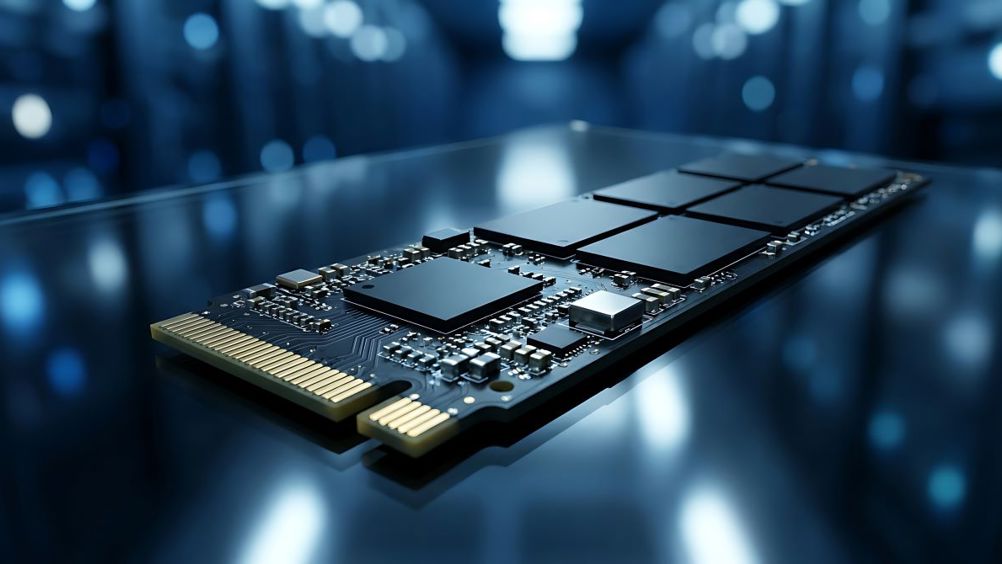
Taiwanese memory chip manufacturer Nanya Technology plans to increase capital spending to more than T$200 billion (US$6.2 billion) next year as it expands production capacity to meet growing demand for memory chips driven by artificial intelligence applications.
The proposed investment, which is approximately four times the company’s planned spending for this year, will primarily support the development of a new manufacturing facility. Speaking during an online briefing, President Pei-Ing Lee said the expenditure plan remains subject to board approval.
The announcement came as Nanya reported a sharp improvement in its financial performance for the second quarter. The company recorded unaudited revenue of T$82.55 billion, an increase of 684% compared with the same period last year. Net income rose 1,324% to T$50.19 billion, while gross margin improved to 79.5%, compared with a negative 20.6% a year earlier.
Nanya, whose customers include Nvidia, Qualcomm and Google, expects capital expenditure to exceed T$50 billion this year. According to Lee, total investment in the new plant is expected to reach approximately T$480 billion once the facility reaches full production capacity.
The first phase of the plant is scheduled to achieve output of 30,000 wafers per month by 2028, with capacity eventually increasing to 45,000 wafers per month.
Lee said the memory market was benefiting from structural changes linked to the rapid adoption of AI technologies and predicted that current supply constraints would continue for several more quarters.
The company’s expansion plans mirror a broader trend across the semiconductor industry, with major memory suppliers including Samsung Electronics and SK Hynix also increasing investment to address rising demand for AI-related memory products.
Commenting on South Korea’s efforts to expand semiconductor manufacturing, Lee said such initiatives were positive for the wider industry and reflected confidence in long-term market demand.
The global memory sector has become a key beneficiary of the AI boom, as advanced applications require significantly greater memory bandwidth and capacity to support training, inference and data-intensive computing workloads.













Leave a comment