Ask the average Australian investor about commercial property, and many will tell you it is too risky, overly complicated, or simply out of reach for someone without millions behind them.
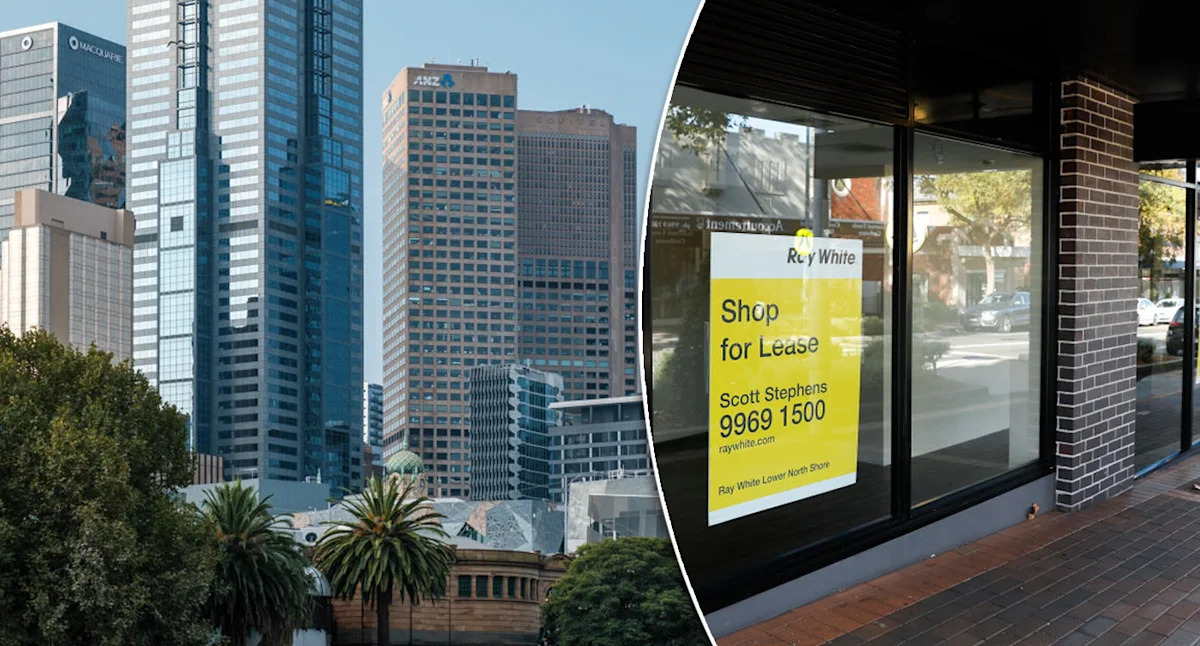
The single biggest reason commercial property is misunderstood is that most Australians treat it as one thing. Mention commercial property and the image that forms is almost always of empty office towers in a CBD, or tired retail shops sitting vacant on a suburban high street. Those assets exist, but they represent a fraction of what commercial property actually covers.
Industrial warehouses, logistics facilities, medical centres, childcare centres, neighbourhood retail strips and self-storage facilities are all commercial property. Each sector has its own supply and demand dynamics, its own tenant profile, and its own investment characteristics. Judging the entire commercial market by what is happening in CBD office towers is roughly equivalent to judging the entire residential market by one oversupplied apartment block.
The post-budget environment has increased this problem. Capital is moving toward commercial property at an increasing pace, and much of it is coming from residential investors who have never operated in the sector before. For those investors, the risk is not commercial property itself. It is approaching an unfamiliar asset class with a residential investor’s assumptions and framework.
What the fundamentals actually look like
Commercial property has its own investment framework, and it starts in a different place to residential.
Rather than focusing on comparable sales or median prices, commercial investors assess the quality of the income a property produces and the sustainability of that income over time. The first question is always about the tenant. Who are they, how does the business operate, and are they financially sound? A property is only as valuable as the business paying the rent.
A shop window in the Bondi area in Sydney, Australia. ·getty
The lease structure matters as much as the tenant. Remaining term, renewal options, annual rent review mechanisms, and who is responsible for outgoings all shape the actual income an investor receives. In many commercial leases, tenants contribute to or fully cover outgoings including council rates, insurance and maintenance. The net income position this creates is materially different to residential property, where most ownership costs sit with the landlord.
Lease duration is perhaps the most under appreciated advantage. Businesses invest significant capital fitting out their premises and relocating is expensive and disruptive. Commercial tenants are generally motivated to stay, with lease terms of five years plus options being standard, and in specialised sectors, leases extending to ten, fifteen or twenty years are not uncommon. That certainty has real value that does not show up adequately in a headline yield comparison with residential property.
Where is the opportunity?
Industrial property continues to benefit from structural tailwinds that have nothing to do with the budget or the rate cycle. E-commerce, supply chain investment, and the growing infrastructure requirements of data centres and automation are all creating sustained occupier demand in a sector where new supply has been declining for two consecutive years. Medical assets are supported by Australia’s ageing population. Childcare centres are underpinned by growing demand for early learning services largely insulated from economic cycles.
These sectors are not performing well because investors are paying attention to them. They are attracting attention because the underlying demand drivers are genuinely strong. That distinction matters because it speaks to durability rather than momentum.
The perception problem, counterintuitively, reinforces the opportunity. When sentiment toward an asset class becomes more negative than fundamentals warrant, competition softens, and entry points improve. Commercial property’s image problem is keeping a meaningful number of investors away from sectors that have nothing to do with vacant offices or struggling retail.
What commercial property is not
None of this means commercial property is suitable for every investor or that the risks are trivial.
Vacancies can run considerably longer than in residential property. Financing requires larger deposits and more conservative lending ratios. Due diligence demands analysis around tenant quality, lease structure and market demand that most residential investors have never had to apply. Buying the wrong commercial asset can be more damaging than buying the wrong residential one.
The risk, more often than not, lies not in commercial property itself but in failing to understand how it works before buying.
Commercial property will not replace residential property in most portfolios, nor should it. But the investment environment has changed materially. The question is not whether commercial property is better than residential. It is whether the perception of commercial property in Australia reflects the reality of what the asset class actually offers. In most cases, it does not. And that gap between perception and reality is the opportunity.
Abdullah Nouh is the founder of Mecca Property Group and a Melbourne-based buyers’ advocate specialising in long-term, fundamentals-driven property strategy. He works with families and investors to build sustainable wealth through strategic residential and commercial acquisitions. Abdullah is currently completing a Master’s in Property at the University of Technology Sydney.
SummaryApart from borrowers’ need for cash, falling costs are a major factor now driving reverse mortgage adoption. For example, the lowest rate for...














Leave a comment