
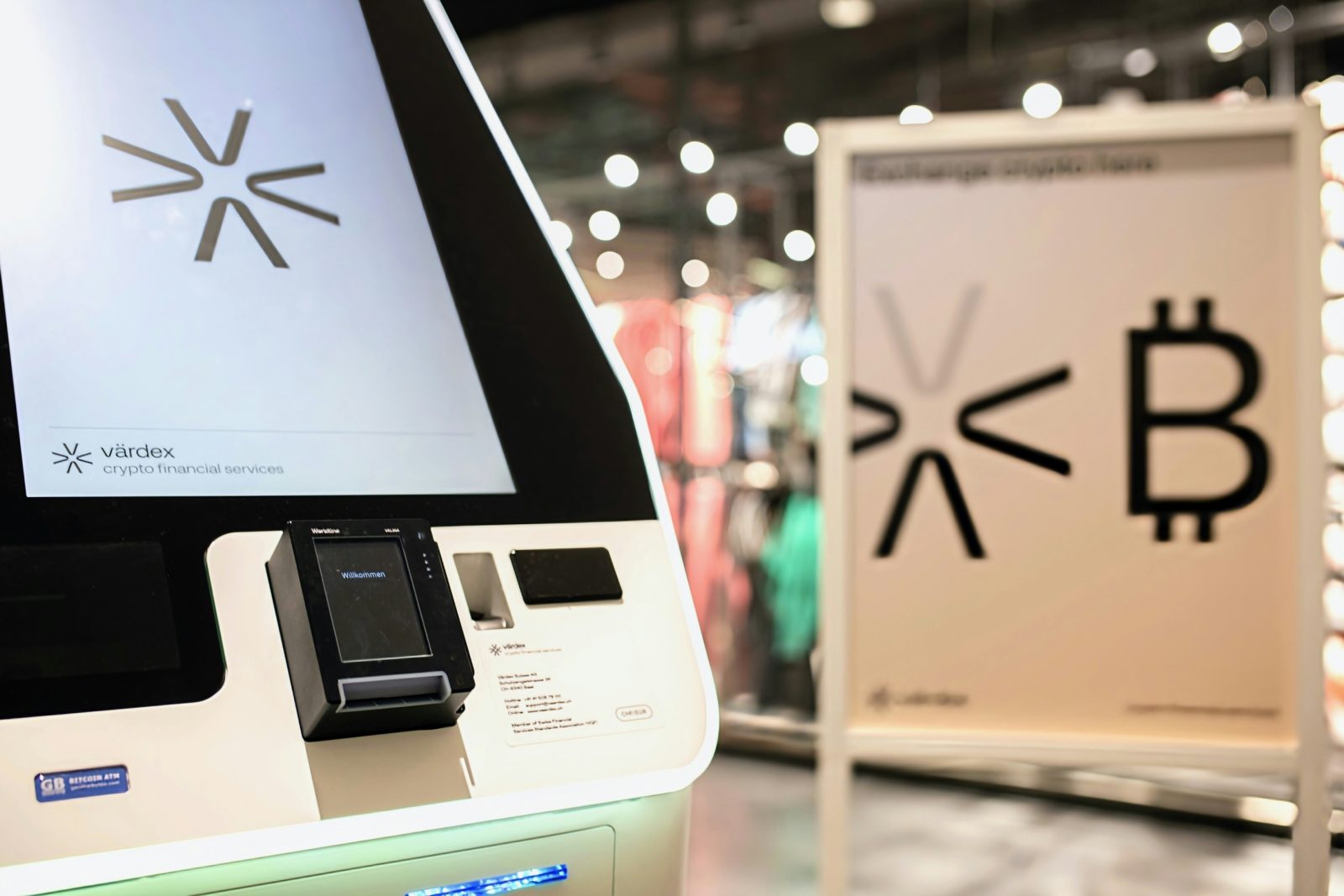
Switzerland’s adults are more than twice as likely as their German counterparts to use cryptocurrency in their daily financial lives — a gap that a fresh cross-country survey makes newly precise, even as Germany’s largest retail banking networks wire crypto access into apps used by roughly 80 million customers. Those two facts together are the story: where Switzerland stands today, and whether Germany’s institutional pivot can close the distance.
The survey, published today by management consultancy BearingPoint, polled 4,035 adults across Germany, Austria, and Switzerland between June 18 and June 29, 2026, using YouGov as the research institute. Switzerland leads the DACH region with 23% of its adult population using cryptocurrencies at least occasionally. Austria sits in the middle at 18%. Germany trails at 11%.
Germany Has a Plan, Not Just a Problem
What makes Germany’s 11% figure more than a static snapshot is what is happening simultaneously in its banking sector. BaFin granted DZ Bank MiCAR authorization in late December 2025, clearing the way for the bank’s meinKrypto cryptocurrency trading platform; DZ Bank announced the platform publicly on January 13, 2026. The platform, branded “meinKrypto,” is embedded as a wallet module directly inside the VR Banking App already used by cooperative bank customers across the country.
The architecture is a hub-and-spoke model. DZ Bank operates the platform centrally, with Boerse Stuttgart Digital providing crypto custody and EUWAX AG handling trade execution. That means roughly 670 local Volksbanken and Raiffeisenbanken — Germany’s cooperative savings banks — can offer Bitcoin, Ethereum, Litecoin, and Cardano to retail customers without building their own compliance infrastructure from scratch. Each local bank still needs to file its own MiCA notification with BaFin before switching the feature on, which means the rollout is sequential rather than instantaneous.
Moving on a parallel track, Sparkassen-Finanzgruppe — Germany’s network of roughly 350 savings banks, with more than 50 million retail customers — has targeted this summer for its own regulated crypto offering. The product runs through DekaBank, Sparkassen’s central securities arm, which already holds a crypto custody license under the German Banking Act. The DekaBank model is more centralized than the DZ Bank hub-and-spoke approach: because the infrastructure is managed at the group level, the rollout path to individual savings banks is shorter. Bitcoin and Ether are the initial assets. The German Savings Banks Association has been explicit that no advertising will accompany the service, and customers will receive prominent risk disclosures — including the possibility of total loss.
As recently as 2023, Sparkassen’s internal committees labeled cryptocurrencies “highly speculative” and voted against offering them. The reversal was driven, in order, by EU MiCA providing a legal framework, accelerating customer demand, and competitive pressure from cooperative banks moving faster.
Three Markets, Three Speeds
The survey’s country-level data extends well beyond the headline usage gap. When asked whether cryptocurrencies are a suitable asset class, 37% of Swiss respondents agreed, compared to 28% in Austria and 23% in Germany. Forward-looking expectations follow the same gradient: 45% of Swiss adults believe cryptocurrencies could eventually function as an international trade or reserve currency, versus 36% in Austria and 32% in Germany.
Interest in a central bank digital currency (CBDC) — a government-issued electronic currency distinct from commercial bank deposits and from decentralized crypto — mirrors the adoption hierarchy: 44% of Swiss adults express interest, compared to 38% in Austria and 29% in Germany. The pattern suggests that crypto-friendly regulatory environments produce higher comfort with digital money in general, not just with decentralized assets.
Dr. Robert Bosch, Global Head of Financial Services at BearingPoint, put it plainly: “Switzerland is not simply more crypto-friendly in the DACH comparison — it is more decisive about digital money overall. Germany is debating risks, while its neighbors are already using and investing more heavily. For banks and financial service providers, this is no longer a fringe issue: those who do not make digital assets accessible in a secure, understandable, and regulatory-compliant way are ceding future value creation to others.”
Why Switzerland Leads: Crypto Valley and the DLT Act
Switzerland’s advantage is structural and accumulated over a decade. The Canton of Zug — home to what the industry calls “Crypto Valley” — was among the first public authorities in the world to accept Bitcoin for cantonal administrative fees. By 2024, the Zug-centered cluster hosted 1,749 active blockchain and distributed ledger technology firms, including the Ethereum Foundation, Cardano, Polkadot, Solana, and DFINITY.
Switzerland’s Federal Distributed Ledger Technology Act (DLT Act) entered into force on August 1, 2021, creating a specific license category — the DLT trading facility — for regulated trading of tokenized securities. Switzerland’s financial regulator FINMA operates on a “same risks, same rules” principle: rather than banning or creating separate crypto-specific rules, it applies existing financial-services licensing frameworks to crypto activities that pose equivalent risks. The result is legal clarity that encourages institutional participation and consumer confidence.
From January 1, 2026, Swiss crypto service providers have been required to collect and report transaction data under the OECD’s Crypto-Asset Reporting Framework (CARF), further embedding digital assets into the formal financial reporting infrastructure. Note: Switzerland has delayed the automatic exchange of that collected data with foreign tax authorities until 2027 while finalizing partner jurisdictions — but the domestic reporting obligation itself is in force.
Germany’s regulatory evolution has been slower, not by deliberate obstruction but by the mechanics of EU-wide rulemaking. Switzerland is not subject to EU MiCA — a regulatory-flexibility advantage and a marketing differentiator for its blockchain sector. Germany, operating within the EU framework, had to wait for MiCA’s full enforcement in July 2026 to obtain the legal clarity its banks needed to proceed confidently with retail crypto products.
A Generational Shift Still Working Through the Population Pyramid
Beneath the country-level data runs a demographic fault line that matters for any institution designing crypto products for the DACH market. One in three adults aged 18–24 across the DACH region now uses digital currencies — a share BearingPoint describes as a signal of generational change gradually spreading into the broader market. The 18-24 pattern holds consistently across all three countries, suggesting that higher national adoption rates will materialize over time as younger cohorts age through the population pyramid, regardless of which banking products launch this summer.
Gender, however, remains a persistent structural divide. In Germany, 15% of men report at least occasional crypto use, compared to just 6% of women — a 2.5-to-1 ratio. Austria registers a similar gap (26% versus 10%). Switzerland records the widest absolute spread of any DACH country, with 31% of men versus 15% of women — though on a notably higher overall base. None of the banking products announced to date has explicitly addressed the gender gap in its product design or marketing approach.
Income and education add further texture. In Germany, households earning more than €4,000 net per month are more than twice as likely to view crypto as a suitable investment (37%) compared to those earning under €2,000 per month (17%). University and Fachhochschule graduates back crypto as an asset class at roughly 30%, compared to around 16% for those with vocational qualifications.
What Traditional Finance Is — and Is Not — Afraid to Say
BearingPoint’s data is careful to note that crypto’s rise does not reflect a loss of confidence in sovereign currencies. Across all three countries, large majorities rate state currencies as a good or very good means of payment: 84% of Germans, 87% of Austrians, and 80% of the Swiss. Gold also retains strong cross-generational appeal as a store of value, particularly as an inflation hedge, and is rated more reliable than crypto for that purpose across all three markets. The survey’s conclusion is that crypto is growing alongside established monetary anchors, not at their expense.
The German banking sector’s framing reflects this. Sparkassen’s no-advertising posture and explicit “highly speculative” labeling position crypto as a service the group is compelled to offer — not one it endorses. That caution is unlikely to hurt adoption among the 18-34 cohort already interested, but it may limit reach to the risk-averse savers who dominate Sparkassen’s core customer base.
How Does Germany Close the Gap With Switzerland?
The honest answer, from this data, is: partially and slowly. German banking infrastructure is being wired for regulated crypto access at a scale — roughly 80 million customers between the two banking groups — that Switzerland’s Crypto Valley ecosystem cannot match in terms of raw distribution reach. But distribution infrastructure and adoption are different things.
Switzerland’s 23% adoption rate was built through more than a decade of regulatory consistency, a dense ecosystem of regulated service providers, and a cultural environment that treats digital assets as a legitimate part of mainstream finance rather than a high-risk appendix. A banking app module does not replicate that ecosystem. What it can do is remove the friction — the need to open a separate account, transfer funds out of traditional banking, and navigate an unfamiliar platform — that keeps many cautious German savers from ever getting started.
If DZ Bank’s meinKrypto and Sparkassen’s DekaBank offering each convert even a fraction of their combined customer base to occasional crypto users, BearingPoint’s next annual survey will look meaningfully different. Whether that happens at German or Swiss speed is what the next twelve months will answer.
Currency conversions from EUR to USD in this article are approximate, based on the exchange rate as of July 30, 2026.
Frequently Asked Questions
Why does Switzerland use cryptocurrency at more than double Germany’s rate?
Switzerland’s lead reflects more than a decade of deliberate regulatory and institutional investment. The Canton of Zug’s Crypto Valley has hosted over 1,700 blockchain firms since the early 2010s, and Switzerland’s DLT Act (in force since August 2021) gave digital asset companies a clear, stable legal framework earlier than any EU member state. FINMA’s “same risks, same rules” approach created legal certainty that encouraged both institutional services and consumer confidence. Germany, operating within the EU framework, had to wait for MiCA’s full enforcement timeline before its major banking institutions could confidently proceed with retail crypto products.
Can I buy crypto through my German savings bank now?
DZ Bank’s cooperative banking network already has BaFin MiCAR authorization for its meinKrypto platform, which is embedded in the VR Banking App — though each local Volksbank or Raiffeisenbank must file its own MiCA notification with BaFin before enabling the service for customers. Sparkassen-Finanzgruppe has targeted this summer for its Bitcoin and Ether offering through DekaBank within the Sparkasse mobile app. Neither group is advertising the service, and both require customers to acknowledge that cryptocurrencies are high-risk investments with potential for total loss.
Who in Germany is most likely to invest in crypto, based on the BearingPoint survey data?
The demographic profile of the German crypto user skews younger (one in three adults aged 18-24 across DACH uses crypto), male (15% of German men versus 6% of German women), higher-income (households over €4,000 per month are more than twice as likely to view crypto as a suitable investment compared to those earning under €2,000 per month), and university-educated (roughly 30% versus 16% for vocational-qualification holders). None of Germany’s major banking product launches to date has specifically addressed the gender gap.
Will the German banking rollout actually close the gap with Switzerland?
The banking access removes a real barrier — the need to leave familiar banking infrastructure to engage with crypto — but it does not replicate the ecosystem depth that explains Switzerland’s lead. Swiss adoption is the downstream effect of a decade of regulatory clarity, a dense cluster of FINMA-licensed service providers, and a cultural framing of crypto as legitimate finance. German bank apps can bring crypto access to 80 million customers; converting that access into actual adoption at Swiss rates depends on cultural and financial literacy factors that no app launch resolves overnight.












Leave a comment