
Quick overview
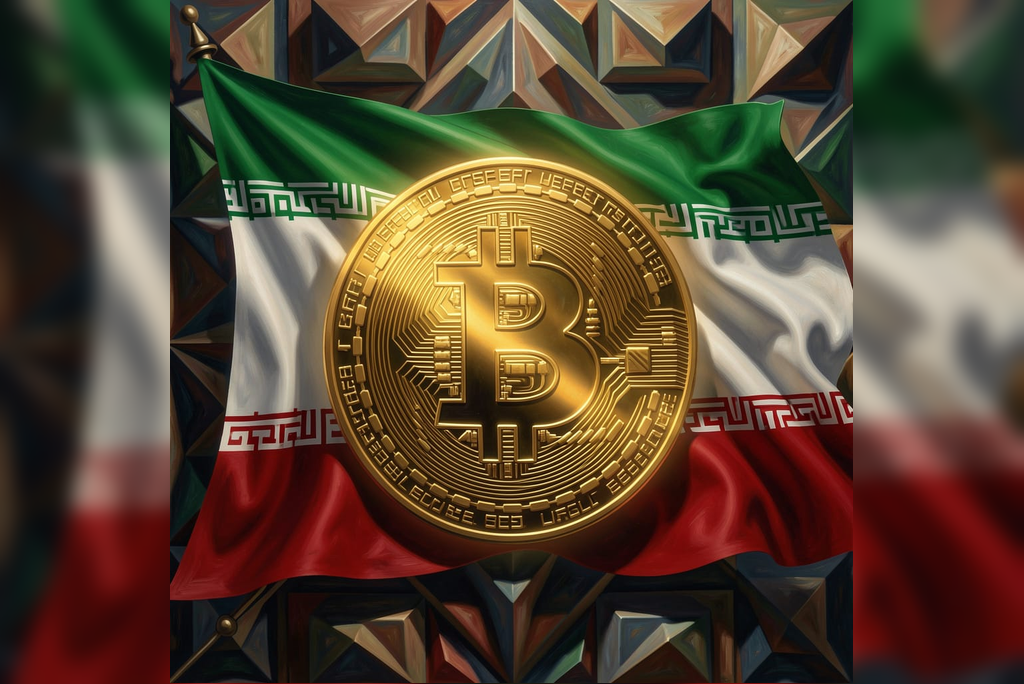
- Iran is requiring vessels crossing the Strait of Hormuz to pay transit tolls in bitcoin amid ongoing regional tensions.
- The toll is set at $1 per barrel of oil, with empty tankers allowed to pass freely, and payments must be made quickly to avoid tracking.
- This move aims to control maritime traffic during a two-week truce while circumventing traditional financial channels restricted by sanctions.
- Iran’s approach links bitcoin to a critical energy corridor and highlights its strategy to navigate geopolitical challenges.
Amid repeated openings and closures of the Strait of Hormuz and as attacks continue across the Middle East, Iranian authorities are reportedly controlling maritime transit through payments in bitcoin.

In the middle of the truce announced by the White House—while missiles, drones, and bombs continue to fly across the region—Iran, perhaps looking beyond the short term, has demanded that vessels crossing the Strait of Hormuz pay a toll in cryptocurrencies. This appears to have been the case with the first two cargo ships that crossed the strait following the announcement.
Private estimates suggested that at least 800 ships remained stranded after the ceasefire agreement between the United States and Iran, amid uncertainty over what the fine print of the deal meant for maritime traffic. According to ship-tracking platform Kpler, the Daytona Beach, sailing under the Liberian flag and bound for the United Arab Emirates, crossed the strait early in the morning, while the NJ Earth, a Greek-owned vessel, followed about two hours later with an undisclosed destination.
These ships appear to be the first large commercial vessels to transit this crucial maritime corridor since the announcement of the two-week ceasefire, under which Iran said it would maintain control of the strait. It remains unclear whether the vessels paid any toll for the passage.
Kpler data show that around 175 million barrels of crude oil and refined products are currently loaded on 187 tankers in the Gulf, which could begin moving depending on developments in the strait.
New Tolls Based on Crypto
According to the British newspaper Financial Times, Iran has declared that it will require shipping companies to pay transit tolls in cryptocurrencies for tankers passing through the Strait of Hormuz, in an attempt to maintain control over this key maritime route during the two-week truce.
Hamid Hosseini, spokesman for the Union of Iranian Exporters of Oil, Gas and Petrochemical Products, told the Financial Times that Iran intends to charge tolls to all ships crossing the passage and to evaluate each vessel individually.
“Iran needs to control what enters and leaves the strait to ensure that these two weeks are not used for weapons trafficking,” Hosseini said, adding that the process could take time for each vessel and that Iran “is in no rush.”
Decisions regarding the conditions for crossing the strait are made by Iran’s Supreme National Security Council. Hosseini’s remarks suggest that Iran may require all tankers to use the northern shipping lane close to its coastline, raising questions about whether Western vessels or ships linked to Gulf states would be willing to take that route.
Hosseini said each tanker must email Iranian authorities with details of its cargo, after which officials would communicate the toll to be paid in digital currencies. The fee is reportedly $1 per barrel of oil, while empty tankers may pass freely.
“Once the email arrives and Iran completes its evaluation, vessels have only seconds to pay in bitcoin, ensuring that the payment cannot be tracked or confiscated due to sanctions,” the Iranian spokesperson explained.
According to the Financial Times, Iran plans to require shipping companies to pay these transit tolls in Bitcoin for vessels passing through the Strait of Hormuz. Micah Zimmerman of BitcoinMagazine.com noted that such a move effectively links bitcoin to one of the world’s most critical energy corridors and to a major geopolitical crisis.
Cryptocurrencies as a sanctions workaround
The method chosen by Iran reflects a clear attempt to bypass traditional financial channels, which remain heavily restricted by sanctions, while still maintaining a mechanism to control maritime traffic.
At the same time, the policy places bitcoin at the center of a geopolitical crisis. Iran has spent years facing restrictions on dollar-based payment systems, limiting its ability to collect fees or process payments tied to maritime trade. By adopting bitcoin, authorities are seeking a channel that operates outside conventional banking networks and offers greater resistance to asset freezes or confiscation.

Ignacio Teson
Economist and Financial Analyst
Ignacio Teson is an Economist and Financial Analyst. He has more than 7 years of experience in emerging markets. He worked as an analyst and market operator at brokerage firms in Argentina and Spain.












Leave a comment