

Got story updates? Submit your updates here. ›
 As global conflicts impact the cryptocurrency market, the potential for a short squeeze in Bitcoin highlights the complex interplay between world affairs and digital assets.Today in Nashville
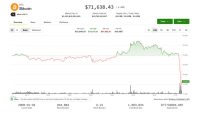
Bitcoin’s price has been volatile amid rising geopolitical tensions, dipping to around $63,000 following military strikes by the U.S. and Israel on Iran. This price movement coincides with a plunge in perpetual futures funding rates to -6%, indicating a potential short squeeze. Traders are heavily positioned for a downward price movement, willing to pay a premium to bet against Bitcoin. The situation is further complicated by Iran’s retaliation, which could pose further downside risks for Bitcoin as analysts predict a broader market sell-off.
Why it matters
The interplay between global events and the cryptocurrency market is a complex and fascinating dynamic. This story highlights how geopolitical tensions can directly impact Bitcoin’s price movements, with the potential for a short squeeze adding an additional layer of volatility. Understanding these market dynamics is crucial for traders and investors navigating the crypto landscape.
The details
On February 28, 2026, Bitcoin’s value dipped to around $63,000 following military strikes by the U.S. and Israel on Iran. This dip coincided with a plunge in perpetual futures funding rates to -6%, indicating a potential short squeeze. A short squeeze occurs when traders betting against an asset are forced to buy it to cover their positions, potentially driving the price upward. The funding rates, which represent payments between traders in perpetual futures markets, are at their second-lowest point in three months, suggesting that traders are heavily positioned for a downward price movement. In the same 24-hour window, the crypto market witnessed liquidations exceeding $500 million, with long positions accounting for a staggering $420 million, indicating a market sentiment leaning towards pessimism.
- On February 28, 2026, Bitcoin’s value dipped to around $63,000 following military strikes by the U.S. and Israel on Iran.
- On February 28, 2026, perpetual futures funding rates plunged to -6%.
The players
Bitcoin
A decentralized digital currency that has become a major asset class in the global financial system.
United States
A global superpower that conducted military strikes on Iran, contributing to the volatility in the cryptocurrency market.
Israel
A Middle Eastern country that participated in the military strikes on Iran, further escalating the geopolitical tensions.
Iran
A Middle Eastern country that retaliated against the U.S. and Israel, potentially posing additional downside risks for Bitcoin.
Crypto traders
Investors and speculators in the cryptocurrency market who are heavily positioned for a downward price movement in Bitcoin.
What’s next
Analysts will continue to monitor the situation closely, as the outcome of the U.S.-Iran conflict and its impact on traditional markets could have significant implications for Bitcoin’s price movement in the coming weeks.
The takeaway
This story highlights the complex interplay between global events and the cryptocurrency market. Bitcoin’s price is not immune to the ripple effects of geopolitical tensions, and traders must be vigilant in navigating the potential for short squeezes and broader market sell-offs triggered by such developments.












Leave a comment