
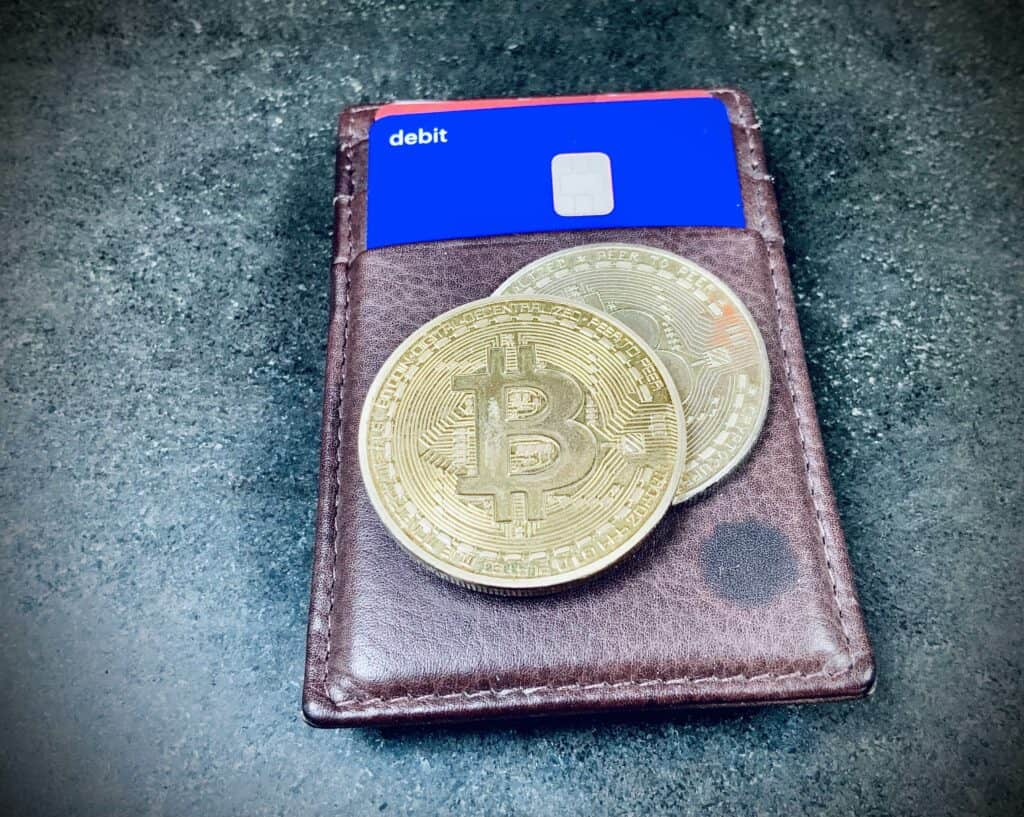
The European Central Bank (ECB) has released a working paper that has attempted to examine who exactly adopts crypto-assets across the Eurozone and why their everyday use remains limited (or so the ECB study claims). Authored by economist Alejandro Zamora-Pérez, the questionable analysis reportedly draws on detailed 2022 survey data from over 39,500 adults in 17 euro-area countries. However, the full reliability and validity of this ECB study cannot be fully ascertained.
Nevertheless, the seemingly biased ECB study challenges common assumptions about digital currencies replacing traditional money and highlights a complex relationship with physical cash.
The research identifies two separate groups among crypto industry participants.
Typical owners tend to be younger, male, better educated, employed, and financially engaged. However, this is actually a trend observed in global financial markets as well.
They often hold higher incomes, maintain larger investment portfolios, and keep more cash reserves than the general population.
These individuals show mixed preferences. They tend to appreciate the privacy and convenience associated with cash, yet they also value the speed and efficiency of card payments.
This blend suggests crypto appeals to them as both a modern investment tool and a digital complement to familiar money habits.
In contrast, the much smaller subset who actually use crypto for payments—often called “crypto payers”—exhibits a distinctly cash-oriented profile.
They prioritize replicating the anonymity and simplicity of physical banknotes in a digital format.
For them, crypto serves less as an investment and more as a private, easy-to-use alternative to handing over notes and coins.
The study finds that standard statistical models initially show a positive link between holding cash and owning crypto, which runs counter to the idea that early adopters are turning away from traditional currency. But again, this claim is questionable considering that cash does not always remain a reliable store of value or even medium of exchange.
However, once researchers account for underlying factors, the picture changes.
Using advanced econometric techniques, including a two-stage selection model to separate ownership from actual payment behavior and a multiple-instrument approach based on pandemic-related payment disruptions, the paper establishes (what it claims is) a causal relationship. However, this is not actually a causal relationship, and leans more towards being a seemingly strong correlation at best.
Under conditions of uncertainty, such as those experienced during COVID-19, building precautionary cash buffers actually lowers the likelihood of crypto ownership. But again, this analysis fails to take into consideration how cash loses its purchasing power over time, a trend that has remained consistent since the advent of fiat money.
For the affected group, cash and crypto function as substitutes rather than complements when stress hits the financial system.
This reversal holds up across robustness checks and aligns with broader macroeconomic patterns observed in early 2020, when euro currency circulation rose while Bitcoin prices fell sharply. However, what the ECB report fails to mention or acknowledge is that BTC had a historic rally where it surged from a low of $3,000 in March of 2020 to around $69,000 by October 2021.
The findings help explain the persistent gap between growing crypto ownership and minimal payment usage. But this trend is actually changing with stablecoins, another area the report fails to address properly.
Merchant acceptance is only part of the equation / process; differing user motivations play a larger role, the report claims.
Owners often treat crypto like an asset class, while payers seek cash-like features in digital form.
These insights carry important policy messages, according to the ECB.
Regulators may need to treat crypto primarily as an investment vehicle for most users, while any future central bank digital currency should incorporate strong privacy protections and straightforward usability to attract the cash-preferring segment. But CBDCs, by their very design, tend to increase government surveillance (something more widely accepted in countries like China) and limit consumer privacy.
Overall, the ECB paper portrays crypto-assets as potentially innovative but imperfect money. According to the latest research study, cryptocurrencies or digital assets have yet to fully replicate the dual roles of exchange medium and reliable store of value that fiat currencies provide, especially in turbulent times.
However, this analysis is deeply flawed because fiat currencies are definitely not a stable store of value and they are not even a reliable medium-of-exchange if we consider how the Iranian Rial has practically collapsed. Earlier, currencies in Venezuela, Zimbabwe, El Salvador, and even the Turkish Lira to a great extent are becoming increasingly ineffective mediums-of-exchange or reliable stores of value. Yet the ECB study casually ignores these shortcomings.













Leave a comment