
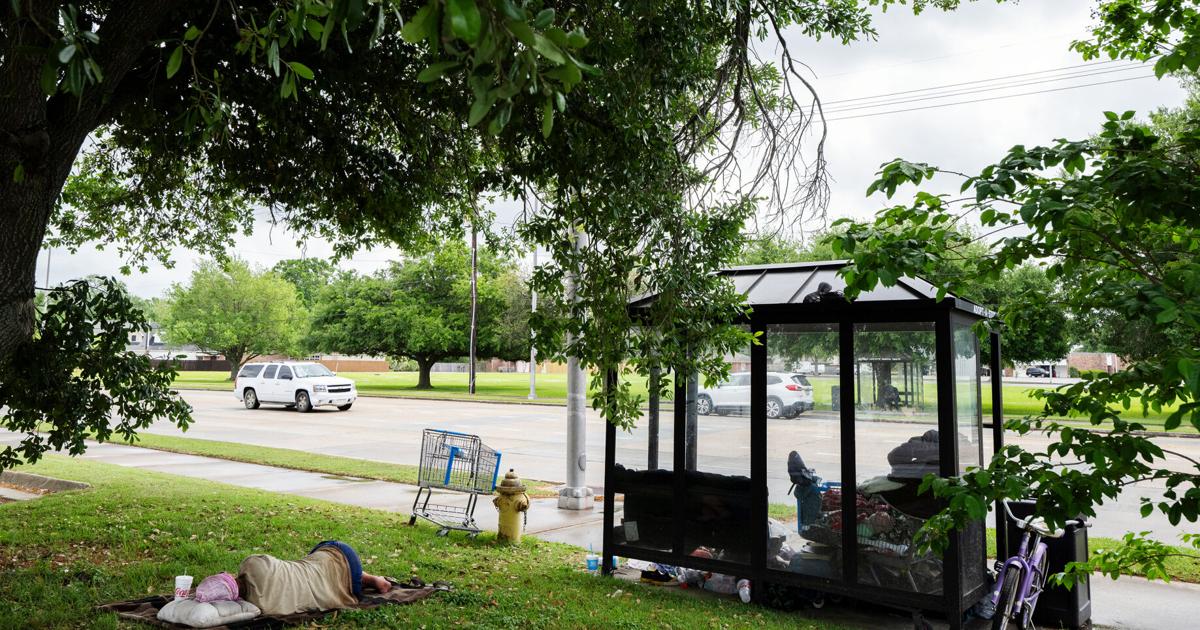
The Lafayette City Council is considering an ordinance that would establish rules and guidelines for removing homeless encampments in the city and make it illegal to camp or squat on public property.
Lafayette Councilman Andy Naquin confirmed the ordinance would “address camping in/on public spaces,“ he wrote in an email. The Acadiana Advocate received a draft copy of the ordinance from a source familiar with the Council.
The draft as it is Thursday would make camping or squatting on public property illegal and punishable by a $500 fine and/or up to 30 days in jail, with a verbal warning required prior. Naquin said the final version would be different because it’s too cumbersome for Lafayette police to enforce as is.
“I am understanding that the legal team is working on a simpler-worded ordinance to be easier to put into practice,“ Naquin wrote. “The council has not received a new draft as of (Tuesday).“
Naquin said the enforcement is being considered after the Council received complaints about Lafayette’s homeless population, adding there is “no ordinance moving forward regarding making sleeping in public illegal.“
The ordinance follows in the footsteps of many U.S. cities that have banned homeless camping and sleeping in public in recent years, following a Supreme Court decision that made it easier to punish those living on the streets.
Other council members and the Lafayette Parish Sheriff’s Office, which would house arrested individuals in its crowded jail, did not respond to requests for comment.
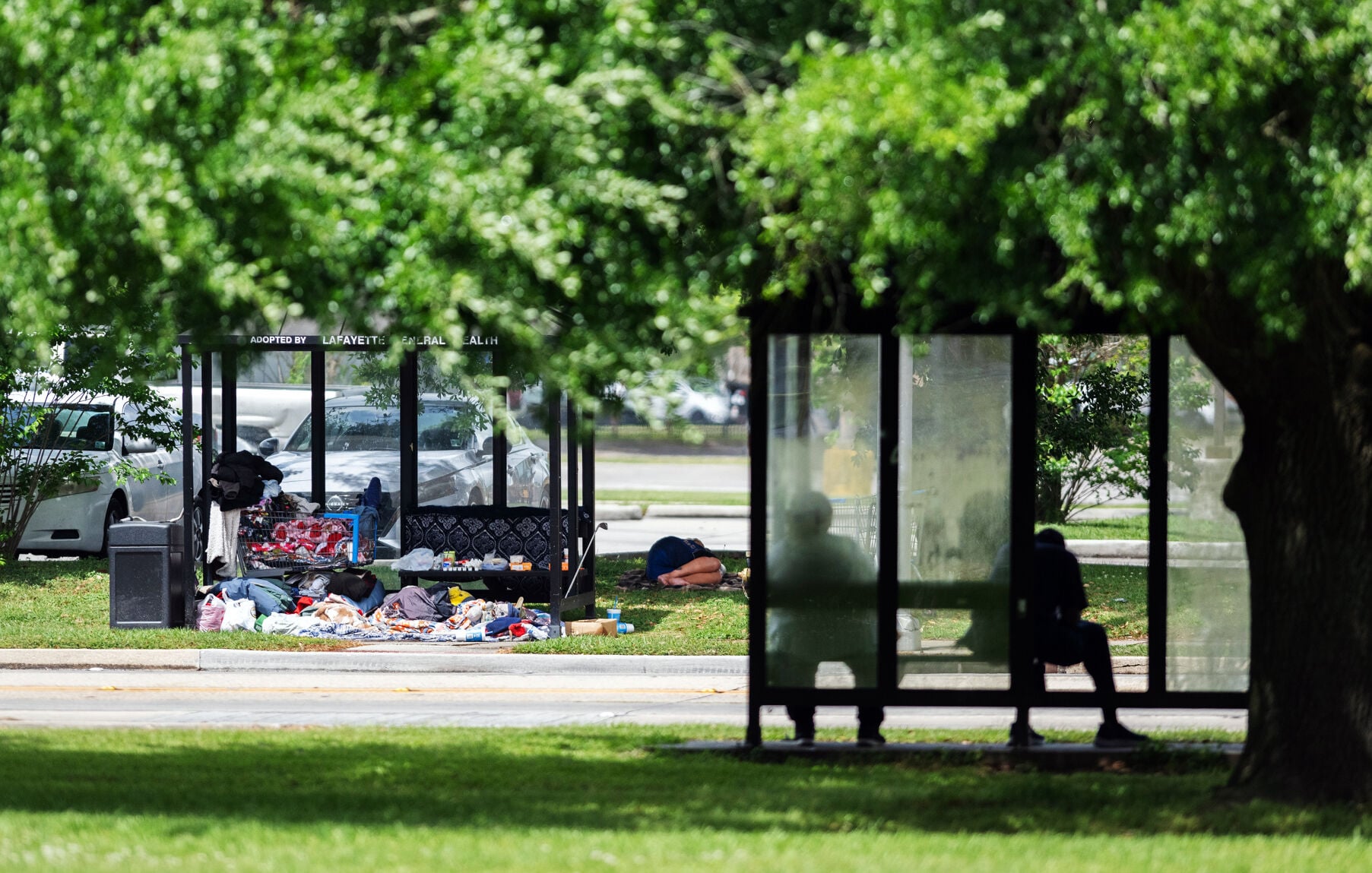
A person sleeps near a covered public bus stop that has been filled with personal belongings as bus riders wait in an uncluttered bus stop across the street Thursday, April 2, 2026, on West Congress Street in Lafayette, La.
As it’s currently written, camping or squatting on public property could include:
-
Claiming possession or exclusive use of public property for living accommodations.
-
Sleeping or making preparations to sleep.
-
Constructing or occupying an outdoor shelter, tent, shack, sleeping bag, or other structure or material.
-
Using or maintaining a campfire, camp stove, or other heating sources or cooking devices
-
Keeping or storing personal property
Public property can include right-of-ways, parking garages, lots, buildings, bus stops, parks and trails, alleyways, sidewalks, benches, vehicle entrances and corridors on public or private property.
What the draft ordinance says
The draft ordinance would establish rules and guidelines for removing or “remediating” homeless encampments. The city would be required to provide a 24-hour posted notice to individuals that would require the date the notice was posted, the date and time range of removal of personal property and the location at which that property can be retrieved.
Removal of the notice would be considered illegal. Additionally, the city would allow individuals to remove the property themselves. The city could waive the 24-hour notice if the encampment or site poses an immediate hazard.
Following the removal of the encampment, the city would post a two-day notice informing people when the removal occurred and where property could be retrieved. Property would be held for 30 days before being disposed of or donated.
The city could also create designated areas for routine removal in areas where homeless populations frequent, which would require signage listing the days and time ranges of routine inspections.
If the ordinance is introduced and passed, the city would join an ever-growing roster of municipalities that have passed similar rules cracking down on homeless populations in light of the 2024 Supreme Court ruling that said such rules did not violate the Eighth Amendment, which prohibits cruel and unusual punishment.
Advocates decry these kinds of proposals
Homeless advocates across the country have argued that the rules against camping and sleeping in public criminalize homelessness and do little to solve issues faced by homeless populations and cities, which are often strapped with limited shelter space.
Lafayette and Acadiana are no different, having lost dozens of shelter beds since the COVID-19 pandemic and currently seeing shelter space at capacity daily. Over the last year, Lafayette has lost 20 beds, increasing the number of homeless people on the street despite a drop in the overall homeless population.
There are currently 410 homeless people in Lafayette, with half of the population being unsheltered, according to the Acadiana Regional Coalition on Homelessness.
How harshly Lafayette would enforce these rules if passed remains to be determined, as does whether they would be challenged in court.
In 2021, signs went up around Lafayette’s busy street corners stating, “Panhandling is Not Safe,“ with the then-Lafayette Police Chief Thomas Glover ordering all officers to enforce panhandling rules. The signs came less than a year after the Lafayette and Parish Councils failed to pass an ordinance banning standing and sitting near roadways.
In 2024, Louisiana passed a law that made panhandling on public right-of-ways and interstate highways illegal and punishable by a $200 fine and/or up to six months in jail.












Leave a comment