
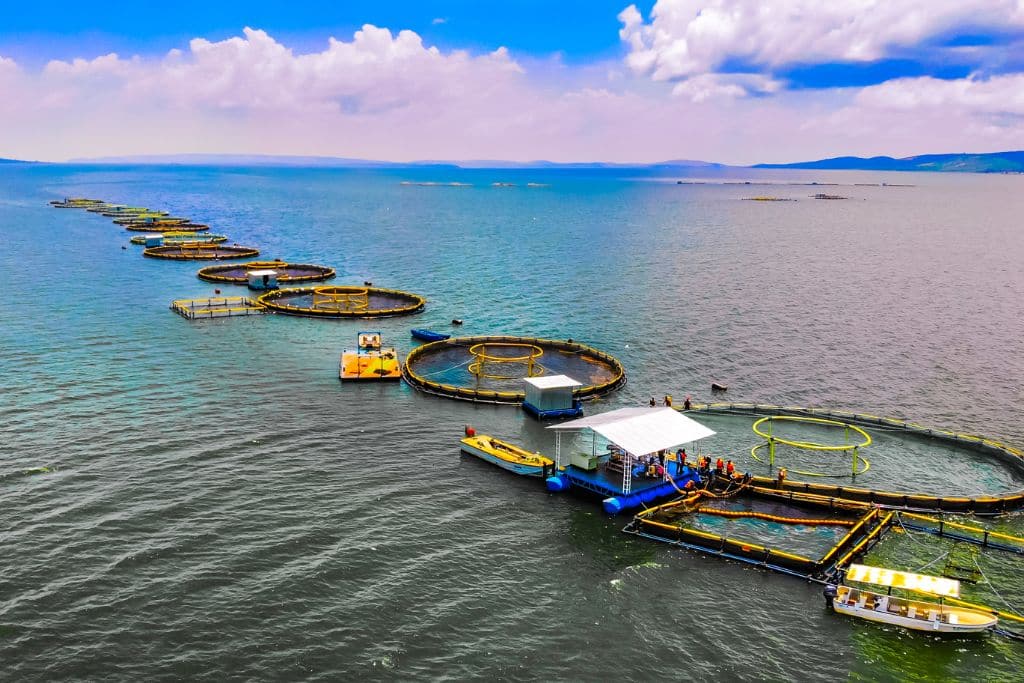
Investments in the blue economy are lagging behind despite ocean health underpinning food security, climate resilience, and billion of lives.
—
This article is part of a three-part series on the blue economy. Check out part 1 – Mapping the Blue Economy: Sectors, Policies, and Challenges Amid Climate Change and part 2 – Why Unchecked Growth Threatens to Collapse Our Marine Ecosystems.
The ocean sustains life on Earth, yet when it comes to global finance, it remains the world’s most neglected asset. Severe funding shortfalls raise a pressing question: how can we bridge the gap while supporting a sustainable ocean economy?
Blue finance mechanisms may provide the answer.
The Funding Gap
The ocean is central to achieving the UN Sustainable Development Goals, underpinning progress on poverty eradication (SDG 1), zero hunger (SDG 2), and climate action (SDG 13). Yet, paradoxically, SDG 14 – Life Below Water – remains the least funded of all. Meeting this goal requires nearly $175 billion in annual investment until 2030 but between 2015 and 2019, oceans received less than $10 billion.

More recent estimates from the High Level Panel for a Sustainable Ocean Economy suggest the figure needed to secure a healthy ocean in the long run could be as high as $550 billion annually. The gap is staggering. Recognizing the shortfall in ocean funding, the 2025 UN Ocean Conference in Nice set mobilizing finance for SDG 14 as a core priority.
But why has ocean investment lagged so far behind? Several structural barriers have deterred funding in this space.
Lack of a universal framework
Without universal standards to guide investments and monitor outcomes, funds risk being misallocated and misreported. This increases the risk of “bluewashing”, where funds may be directed to projects that look sustainable on paper but in practice continue to harm marine ecosystems.
Harmful incentives
Activities detrimental to the environment continue to receive support. Nearly $7 trillion is spent annually on nature-negative activities including unsustainable fisheries and harmful fossil fuel subsidies, according to 2023 estimates.
Perceived low returns
Ocean projects often appear less attractive to investors due to unpriced natural capital, small project scales, and long timelines.
These barriers have created hesitation in capital markets. Yet the case for redirecting funds is compelling. Investing in nature-positive solutions can yield significant returns. Studies suggest that investing $1 in ocean solutions can yield at least $5 in global benefits by 2050. This is where blue finance comes in.
Blue Finance and Sustainable Investment Tools
Blue finance refers to investments, loans, and financial instruments aimed at projects that promote sustainable ocean economies, marine ecosystem conservation, and coastal resilience. The capital for blue finance comes from a mix of sources: philanthropic giving, public budgets, private investment, and blended finance models that combine these streams to amplify impact. Among the tools deployed, blue bonds and blue loans stand out as the most common financial instruments used to channel this capital into ocean solutions.

Often seen as a subset of green bonds, blue bonds are fixed-income instruments designed specifically to fund projects with positive ocean-based impacts. The world’s first sovereign blue bond was issued in 2018 by the Republic of Seychelles for $15 million with support from the World Bank, Global Environment Facility and other major banks and investors. With these funds, Seychelles was able to outperform many of its goals,including the expansion of the management coverage of marine protected areas from 5 million hectares to about 22 million.
Momentum is building. Blue finance investments are expected to expand rapidly in 2026, driven by sovereign and corporate issuances, particularly in Latin America.
To support this growth, the International Finance Corporation, in collaboration with the International Capital Market Association, the UN Global Compact, the UN Environment Programme Finance Initiative, and the Asian Development Bank, introduced voluntary guidelines for investors and financial institutions in 2023. They provide structured frameworks, eligibility criteria, and case studies, boosting confidence among investors.
Still, the absence of a universally accepted taxonomy for sustainable ocean finance means that instruments like blue bonds and loans are still underutilized, limiting their transformative potential.
Private Sector and Oceans of Opportunity
The private sector is increasingly stepping into the blue economy, spurred by the rise of ESG reporting and sustainability commitments. Yet bridging the ocean finance gap requires more than corporate pledges – it demands blended finance, where grants, philanthropic funds, development finance, and private capital converge.
Philanthropic and impact investors often act as catalysts, absorbing initial risks and proving project viability. This paves the way for larger commercial funding. Concessional finance, such as grants or low-interest loans, can support community-driven innovations from microinsurance for small-scale fishers to mangrove carbon credits – activities that may not fit conventional risk-return profiles but promise long-term impact.
Ocean finance does not exist in a vacuum. Geopolitical instability and market uncertainty have already made long-term funding harder to mobilize. Yet these challenges also underscore the urgency of building resilient frameworks. Stronger global standards, innovative financing models, and private sector leadership will be essential to keep ocean sustainability on track.
This is not simply about plugging a funding gap. It is about unlocking a future where economies thrive because ecosystems do. The ocean’s health underpins food security, climate resilience, and billions of lives – and investing in it is both a moral imperative and a smart economic choice.
Featured image: Wikimedia Commons.
This story is funded by readers like you
Our non-profit newsroom provides climate coverage free of charge and advertising. Your one-off or monthly donations play a crucial role in supporting our operations, expanding our reach, and maintaining our editorial independence.
About EO | Mission Statement | Impact & Reach | Write for us












Leave a comment