
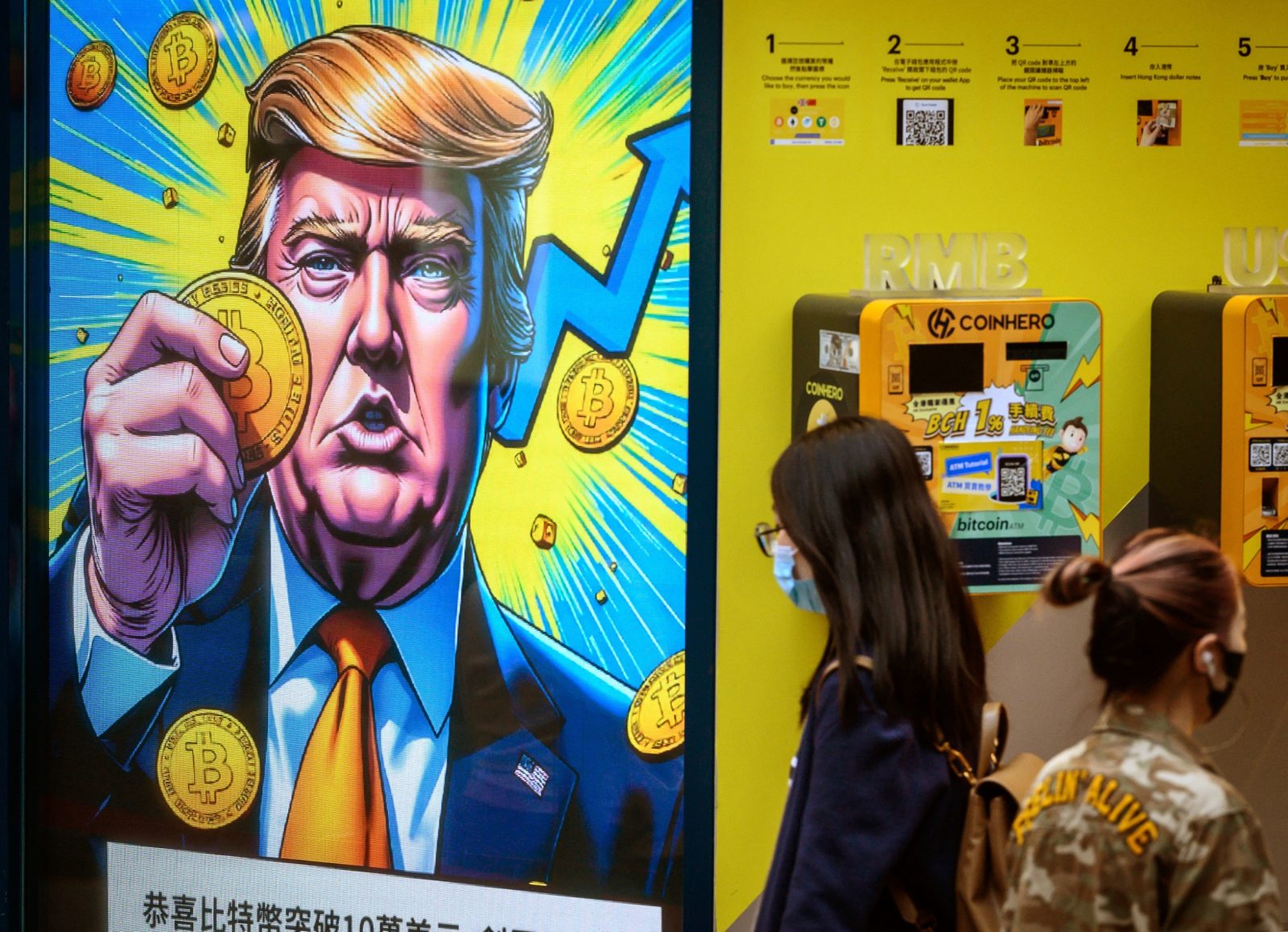
On-chain blockchain data released July 4 confirms what the structural mechanics of the $TRUMP token made mathematically predictable from the moment of its January 2025 launch: nearly two-thirds of everyone who ever bought the coin lost money, with combined losses across 988,905 wallets totaling $3.81 billion. The same data covers the other side of that ledger — President Donald Trump declared $636 million in royalties from the token in his 2025 financial disclosure, part of at least $1.4 billion in total crypto-related income for the year. Nansen data reported by CoinDesk
Those two numbers are not in tension. They are the same transaction, seen from two sides of a financial structure specifically designed so one party profits whether the price rises or falls. Trump’s entities did not earn $636 million by holding $TRUMP and watching it appreciate. They earned it through trading-activity royalties that flowed regardless of price direction — a mechanism that remained invisible to most retail buyers, and that no U.S. law required to be disclosed. CIC Digital LLC and Celebration Coins licensing structure
$3.81B in Losses Was the Structural Prediction, Not a Surprise
Blockchain analytics firm Nansen, which compiled the data and shared it with CoinDesk, tracked all 1.48 million wallets that have ever held $TRUMP since its January 18, 2025 launch. Of those, 988,905 wallets — roughly two out of every three — are currently in a loss position, combining wallets that sold below their purchase price and those still holding tokens now worth a fraction of what they paid. The 492,285 wallets in profit are collectively up $4.04 billion, but that figure is concentrated almost entirely among buyers who entered in the first hours of launch, when the token traded below $1 per token, before it briefly surged to a near-$75 peak within 48 hours. Nansen data via CoinDesk
Across all 1.48 million wallets, gains and losses offset to approximately $236 million — a number that might suggest a marginally positive-sum game. It does not. It reflects the mathematical reality of a system structured to transfer wealth from late entrants to early entrants, with a separate royalty stream flowing to the issuer independent of both. When Nansen’s data shows that $71 billion in total trading volume has flowed through the token since launch, and that the issuer’s income was tied to that volume rather than to the token’s price, the $3.81 billion in retail losses is not a disappointing outcome — it is the mechanism that generated the income.
$TRUMP currently trades near $1.79, down approximately 96 to 97 percent from its all-time high of $75.35. Its market capitalization has fallen from nearly $15 billion at the January 2025 peak to roughly $425 million. Current $TRUMP price data
How the Royalty Engine Worked While Prices Fell
The $TRUMP token was built on Solana with a fixed supply of one billion tokens. The token’s issuing entities — Fight Fight Fight LLC and CIC Digital LLC, both Trump Organization affiliates — retained 80 percent of that supply, subject to cliff unlocks and daily vesting schedules extending through 2028. Token distribution and supply structure
The first major insider cliff hit in April 2025, releasing 40 million tokens into a market that had already seen the price decline sharply from its January peak. That release added programmatic sell pressure on a schedule that was publicly available on-chain but rarely factored into retail buyers’ entry decisions.
The more structurally significant mechanism was the royalty arrangement. Trump’s entities earned income through a licensing agreement between CIC Digital LLC and an entity called Celebration Coins — an organization for which no public digital footprint has been found. Under this structure, every trade of the $TRUMP token generated royalty revenue flowing to Trump-affiliated entities, regardless of whether the price was rising or falling. The income Trump reported on his June 30 Office of Government Ethics disclosure — $636 million from $TRUMP alone — was generated by volume, not by appreciation. Nicholas Pinto, a crypto trader who voted for Trump in 2024 and has since lost roughly $250,000 of an approximately $500,000 $TRUMP investment, described it this way: “He is leveraging the power of being president to launch currencies, when he seems trustworthy in the public’s eye. It is kind of incredible. It is almost a legal scam.” Pinto’s account in the New York Times
The White House has rejected that framing. Spokesperson Anna Kelly said: “President Trump proudly made the United States the crypto capital of the world. All actions by President Trump and his administration are taken in the best interest of the American people.” Trump himself told CNBC he did nothing illegal, said he was unaware of the extent of his holdings, and said he handed day-to-day control of his businesses to his two eldest sons before taking office without divesting. Trump CNBC interview, July 2, 2026
World Liberty Financial: Parallel Structure, Similar Outcome
The $TRUMP loss data is not an isolated result within Trump’s crypto portfolio. Nansen separately tracked secondary-market performance for WLFI, the token of World Liberty Financial — a decentralized finance protocol in which a Trump business entity holds 60 percent equity and receives 75 percent of all token sale revenue.
Of the 26,663 wallets Nansen tracked buying WLFI on secondary markets, approximately 22,715 — roughly 85 percent — are currently underwater, with combined secondary-market losses of around $83 million against $23 million in profits. WLFI currently trades near $0.056, down more than 80 percent from its secondary-market open of $0.29. The 241,651 wallets that purchased WLFI in the original ICO are excluded from these figures, meaning the total loss picture is likely a significant undercount, since much of the trading occurred on centralized exchanges whose transaction-level data is not publicly visible on-chain.
Trump’s total 2025 income from World Liberty Financial reached $799 million, according to his financial disclosure, including proceeds from the United Arab Emirates, which acquired nearly half the company in early 2025. His total declared income from all business ventures in 2025 is at least $2.2 billion. Trump’s 2025 OGE financial disclosure
A Gala That Made the Structure Explicit
On May 22, 2025, Trump hosted a black-tie gala at his Virginia golf course for the top 220 holders of the $TRUMP token, who had collectively spent an estimated $148 million to qualify. The event was promoted by Trump on Truth Social as “the most EXCLUSIVE INVITATION in the world,” causing the token’s price to surge more than 60 percent as buyers rushed to climb the leaderboard. ABC News coverage of the gala
The guest list made the structural dynamic concrete. The top holder was Justin Sun — a Chinese-born crypto entrepreneur who at the time faced SEC civil fraud charges for alleged market manipulation of his Tron blockchain’s TRX token. One month after Sun invested $30 million in World Liberty Financial in late 2024, the Trump administration’s SEC lawyers moved to halt that fraud case. Sun subsequently invested a further $45 million in WLFI, bringing his total investment in Trump crypto ventures to over $93 million before the gala. The fraud case was eventually settled in March 2026 for a $10 million payment with no admission of wrongdoing. Justin Sun SEC settlement, Reuters
A Bloomberg analysis found that 19 of the top 25 gala-qualifying wallets were almost certainly controlled by individuals outside the United States. At least 34 of the top 220 gala attendees sold most of their token holdings after the event, further confirming the dinner served partly as an exit-liquidity window for sophisticated entrants rather than as a community reward. Ethereum co-founder Vitalik Buterin characterized the broader dynamic in a January 2025 social media post: politician-backed coins are “vehicles for unlimited political bribery, including from foreign nation states.” Bloomberg analysis of gala wallets
The Office of Government Ethics confirmed Trump’s financial disclosures comply with applicable disclosure laws. The OGE’s role is limited to reviewing disclosures; conduct enforcement falls to the Justice Department, which is led by Trump’s own appointees.
No Federal Law Protects Retail Memecoin Buyers
In February 2025, weeks after the $TRUMP launch, the SEC’s Division of Corporation Finance issued a staff statement concluding that typical memecoins are not securities. That determination removed the most direct federal investor-protection pathway for anyone who lost money on $TRUMP. SEC staff statement on meme coins, February 2025
The GENIUS Act, signed into law on July 18, 2025, established the first federal framework for stablecoins but contained no provisions addressing memecoins or tokens issued by elected officials. A Senate amendment that would have stripped profit-making provisions for the president and his family failed before the bill’s passage. GENIUS Act White House fact sheet
The joint SEC-CFTC guidance issued on March 17, 2026 established a five-category digital asset taxonomy — but again, memecoins fell outside the securities definition under most interpretations, leaving retail buyers without the disclosure requirements and antifraud protections that equity investors receive as a matter of course.
Europe took the opposite approach. MiCA — the EU’s Markets in Crypto-Assets regulation — requires any crypto asset sold to the public to meet disclosure and consumer protection standards regardless of how it is labeled. MiCA reached full EU enforcement on July 1, 2026, three days before the Nansen data was published. American retail memecoin buyers have no equivalent protection.
The broader market structure bill — the Digital Asset Market Clarity Act — missed its stated July 4 signing target and remained stalled at Senate Calendar No. 423 as of today. CLARITY Act: Senate Calendar No. 423
Senator Kirsten Gillibrand renewed a proposal on July 3 to bar elected officials and their spouses from issuing or sponsoring digital assets. “Public officials and their spouses should not be issuing memecoins,” Gillibrand said, framing the measure as basic conflict-of-interest prevention. Gillibrand proposal, July 3, 2026 The Senate returns from recess on July 13, at which point the CLARITY Act faces a pre-August window that analysts have described as the last realistic 2026 gate.
NYU law professor Stephen Gillers noted that Trump historically “plays to people’s fantasies,” and suggested that encouraging supporters to invest while simultaneously structuring a deal that guaranteed personal profits regardless of price outcomes could attract future litigation. Whether a sitting president’s token falls under the equivalent legal scrutiny applied to other celebrity token promoters — or whether the political dimension provides effective insulation — remains an open question without a judicial answer.
What Comes After 96% Down
The losses on $TRUMP have been compounded by a broader crypto contraction. Bitcoin, which briefly touched a record above $126,000 in October 2025, has since fallen roughly 50 percent from that peak. The sector has spent the first half of 2026 in a protracted slump. Trump Media and Technology Group, which separately purchased approximately $2 billion in Bitcoin near market peaks in summer 2025, reported a $405.9 million loss in Q1 2026 driven almost entirely by unrealized markdowns on those holdings.
More than $600 million was drained from decentralized finance protocols through hacks and exploits in the first half of 2026. Nansen’s analysis implies that retail losses on $TRUMP alone — the result not of theft but of ordinary market structure operating as designed — are nearly four times that figure.
The distributional math of the $TRUMP launch is now fully documented: a small group of early entrants and the token’s issuer captured approximately $4.04 billion in gains while 988,905 wallets absorbed $3.81 billion in losses, and the issuer earned an additional $636 million in royalties from the trading activity that produced those losses. The mechanism was legal. No U.S. law required its disclosure. No U.S. law currently provides retail buyers with recourse. Those three facts, taken together, describe not a market failure but a regulatory design choice — and today’s on-chain data quantifies what that choice cost.
Frequently Asked Questions
How much did Trump earn from the $TRUMP memecoin, and how was that income structured?
Trump’s 2025 financial disclosure, released by the Office of Government Ethics on June 30, lists $636 million specifically attributed to the $TRUMP token, described as royalties flowing to CIC Digital LLC under a licensing agreement with an entity called Celebration Coins. Critically, this income was generated from trading-activity volume, not from holding tokens that appreciated in price. The structure decoupled Trump’s earnings from whether retail buyers gained or lost — he collected royalties whether the price was rising or falling, and regardless of how many buyers were in a loss position.
Did the $TRUMP token always have to end this way? Was this outcome avoidable?
The distributional outcome — a small cohort of early buyers capturing most gains while the retail majority absorbed losses — is not a random market result. It is the structural prediction of any asset whose value depends on a continuous influx of new buyers who enter at progressively higher prices. When 80 percent of the token supply is retained by the issuer with unlock schedules extending through 2028, and when retail buyers can only enter after the first speculative wave has already driven prices upward, the system is architected so that early entrants and insiders profit at late entrants’ expense. The specific numbers documented by Nansen — $3.81 billion in losses across 988,905 wallets — represent the measured scale of an outcome that the token’s mechanics made structurally inevitable.
Can retail investors sue Trump or recover losses from the $TRUMP token?
As of July 4, 2026, no established U.S. legal pathway provides retail memecoin buyers with recourse equivalent to securities fraud protection. The SEC’s February 2025 staff statement explicitly concluded that typical memecoins are not securities, removing the most direct federal enforcement avenue. Legal experts including NYU professor Stephen Gillers have flagged the theoretical possibility of future class-action litigation, arguing the structure — encouraging supporters to invest while guaranteeing personal profit regardless of price — could attract claims. But no such lawsuit has been filed, no U.S. law currently mandates the disclosures that would make a fraud claim straightforward, and the Justice Department that would bring criminal charges is led by Trump’s own appointees.
What is the CLARITY Act, and does it protect people from future losses on memecoins?
The Digital Asset Market Clarity Act is a comprehensive market structure bill that passed the House in July 2025 with bipartisan support and is now stalled in the Senate at Calendar No. 423. As of July 4, 2026, it has not passed and has no scheduled cloture vote. Even if enacted in its current form, the bill focuses on jurisdictional clarity between the SEC and CFTC for digital assets, developer liability protections, and exchange registration — not on creating explicit consumer protection standards for memecoins as a class. Senator Gillibrand has attached a condition to her floor support: enforceable ethics language requiring elected officials and their spouses to disclose or divest crypto holdings. Without that provision, the bill addresses the regulatory framework but leaves the conflict-of-interest problem that the $TRUMP data now quantifies structurally unaddressed.
Note: All wallet profit and loss figures from Nansen are based on on-chain analytics through the end of June 2026 and combine realized losses from completed sales with unrealized losses for wallets still holding $TRUMP below their average purchase price. Figures reflect blockchain records rather than verified individual identities and may shift as market prices fluctuate.










Leave a comment