
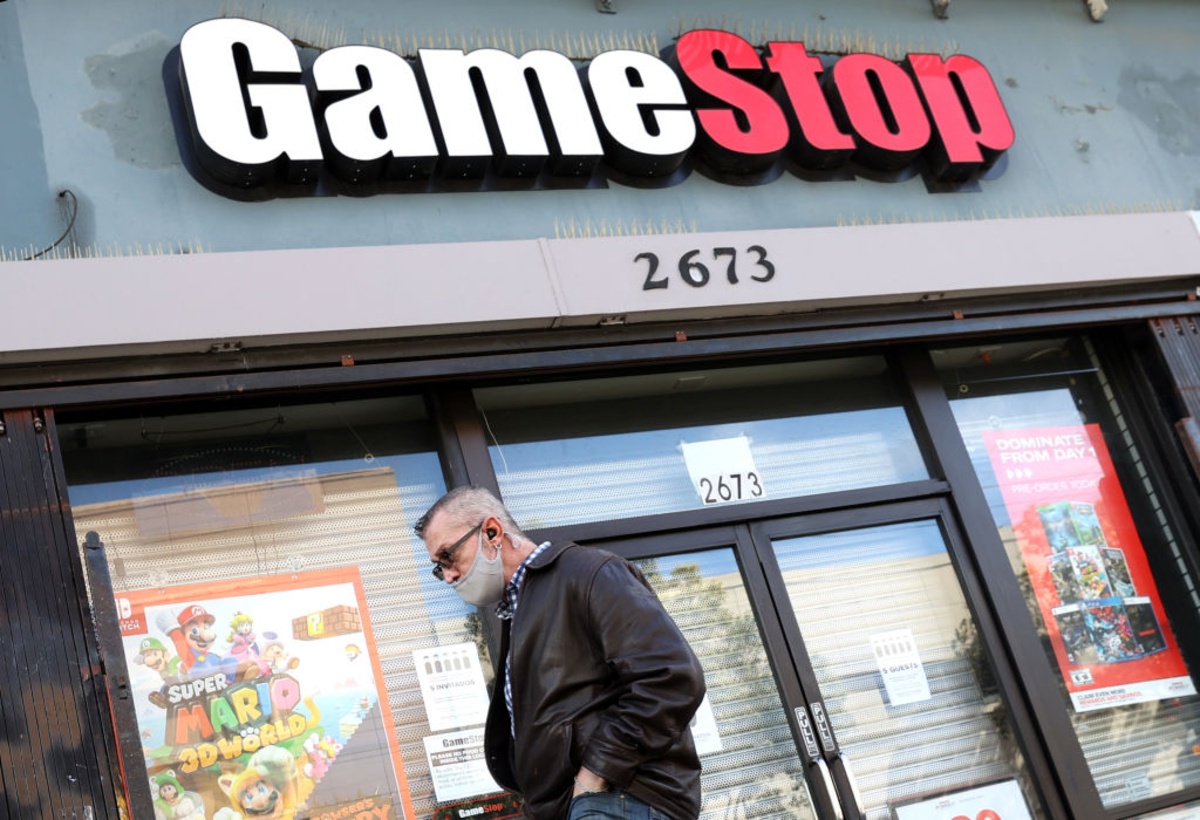
GameStop Corp. (NYSE: GME) announced Monday morning that it has privately negotiated agreements with a select group of existing noteholders to exchange approximately $1.4 billion in outstanding zero-coupon convertible senior notes for newly issued Class A common stock — eliminating a third of its long-term debt without spending a single dollar in cash, according to the company’s official announcement. GME shares fell sharply in premarket trading, sliding as low as 10.5% to an intraday low of $19.72 before partially recovering to around $20.44, a decline of roughly 5.9% from Friday’s close. The market’s response captures the essential tension in this deal: what looks like a clean balance sheet improvement for the company is, for the people who already own its stock, a direct reduction in their proportional ownership.
What the Exchange Actually Does — and Who Pays for It
Under the terms of the exchange agreements, participating noteholders will surrender approximately $400 million of GameStop’s 0.00% Convertible Senior Notes due 2030 and $1.0 billion of its 0.00% Convertible Senior Notes due 2032 in return for newly issued common stock, as outlined in the exchange agreement. GameStop receives no cash from the transaction — the debt is simply canceled in exchange for equity. Following the close, the company will still carry roughly $1.1 billion of 2030 Notes and $1.7 billion of 2032 Notes, leaving approximately $2.8 billion in convertible debt on the balance sheet.
The zero-coupon structure of these notes is central to understanding who bears the cost of this exchange. Unlike traditional corporate bonds, zero-coupon convertibles pay no interest at all. Their entire value to the noteholder comes from one thing: the option to convert the debt into GameStop common stock at a predetermined ratio. GameStop, in turn, benefited at issuance from paying no interest — borrowing billions without a quarterly cash outflow in exchange for the eventual dilution that conversion would create. Monday’s exchange simply front-loads that dilution, crystallizing it now rather than letting it materialize at maturity in 2030 and 2032.
The exchange price isn’t set yet and won’t be for weeks. The number of shares GameStop must issue will be determined in part by the average volume-weighted average price (VWAP) of GME stock over a 35 consecutive trading day reference period that began with today’s market open on August 3, 2026, subject to a per-share price floor, per the terms announced Monday. GameStop has not disclosed the specific floor price. The exchange is expected to close on or around September 23, 2026.
What the VWAP Mechanism Means for Ordinary Shareholders
The 35-day reference period is where existing retail shareholders face a structural disadvantage that the press release acknowledges but does not emphasize. GameStop stated explicitly that participating noteholders may purchase or sell shares of Common Stock in open market transactions or enter into or unwind various derivative transactions with respect to Common Stock to hedge or unwind their investments in the Exchange Notes and that these activities could increase or decrease the market price of the Common Stock in ways that may be material.
In plain terms: the institutional investors who negotiated the exchange were given contractual permission to short GME stock during the pricing window. A lower VWAP benefits them — a lower average stock price means they receive more shares for their surrendered notes, up to the limits set by the price floor. Ordinary GME shareholders cannot similarly protect themselves from this mechanism. The noteholders negotiated a floor that protects the company from issuing unlimited shares; no equivalent protection exists for existing retail holders against the dilutive effect of the new shares entering the market.
This information asymmetry between sophisticated institutional noteholders and retail shareholders is the structural story inside a transaction that the headline numbers — $1.4 billion in debt eliminated — can obscure.
The Bitcoin Era Context
The convertible notes being exchanged are the same instruments that funded GameStop’s pivot toward a Bitcoin treasury strategy in 2025. In March 2025, the company raised approximately $1.3 billion through a private offering of 2030 Notes, with proceeds earmarked in part for Bitcoin purchases. Months later, GameStop priced an upsized $2.25 billion offering of [2032 Notes due June 2025](https://www.businesswire.com/news/home/20250612275872/en/GameStop-Announces-Pricing-of-Upsized-Private-Offering-of-$2.25-Billion-of-Convertible-Senior-Notes) — also flagging Bitcoin investment as a potential use of funds. By May 2025, the company had deployed approximately $513 million of those proceeds to acquire 4,710 Bitcoin at an average cost of roughly $108,950 per coin.
Those holdings have lost significant value since. Bitcoin was trading at approximately $62,500 on August 3, 2026 — down roughly 42% from GameStop’s average purchase price. At current market prices, GameStop’s 4,710 BTC position is worth approximately $295 million against a cost basis of around $513 million — an unrealized loss of roughly $218 million. The company’s annual report for fiscal year 2025 already recorded a net loss on digital assets of $131.6 million. The Bitcoin treasury strategy that the convertible notes were partly designed to fund has, as of today, produced a substantially underwater position.
Monday’s debt-for-equity swap represents the next phase of managing the capital structure that strategy created. Having used zero-coupon convertible notes to raise billions cheaply, GameStop is now converting a portion of that debt back into equity — before maturity — rather than waiting for natural conversion or redeeming it with cash.
What the Remaining $2.8B in Notes Means Going Forward
The most consequential number in Monday’s announcement is not $1.4 billion — it’s $2.8 billion. That is what remains on GameStop’s books after this exchange closes, spread across $1.1 billion in 2030 Notes and $1.7 billion in 2032 Notes, as confirmed by the exchange agreement. Both series carry the same zero-coupon, equity-conversion structure as the notes being retired today. If those remaining notes are eventually exchanged or converted into equity — either through future private negotiations or at maturity — shareholders could face another significant dilution event comparable in scale to what is being announced now.
Prior to Monday’s transaction, GameStop carried $4.17 billion in long-term debt as of May 2026. After the exchange closes in late September, that figure will drop to approximately $2.8 billion — a reduction of roughly one-third. That is a legitimate balance sheet improvement. But the mechanism of improvement comes at the cost of existing shareholders, and the $2.8 billion that remains is an overhang that will shadow the stock through at least 2030.
Analysts expect earnings to decline sharply in the current quarter regardless of Monday’s news. The Wall Street consensus estimate for Q2 EPS stands at $0.06, down from $0.25 in the same quarter a year earlier. The next major financial catalyst arrives with the September 8, 2026 estimated earnings report — which will now land at almost exactly the same time as the exchange is set to close.
The eBay Backdrop
GameStop also announced Monday that it holds approximately 9.8% of eBay’s common stock — some 43.4 million shares — as part of CEO Ryan Cohen’s ongoing, board-rejected effort to acquire the e-commerce platform, according to a regulatory filing. Cohen has been quietly building the stake since submitting a $56 billion, $125-per-share proposal in May 2026 that eBay’s board dismissed as “neither credible nor attractive.” An FT profile published in July 2026 confirmed Cohen is still pressing the pursuit.
Some observers noted Monday’s balance sheet action with dry humor, pointing out that GameStop had turned its attention from buying eBay to buying back its own debt. The timing is less coincidental than it appears: a leaner balance sheet improves the optics of GameStop’s financing case if Cohen continues to press for a deal. eBay’s board specifically cited concerns about “financing viability” in its rejection letter — removing $1.4 billion in debt is a visible, if partial, response to that criticism.
Cohen withdrew his proposed $35 billion performance award in June 2026 in a separate move — removing the award from the proxy — that he characterized as redirecting leadership focus toward operating performance and the eBay acquisition.
What Existing GME Holders Should Understand Before September
For investors currently holding GME shares, Monday’s transaction creates a narrow but defined window of elevated risk. The 35-day VWAP reference period means that the final dilution calculation — the actual number of new shares entering the market — will not be determined until mid-September. During that window, the noteholders who are about to receive those shares have both the right and the financial incentive to engage in stock market activity that could affect the very pricing mechanism that determines their payoff, as GameStop’s own announcement acknowledges.
The per-share price floor limits the company’s exposure to unlimited share issuance if GME stock falls significantly, but GameStop has not disclosed the specific floor level. Until that floor is published or the reference period ends, the exact dilution impact on existing holders remains an open variable.
Beyond the reference period, the strategic calculus for GME shareholders hasn’t fundamentally changed. The company runs a growing collectibles business — collectibles generated $348.9 million in Q1 FY2026, approximately 42% of total revenue, up 65% year-over-year. It holds roughly $8.4 billion in cash and marketable securities. And it is pursuing a speculative, board-rejected acquisition against a company worth multiples of its own market cap. Monday’s debt exchange makes the balance sheet marginally cleaner without resolving any of those larger questions.
Frequently Asked Questions
What does GameStop’s debt-for-equity swap mean for shareholders who already own GME stock?
Existing GME shareholders will be diluted — more shares will be in circulation after the exchange closes, which means each current share represents a smaller percentage of the company. The exact number of new shares won’t be known until around mid-September, after GameStop calculates the average stock price over a 35-day reference period beginning August 3, 2026. The dilution is a direct financial cost to existing holders in exchange for GameStop’s balance sheet improvement.
Will GameStop issue more stock in the future from its remaining convertible notes?
Possibly. After this exchange, approximately $2.8 billion in convertible senior notes remains on GameStop’s books — $1.1 billion due 2030 and $1.7 billion due 2032. Both series carry the same zero-coupon, equity-conversion structure as the notes being retired in Monday’s deal. If GameStop negotiates additional private exchanges, or if the notes ultimately convert under their original terms at maturity, existing shareholders could face another round of dilution of comparable or greater scale.
Why can noteholders trade GME stock during the 35-day pricing period?
GameStop’s press release explicitly acknowledges that noteholders who are party to the exchange may buy or sell GME shares — or enter into derivative transactions — to hedge or unwind their positions during the reference period. This is a standard, legal feature of privately negotiated note exchanges. It also means that institutional investors have contractual permission to take market positions that could affect the very pricing window used to calculate how many new shares they receive. Ordinary GME shareholders have no equivalent mechanism to protect themselves from this dynamic, as detailed in the company announcement.
How does this exchange affect GameStop’s pursuit of eBay?
It removes $1.4 billion from GameStop’s stated long-term debt, which directly addresses one of eBay’s board’s stated objections: concerns about financing viability. A leaner balance sheet strengthens the financial optics of GameStop’s acquisition case, though eBay’s board has not reversed its rejection, and the fundamental financing gap — acquiring a company worth multiples of GameStop’s own market cap — remains, as documented in eBay’s rejection.











Leave a comment