

AUD/USD (AUDUSD) is down 0.52% at Aug 3 09:50(ET), now at $0.69839, with a 7-day down of 0.08%.
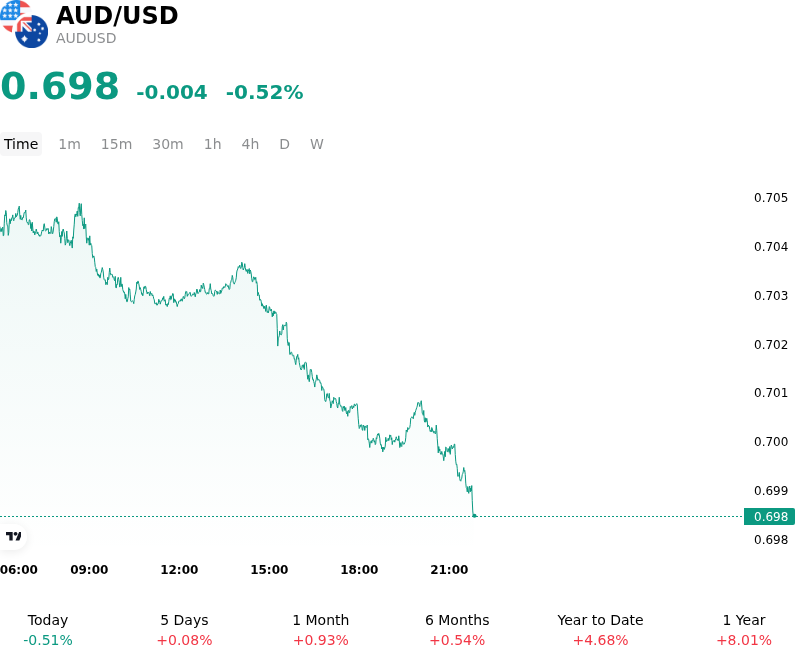
The Australian dollar faced selling pressure against the U.S. dollar as market participants recalibrated expectations ahead of the Reserve Bank of Australia’s scheduled policy meeting. The decline in the pair was primarily driven by a combination of disappointing regional economic data and a broader resurgence in U.S. dollar strength fueled by rising Treasury yields. Investors are increasingly betting that the RBA may adopt a more cautious stance regarding future tightening, as domestic consumption shows signs of fatigue despite persistent services inflation.
In the United States, recent manufacturing and employment indicators have highlighted the resilience of the U.S. economy, leading to a hawkish repricing of the Federal Reserve’s terminal rate path. This has widened the interest-rate differential in favor of the Greenback, drawing capital away from the Australian dollar. The rise in U.S. yields has provided a solid floor for the U.S. dollar, particularly as global risk sentiment remains fragile, prompting a retreat from high-beta currencies like the AUD.
Commodity markets also played a significant role in the Aussie’s underperformance. Concerns over the growth trajectory in China, following a series of underwhelming purchasing managers’ index releases, have dampened the outlook for industrial metals. As Australia’s largest trading partner, any perceived slowdown in Chinese infrastructure and manufacturing activity directly impacts demand for iron ore and copper, undermining the Australian dollar’s fundamental support.
From a technical perspective, the breach of key support levels during the session triggered institutional stop-loss orders, accelerating the downward momentum. The move appears to be a reflection of a broader macro trend where the U.S. dollar maintains its yield advantage while the Australian dollar remains sensitive to shifting growth expectations in Asia. Investors remain focused on the RBA’s forward guidance and the potential for further divergence between the monetary policy paths of the two central banks. The primary risk remains a sharper-than-expected downturn in global manufacturing, which would continue to favor the U.S. dollar’s safe-haven appeal over the pro-cyclical Australian dollar.
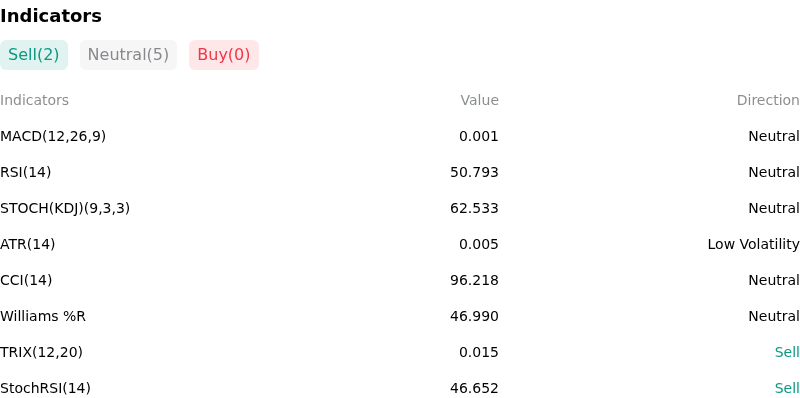
Technically, AUD/USD (AUDUSD) shows a MACD (12,26,9) value of 0.001, indicating a neutral signal. The RSI at 50.793 suggests neutral condition and the Williams %R at 46.990 suggests neutral condition. Please monitor closely.
This article may include AI-generated content that is human-reviewed, which is for reference and general information purposes only and does not constitute investment advice.








Leave a comment