

Bitcoin (BTC 0.08%) and Zcash (ZEC 3.38%) both cap their supply at 21 million coins, and both borrow their mining architecture from the same original blueprint. But whether an asset is a store of value isn’t something that’s settled in a white paper or in a technical discussion among developers. It’s settled by an evolving web of social consensus and real-world utilization in the form of parked capital.
Let’s compare and contrast Bitcoin and Zcash to see which one is the better store of value, as the winner is also the coin that’s more likely to stand the test of time in your portfolio.

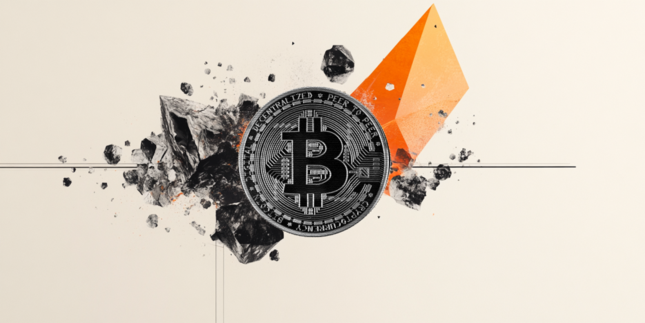
Image source: Getty Images.
Bitcoin is already doing the job
Today Bitcoin has a market cap near $1.5 trillion, while Zcash has a market cap of just $5.7 billion.
So, right out of the gate, it’s obvious that there’s a vastly larger amount of capital allocated to Bitcoin, which is a large vote in its favor as being the better store of value. Of course, market cap alone isn’t the entire verdict here, but an asset’s liquidity and institutional acceptance all scale with size, and those are the qualities a store of value needs.
The institutional infrastructure around Bitcoin is indeed quite extensive at this point. U.S. spot Bitcoin exchange-traded funds (ETFs) hold nearly $57.5 billion in Bitcoin. Public corporations hold another $91.7 billion of Bitcoin on their balance sheets.

Today’s Change
(-0.08%) $-61.43
Current Price
$75035.00
Key Data Points
Market Cap
$1.5T
Day’s Range
$73854.00 – $76165.00
52wk Range
$60255.56 – $126079.89
Volume
41B
Zcash has no comparable bench. Only one public company holds it, and those holdings of ZEC are only worth $101.9 million. It doesn’t have any ETFs approved, though that may change later this year. So it simply isn’t as widely accessible, which means fewer people and organizations can use it as a store of value even if they wanted to.
Furthermore, the remaining regulatory friction surrounding Bitcoin is fading fast.
In June 2025, the Federal Housing Finance Agency (FHFA) ordered Fannie Mae and Freddie Mac to count cryptocurrency, specifically Bitcoin, as a qualifying asset for single-family mortgages. That directive became concrete in late March 2026 with the launch of a Fannie Mae-compliant mortgage product letting borrowers pledge Bitcoin for a down payment without selling. Few other assets are allowed to anchor a conforming loan in the U.S. housing market, and Zcash isn’t one of them.
Then there’s the strangest data point of 2026 so far.
As a result of the war, Iran’s parliament signed into law a Strait of Hormuz toll system in late March, naming Bitcoin specifically as an accepted settlement asset, alongside Chinese yuan, for the $1-per-barrel fee it levied on oil tankers. It’s unclear whether this toll is actually being paid and collected by anyone. The point is that when a country picks an asset for paying the tolls associated with transiting the chokepoint for a fifth of the global daily oil supply, it picks something that’s neutral, bearer money. Zcash never enters these conversations.
Zcash has a real edge, but it’s not mature yet
Zcash isn’t necessarily going to be playing second fiddle to Bitcoin in terms of being a store of value. In the long run, it has an important advantage.
Zcash’s network lets users transact without exposing the sender, recipient, or amount being exchanged. Bitcoin’s ledger is fully public, and forensics companies can fingerprint most wallet activity. If privacy ever becomes a mainstream demand for stores of value, Zcash is positioned to benefit in a way that Bitcoin cannot ever be. If that sounds far-fetched, consider that gold, the ultimate scarce store of value, is effectively already private in the sense that there is no record of who owned any given bar of gold inscribed on the bar itself.

Today’s Change
(-3.38%) $-10.87
Current Price
$311.11
Key Data Points
Market Cap
$5.2B
Day’s Range
$301.18 – $337.26
52wk Range
$30.50 – $734.96
Volume
443M
Unfortunately, for today, Zcash’s future is uncertain as a result of regulatory headwinds.
The European Union’s Anti-Money Laundering Regulation (AMLR) takes effect in mid-2027, and it bars crypto-asset service providers from listing or custodying privacy coins, including Zcash. Similarly, Japan and South Korea have effectively barred privacy coins from licensed crypto exchanges, and they aren’t the only ones. Every jurisdiction that closes this door makes Zcash harder to accumulate at institutional scale, which detracts from its status as a store of value.
Therefore, while it could change in the long run, Bitcoin is the better store of value at present.










Leave a comment