
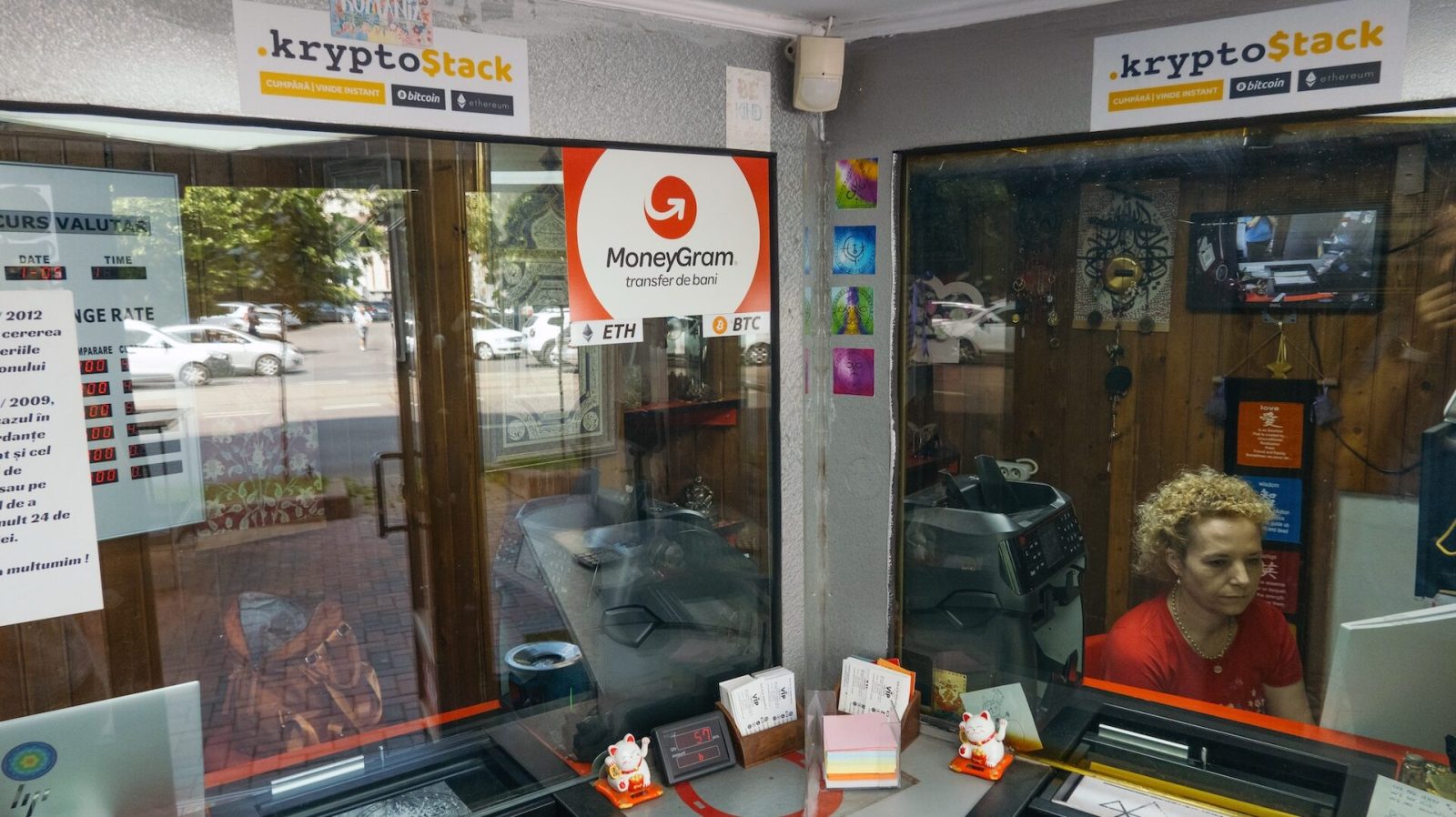
As scammers and terrorists increasingly turn to crypto, a Canadian intelligence office is raising alarms about risks posed by an emerging industry offering discreet means to convert cryptocurrency to large sums of physical cash and vice versa.
A substantial portion of these services across Canada are being “heavily exploited for illicit purposes” and are “knowingly facilitating money laundering, sanctions evasion” and a variety of “transnational organized crime activities,” according to a Canadian intelligence memo reviewed by the International Consortium of Investigative Journalists.
The memo’s assessment shows top financial intelligence officials echoing a concern that some crypto experts have voiced with growing urgency over the past year: A worldwide industry of services converting cryptocurrency into large sums of physical cash — often with few questions asked and conducted with deep anonymity — has opened a gaping hole in the global bulwark against dirty money.
Dated March 2026 and obtained through a public records request by ICIJ partner The Toronto Star, the Canadian assessment came from the Strategic Intelligence, Research and Analytics Unit, the intelligence-gathering office within FINTRAC, the country’s agency overseeing efforts to combat money laundering and terror financing.
Garry Clement, who formerly ran the Canadian national police’s proceeds of crime program, told ICIJ that he’s not surprised by the government assessment.
Crypto-to-cash operators “service really professional money launderers,” Clement said. Their money, he added, “comes from the drug trade, it comes from human smuggling, it comes from massive amounts of fraud and it comes from a lot of cyber crime.”
The memo notes that recent media reporting has highlighted the rise of such services in Canada. Last November, ICIJ and 37 other news organizations released the Coin Laundry, a global investigation that examined illicit finance in cryptocurrency around the world, including Canada’s thriving crypto-to-cash businesses. These services allow holders of cryptocurrency to cash out huge sums without touching the mainstream banking system. In doing so, these operations sidestep banking systems’ traditional safeguards on dirty money tied to organized crime, human trafficking or foreign sabotage operations.
As part of this reporting, ICIJ and its partner reporters performed undercover transactions with these services in Poland, Ukraine, the United Arab Emirates and Canada. This included a reporter for the Toronto Star arranging a crypto-to-cash conversion with a global organization called 001k. The reporter sent the firm 2,000 crypto tokens to exchange for cash in Toronto.
Instead of asking for a customer name or ID, the service asked the reporter to take a photograph of the serial number on a five-dollar bill and then present the same banknote at the cash hand-off to prove she had provided the crypto. Based on interviews with experts by ICIJ’s Canadian reporting partners, this transaction likely violated Canadian anti-money laundering laws.
001k has moved more than $14.8 billion in cryptocurrency in recent years, according to data crypto-tracing firm Chainalysis provided to ICIJ.
In early March, the Star’s reporting identified a single thoroughfare in the greater Toronto area with 50 businesses advertising crypto services, most of which appeared to be operating unlawfully.
Just weeks after the Star’s report, the Canadian government took action, revoking dozens of crypto firms’ registrations, including several crypto-to-cash firms that the Star had identified as operating unlawfully.
The report is heavily redacted, with one of the fully withheld sections titled “Intelligence Gaps.” It describes the crypto businesses blending into unglamorous corridors of everyday commerce like shipping centers, rented shared workspaces, and shopping malls.
“Although these entities often present themselves as intermediaries for legitimate cryptocurrency transactions, many seemingly operate without customer due diligence, offer anonymity that exceeds what is available through centralized exchanges, and actively bypass” traditional anti-money laundering safeguards, the report states.
In an email, a FINTRAC spokesperson told ICIJ that in recent years it has focused heavily on investigating and enforcing breaches of the law by virtual currency dealers. So far this year, the watchdog has revoked the registrations of 123 crypto businesses, the spokesperson said.
Clement told ICIJ that the recent intelligence assessment is only useful if it’s backed up by meaningful enforcement, which he says has not been the case in recent years.
“The bottom line is if you don’t do anything about a situation when it’s just starting out, it expands,” Clement said. “That’s exactly what’s happened in this country.”
Emma McIntosh and Sheila Wang contributed additional reporting.










Leave a comment