

When it comes to where you put your money, the choice between crypto and stocks has always been one of the hardest to make in investing. One side gives you steady compounding backed by company earnings, while the other gives you a fixed-supply asset that comes up as high risk/high reward.
Most people usually hold a ratio between the two to balance things out, but right now the market is making it tempting to shift toward stocks. The S&P 500 closed at a record 7,230 on May 1 after Apple authorised a $100 billion share buyback. Meanwhile, Bitcoin (CRYPTO: BTC) finished the same week below $80,000, unable to push higher, but was up 14% in April. So, is this the right time for you to dump BTC for the S&P 500?
Apple’s $100 Billion Buyback Pushed the S&P 500 Past 7,200 for the First Time

Apple capped Q2 with a record $111.2 billion in revenue on Thursday, April 30, then Tim Cook used the earnings call to announce one of the biggest single-shot capital returns in corporate history. The board had authorised another $100 billion to buy back Apple shares—a fresh addition on top of the $850 billion the company has already returned through repurchases since 2012.
The size of it stood out because Microsoft, Alphabet, and Amazon are each on track to spend somewhere between $180 billion and $200 billion this year on AI infrastructure, while Apple is doing the opposite—handing the cash straight back to shareholders.
The market had Thursday night to think about it, and by Friday, May 1 it priced the news in. Apple stock closed up 3.26%, and because Apple is one of the largest stocks in the S&P 500, that single move was the strongest one, lifting the entire index. The S&P closed at 7,230.12—its first ever close above 7,200, and the Nasdaq joined it at a record 25,114.44.
The S&P just closed its fifth straight winning week, which is the longest streak since 2024, and both the S&P and the Nasdaq just wrapped their strongest month since November 2020.
Bitcoin Is Down 12% YTD, But Institutions Just Bought $629 Million in One Day
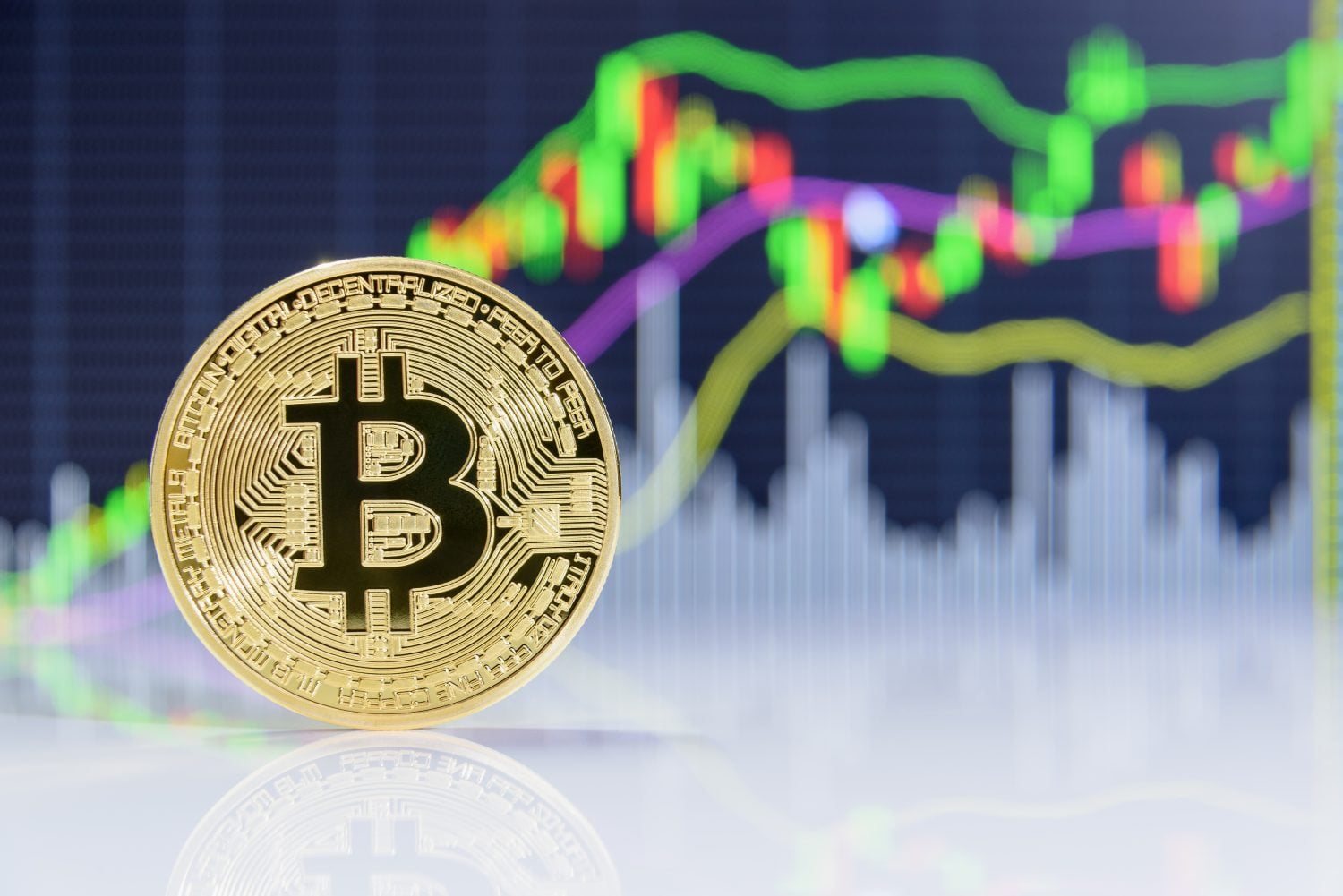
Bitcoin started 2026 above $88,000 with momentum building through mid-January. Then the Iran war started in late February, causing oil prices to spike, and Bitcoin dipped due to the macro pressure. The Bitcoin price has clawed its way back to $78,381, but still down roughly 12% on the year, while the S&P 500 is up around 5.6%.
April was Bitcoin’s best month in nearly a year. The BTC price closed the month up 14%, and ETF flows turned with it. Bitcoin ETFs recorded $2.44 billion in net inflows, marking the strongest monthly haul since October 2025, and a sharp reversal after four straight months of outflows that started in November.
On Friday, May 1—the same day the S&P closed at its first ever 7,200 record—spot Bitcoin ETFs absorbed $629.8 million in net inflows. BlackRock’s IBIT pulled in $284.4 million on the day, and every one of the 13 spot Bitcoin ETFs ended positive. The story making the rounds is that big money is rotating out of crypto and into stocks. However, on the day that story was easiest to tell, the biggest buyers in the market did the opposite by stacking more BTC.
Bitcoin Has Its Own Version of Apple’s Buyback

Apple takes cash from its earnings, uses it to buy back its own shares from the open market, and the share count drops. With fewer shares outstanding, each remaining share represents a bigger slice of the same business, so earnings per share go up automatically.
That is one reason Apple stock holds up every time the broader market wobbles. The company has returned over a trillion dollars to shareholders this way since 2012, with $850 billion of it through buybacks alone.
Bitcoin does not have a CEO or a cash pile to do anything similar. What it has is a hard supply cap enforced by code, not by a board decision that can be changed. The protocol limits the total number of coins that can ever exist to 21 million. Around 20 million of those have already been mined, which means there’s less than 1.1 million left. And the rate at which new Bitcoin comes into existence keeps halving, with the next cut by April 2028.
Around 12% of all circulating BTC is in spot ETFs and public company treasuries, per Fidelity. That supply is taken off exchanges and into custody by long-term holders who are not selling at the next pullback.
So when a Bitcoin holder is asked to swap their BTC for a stock that just announced a buyback, the honest answer is that both assets have a structural reason their prices hold up. Apple does it through its checkbook, while Bitcoin does it through its code.
Should Apple’s Buyback Change How You Hold Bitcoin in May?
Our take is that you shouldn’t dump Bitcoin for the S&P 500 right now. The S&P is sitting at a record 7,230 with Apple’s buyback already priced in, while Bitcoin is still trading around 38% below the $126,000 record it set in October 2025. The bigger move from here is far more likely to come from Bitcoin than from stocks already at all-time highs.
Two things could move the Bitcoin price in the months ahead. The Iran war winding down would pull oil prices off their highs and ease the inflation pressure that has weighed on crypto since February. Then the CLARITY Act passing the Senate would set the rules for how crypto operates in the U.S., and that vote is the biggest tailwind crypto needs this year. If both happen before year-end, BTC running back toward the $120,000–$170,000 range is well within reach.










Leave a comment