
Editorial Note: While we adhere to strict
Editorial Integrity, this post may contain references to products from our partners. Here’s an explanation for
How We Make Money. None of the data and information on this webpage constitutes investment advice according to our
Disclaimer.

Binance – Best crypto exchange for 2026 (United Kingdom)
What Litecoin (LTC) could be worth in 2-10 years:
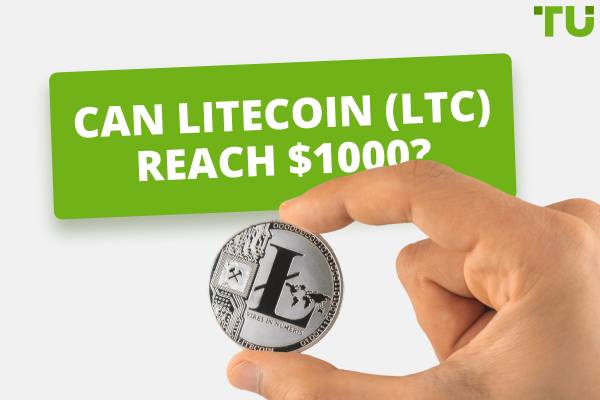
Litecoin is one of the oldest cryptocurrencies that have managed to keep flourishing. It has been on the market for over a decade now and counts as one of the most popular altcoins in the crypto world.
From its launch till this year, Litecoin has been through many ups and downs, which is why it is crucial to predict its future growth. So, we’re here to analyze the upcoming future of Litecoin for you.
But the questions appear, how high can these prices grow? Will it even grow or completely crash down in the upcoming years? Since Litecoin is a bit unpredictable, these questions are valid.
In this article, we have answered all the important questions and concluded the history of Litecoin that enables us to analyze its future growth and predictions. So, study this in-depth overview of the upcoming cycle so you can make the right investments and earn long-term benefits.
What is Litecoin (LTC)?
Litecoin is a cryptocurrency created in the Bitcoin blockchain from a fork in 2011. The creators of Litecoin designed it as a solution to address developer concerns when Bitcoin was becoming too centrally controlled.
Litecoin also intended to prevent largescale mining firms from gaining the upper hand in mining. However, the coin failed in this aim but later evolved into a minable coin. As a result, Litecoin is now available as a peer-to-peer system.
Although Litecoin is similar to Bitcoin in many ways, it has much faster and more efficient transactions than the top cryptocurrency globally. Litecoin’s price stands at 55.4 with a $7.7 billion market cap.
In addition, the coin has an $836.1 million 24h trading volume with a 70.1M LTC circulating supply. The Litecoin circulating supply is halved every four years to retain its value.
What Influences LTC Price?
Maximum Supply
The maximum supply limit of Litecoin affects its price the most. If the interest in a coin is high, but the supply is low, the price will inevitably increase. Conversely, if the interest is low and the supply is plenty, the price will decrease.
The creators of Litecoin only make a small number of coins available for trading per year, which increases its price rapidly.
Crypto Cycle
The crypto cycle has four phases. That includes the slow accumulation, the quick run-up, the plateau in price, and the subsequent price drop. This pattern repeats every cycle no matter what the market is or the coin is.
No matter how successful a cryptocurrency is, it will experience its highs and lows. For example, at the end of the bull cycle, Litecoin’s price drops before slowly rising again in the next cycle.
Cost of Production
Of course, the cost of production is an important factor that affects Litecoin’s price. Since it has a similar structure to Bitcoin, Litecoin’s cost of production is calculated by direct fixed costs for infrastructure and electricity for mining the coins.
Important News
Trending news, especially social media, also affects the price and investor interest. Other than that, celebrity interest is another great influence on Litecoin price.
What Could Litecoin (LTC) Be Worth in 10 years?
Crypto forecasters have analyzed the worth of Litecoin per token in the next ten years. Here’s all you need to know about Litecoin’s price in the next decade and what factors affect this price.
Litecoin Price Prediction for the 2030s
Right now, Litecoin costs 55.4 per token, and it had an all-time high of $412 in 2021. Coin Price Forecast experts predict major growth for the coin in 2029.
Litecoin‘s price will be $170 at the beginning of 2029, when 2029 ends, LTC will be at $260. By the time we reach 2035, LTC can soar even higher than $170.
Here’s a more detailed overview of the price of Litecoin in ten years:
| Year | Price in the middle of the year | Price at the end of the year |
|---|---|---|
| 2026 | $100 | $97 |
| 2027 | $90 | $95 |
| 2028 | $100 | $170 |
| 2029 | $170 | $260 |
| 2030 | $260 | $190 |
| 2031 | $190 | $210 |
| 2032 | $210 | $310 |
| 2033 | $320 | $320 |
| 2034 | $280 | $240 |
| 2035 | $230 | $170 |
| 2036 | $160 | $160 |
| 2037 | $160 | $170 |
| 2038 | $150 | $140 |
| 2039 | $130 | $140 |
| 2040 | $150 | $250 |
Litecoin Price Predictions 2026
Litecoin is expected to continue its growth trajectory into 2026, supported by wider adoption, technological upgrades such as MimbleWimble privacy features, and overall strengthening in the crypto market; analysts project moderate to bullish price targets, with potential resistance near historical highs if market sentiment remains positive and broader macro conditions improve.
Here’s a more detailed monthly price prediction of Litecoin:
| Month | Minimum Price, $ | Average Price, $ | Maximum Price, $ |
|---|---|---|---|
| June 2026 | 84 | 86 | 88 |
| July 2026 | 84 | 85 | 87 |
| August 2026 | 79 | 80 | 82 |
| September 2026 | 140 | 140 | 140 |
| October 2026 | 140 | 150 | 150 |
| November 2026 | 170 | 170 | 180 |
| December 2026 | 150 | 150 | 150 |
Will Litecoin Hit $1,000?
The founder of Elevate Trading, Nebraskan Gooner, predicted last year that Litecoin has the potential to reach $1,000 per token soon. He stated that it could even soar to $1,500 in the coming years.
Experts have analyzed that Litecoin can hit the 1k mark within the next ten years, if not sooner. That’s because LTC has shown remarkable growth in the past and will continue to retain this growth due to investor interest.
88% of all available Litecoins will have been mined in the next five years. Therefore, the network will have to reach a $74 billion market cap for LTC to cost $1,000 within the next five years. However, it’s hard to make such predictions accurately.
Cryptocurrencies are volatile, and there’s no way to predict investor interest. However, we can consider factors such as supply and price history. So, if you’re wondering, “Will Litecoin reach $1000?” here’s the answer: it’s possible!
Can Litecoin Reach $5,000 or $10,000?
It’s not probably for Litecoin to reach $5,000 or $10,000 soon. However, experts have made optimistic predictions about Litecoin prices and stated that they might reach $1,000 in five to ten years. But that’s as good it gets.
It’s nearly impossible for Litecoin to reach $10,000 since it will already require $74 billion to reach $1,000 per token. So, for LTC to cost $10,000 within the next ten years, it would require a market cap of approximately $740 billion.
Of course, that’s a large sum to acquire, and it doesn’t take a market genius to know that won’t happen in the next five years. So, if you’re wondering, “Will Litecoin reach $10,000?” here’s the answer: it’s completely impossible!
Should I Invest in Litecoin (LTC) Right Now?
The growth rate of Litecoin is pretty impressive, which is why it has the potential to reach $1,000 in the next ten years. Unfortunately, the coin experienced a low in 2020, which undoubtedly shook the network’s confidence. But, by 2023, things finally turned around, and LTC‘s price started rising rapidly again.
The cryptocurrency reached its all-time high in May of 2021, and its growth rate is still positive. Therefore, LTC is a good investment if you choose the perfect time to make your move.
However, investing in crypto is ultimately personal and at your discretion. In addition, the industry is very volatile and unpredictable, so you must be wise about where you place your money.
If you’re a beginner in crypto, we’d recommend starting with a small amount in investment. Then, you’ll be able to gauge the coin’s performance and go for more long-term investments.
Where to Buy LTC?
Here are the two best crypto exchanges that support Litecoin. We considered the payment methods, assets, fees, and security required by each exchange.
Treat LTC as a secondary position in a diversified crypto portfolio
Litecoin should be approached less as a “moonshot” asset and more as a cyclical, infrastructure-grade cryptocurrency. I don’t view LTC as a coin you buy for explosive innovation, but rather as one that historically performs best when sentiment shifts back toward reliability, liquidity, and low transaction friction. In the coming years, I expect Litecoin to continue oscillating within broader market cycles, offering opportunities primarily for disciplined accumulation and cycle-based exits rather than aggressive long-term holding. My practical recommendation is to treat LTC as a secondary position in a diversified crypto portfolio: accumulate gradually during prolonged bearish or sideways phases, reduce exposure into strong rallies, and avoid relying on it as a sole growth driver. Litecoin’s strength lies in survivability and consistency, not in constant upside momentum, and investors who align their strategy with that reality tend to manage risk far more effectively.
Conclusion
While Litecoin (LTC) has demonstrated resilience and adaptability over the years, reaching the $1000 mark within the next decade remains highly speculative. Many experts point to its strong technological foundation and established user base as key strengths, but also caution about increasing competition from both newer and established cryptocurrencies. For instance, previous cycles have shown LTC’s price can surge alongside major Bitcoin rallies, yet sustaining such momentum is challenging. Ultimately, investors should remember that the potential for significant gains always comes with considerable risk—success in crypto often favors those who balance optimism with rigorous due diligence.
FAQs
Litecoin’s maximum supply is capped, with a limited number of coins released each year. As more coins are mined and the available supply shrinks, scarcity can drive prices higher if demand remains unchanged or increases. This supply limitation is a fundamental aspect influencing LTC’s future price potential.
The cost of mining Litecoin includes expenses like infrastructure and electricity. When production costs increase, miners are less likely to sell at lower prices, which can support the market price. Conversely, lower production costs can make lower prices more sustainable. Thus, mining costs act as a price floor and impact long-term value.
Litecoin is viewed as reliable due to its long track record, consistent network performance, and focus on efficient transactions. Experts note that LTC tends to perform best when the market values stability and liquidity, rather than seeking rapid innovation or large speculative gains.
To reach a price of $1,000 per coin, Litecoin would require a market capitalization of approximately $74 billion based on its circulating supply. This substantial growth is possible over the next decade if current trends continue, but reaching higher milestones like $10,000 per LTC is considered extremely unlikely due to the much larger market cap needed.
Did you like the article?
Editors’ Top Picks and Insights
Related Articles
Team that worked on the article
Andrey Mastykin is an experienced author, editor, and content strategist who has been with Traders Union since 2020. As an editor, he is meticulous about fact-checking and ensuring the accuracy of all information published on the Traders Union platform.
Rinat Gismatullin is an entrepreneur and a business expert with 9 years of experience in trading. He focuses on long-term investing, but also uses intraday trading.
Mirjan Hipolito is a journalist and news editor at Traders Union. She is an expert crypto writer with five years of experience in the financial markets.
Forex leverage is a tool enabling traders to control larger positions with a relatively small amount of capital, amplifying potential profits and losses based on the chosen leverage ratio.
Index in trading is the measure of the performance of a group of stocks, which can include the assets and securities in it.
Volatility refers to the degree of variation or fluctuation in the price or value of a financial asset, such as stocks, bonds, or cryptocurrencies, over a period of time. Higher volatility indicates that an asset’s price is experiencing more significant and rapid price swings, while lower volatility suggests relatively stable and gradual price movements.
CFD is a contract between an investor/trader and seller that demonstrates that the trader will need to pay the price difference between the current value of the asset and its value at the time of contract to the seller.
Crypto trading involves the buying and selling of cryptocurrencies, such as Bitcoin, Ethereum, or other digital assets, with the aim of making a profit from price fluctuations.








Leave a comment