


Now you see it; now you don’t.
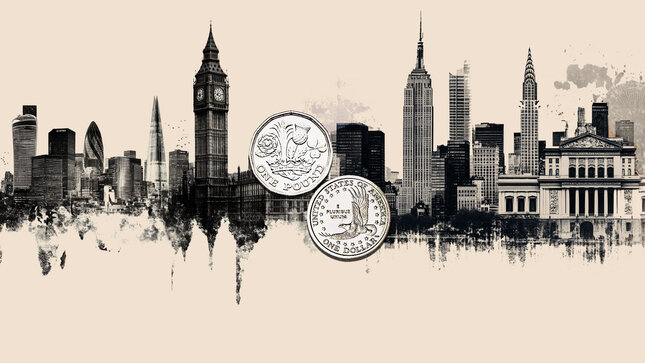
© Nomad_Soul/stock.adobe.com
Most paper money today is fiat currency, meaning it has value because users have faith in the government backing it—not in the material it’s made from. And just as the government can giveth, it can taketh away.
That’s right: Governments can use a process called demonetization to render bills or coins worthless. They may choose demonetization as a tool to fight inflation, counterfeiting, tax evasion, and money laundering, as well as to streamline trade among nations. Demonetization has been used over the years with varying degrees of success—sometimes causing significant disruption for the general population.
Another reason nations might want to pull bills from circulation is to promote the emergence of a cashless society and digital banking. As those changes gain more traction, the term “demonetization” is evolving in the age of social media influencers.
Historical examples of demonetization
Imagine you’re watching TV and your nation’s leader announces that more than 80% of your currency is now worthless and you have less than two months to exchange certain bills for newly minted ones. Such a scenario played out in November 2016 when India’s Prime Minister Narendra Modi outlawed two widely used bills—the 500 and 1,000 rupee notes.
The goal was to crack down on counterfeiters and tax dodgers. Counterfeiters were unlikely to risk bringing fake bills to a bank to exchange them. To deal with tax dodgers, banks required proof of tax payments. Those who couldn’t supply it faced a penalty.
But there were also far-reaching impacts on everyday Indians and the broader national economy. Long lines formed at banks, and security forces were deployed to prevent unrest. In a nation where most consumers use notes and coins, the sudden cash crunch hit the economy as discretionary spending collapsed and laborers who were paid in cash had to miss work to exchange bills.
Although India offers the most prominent modern-day example of national demonetization, the practice has been around for centuries. It happened in ancient Rome, China from the 9th to 14th centuries, England in the 1300s, and Japan in the 1600s.
The United States demonetized silver as a form of legal tender in the 1870s to adopt the gold standard and combat inflation driven by an increasing supply of silver. As more silver coins entered circulation, their value declined, reducing the purchasing power of money—meaning more coins were needed to buy the same goods. In response, silver was spent while gold was hoarded (an example of Gresham’s law).
In 1933, the U.S. government required citizens to turn in privately held gold and fully abandoned the gold standard in the 1970s, making the U.S. dollar a fiat currency.
In the 21st century, in addition to India’s shock demonetization, Venezuela and Zimbabwe have implemented demonetization policies to combat hyperinflation.
The euro: A controlled demonetization
Not all demonetization efforts are aimed at fighting inflation or financial crime. Some measures are implemented to support trade, such as the evolution of the U.S. dollar from colonial notes or, more recently, the launch of the euro as the official currency of the European Union trade bloc.
One reason the euro has been successful—so much so that it is one of the world’s reserve currencies—is its gradual launch.
The introduction of euro coins and banknotes in 2002 ushered in the biggest cash changeover in history. For three years before the launch of euro-denominated cash and coins, the euro was used only for accounting purposes and electronic payments. After the launch, there was a short period when both national currencies and euros were legal tender. But there were much longer periods when citizens could still exchange old banknotes and coins with central banks, many of which offer an unlimited window.
Demonetization in the digital age
Beyond government policies, demonetization is also used to describe something else: the loss of a revenue stream in the digital world.
On social media sites such as YouTube, high-performing creators—including influencers—can often earn money based on how many views they get, how long viewers engage with their content, and how much buzz their content generates in the form of likes or comments, among other metrics.
“Demonetization,” in this sense, is when such users lose their ability to earn money from the site. This can happen if social media creators violate content guidelines, or when a service changes its algorithm—as YouTube did in the late 2010s after advertisers found their ads appearing alongside content many viewers considered objectionable.
This type of demonetization can apply to individual posts or an entire channel, but it’s different from “deplatforming,” which refers to banning content creators or accounts from a social media site or service, preventing them from posting, earning money, or engaging with others.
Currency and credibility
Regardless of how you earn or spend money, the way you interact with it continues to evolve—shaped by social media, government policies, and the move toward cashless societies.
You may use a debit or credit card, a digital payment service such as Venmo or PayPal, or cold hard cash, but unless you use cryptocurrency, your money is fiat currency governed by a central bank.
Although nations benefit from stable currencies, they aren’t likely to demonetize huge portions of cash as India did in the mid-2010s. Still, it’s worth remembering that without public faith in a central bank, paper money is just that—paper.











Leave a comment