
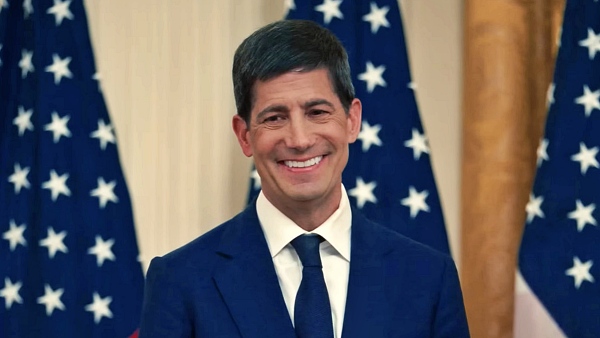
The first Federal Open Market Committee meeting chaired by U.S. Federal Reserve Chairman Kevin Warsh (워시) since taking office has again highlighted structural differences between the dollar and bitcoin.
Bitcoin Magazine, a blockchain media outlet, reported on June 19 local time that Warsh held the benchmark rate steady at the meeting while making clear that policy priorities would be placed on price stability. He also set out a stance of offering less preemptive guidance than in the past and strengthening data-based policy decisions.
The core of the meeting lies not in the new chairman’s hawkish inclination itself but in the fact that the dollar remains a currency requiring ongoing policy management. The article says Warsh is focused on managing the dollar’s value and price stability, showing that the fiat-currency system ultimately depends on human judgment and policy intervention.
The Fed adjusts the money supply and the interest-rate environment to balance inflation and employment. That is an inherent feature of a fiat-currency system, meaning the money supply can be expanded or reduced as needed. Historically, however, the dollar supply has moved in the direction of expansion over the long term.
After the United States left the gold standard in 1971, the dollar’s purchasing power fell sharply. A dollar then corresponds to about 12 cents of purchasing power today. U.S. M2 money supply also rose from the scale of hundreds of billions of dollars to a level above $22 trillion. An expanding money supply can dilute purchasing power for existing holders.
By contrast, bitcoin has a fixed total issuance of 21 million coins. New supply halves every 210,000 blocks, roughly every 4 years, and around 2140 additional issuance will approach zero. The biggest difference from fiat currency is that no individual, committee or government can arbitrarily increase the total supply.
Warsh’s price-stability stance also makes the contrast clearer. Even if a hawkish Fed chairman moves to curb inflation, the dollar remains a currency that requires supply management. Bitcoin, by contrast, is seen as providing a fixed-supply base that cannot be diluted by policy decisions.
The difference is also linked to corporate cash-management strategies. Companies holding large cash-like assets cannot avoid considering the issue that purchasing power gradually declines due to inflation while funds sit in bank deposits or short-term financial products. Even if Warsh stresses price stability, the structure of fiat currency, under which authorities can increase supply if they deem it necessary, does not change.
This has also led to arguments that chief financial officers should reconsider whether to keep managing cash-like assets ranging from hundreds of millions to tens of billions of dollars in managed currencies. Bitcoin is cited as an alternative because scarcity is guaranteed at the protocol level.
The article says strategic review is becoming more important for companies looking beyond a few quarters of results and considering long-term preservation of purchasing power, including deploying part of treasury reserves as a long-term store of value. It concludes that Warsh’s first FOMC served as an occasion to compare again the dollar’s policy-management system and bitcoin’s fixed-supply structure.









Leave a comment