
Brussels’ effort to reduce dependence on Chinese clean-energy technology is colliding with the practical cost of building renewables, especially in member states that rely heavily on public financing.
EU restrictions on public funding for Chinese-made power inverters risk delaying renewable-energy projects in poorer member states, exposing a difficult trade-off at the heart of Europe’s green industrial policy.
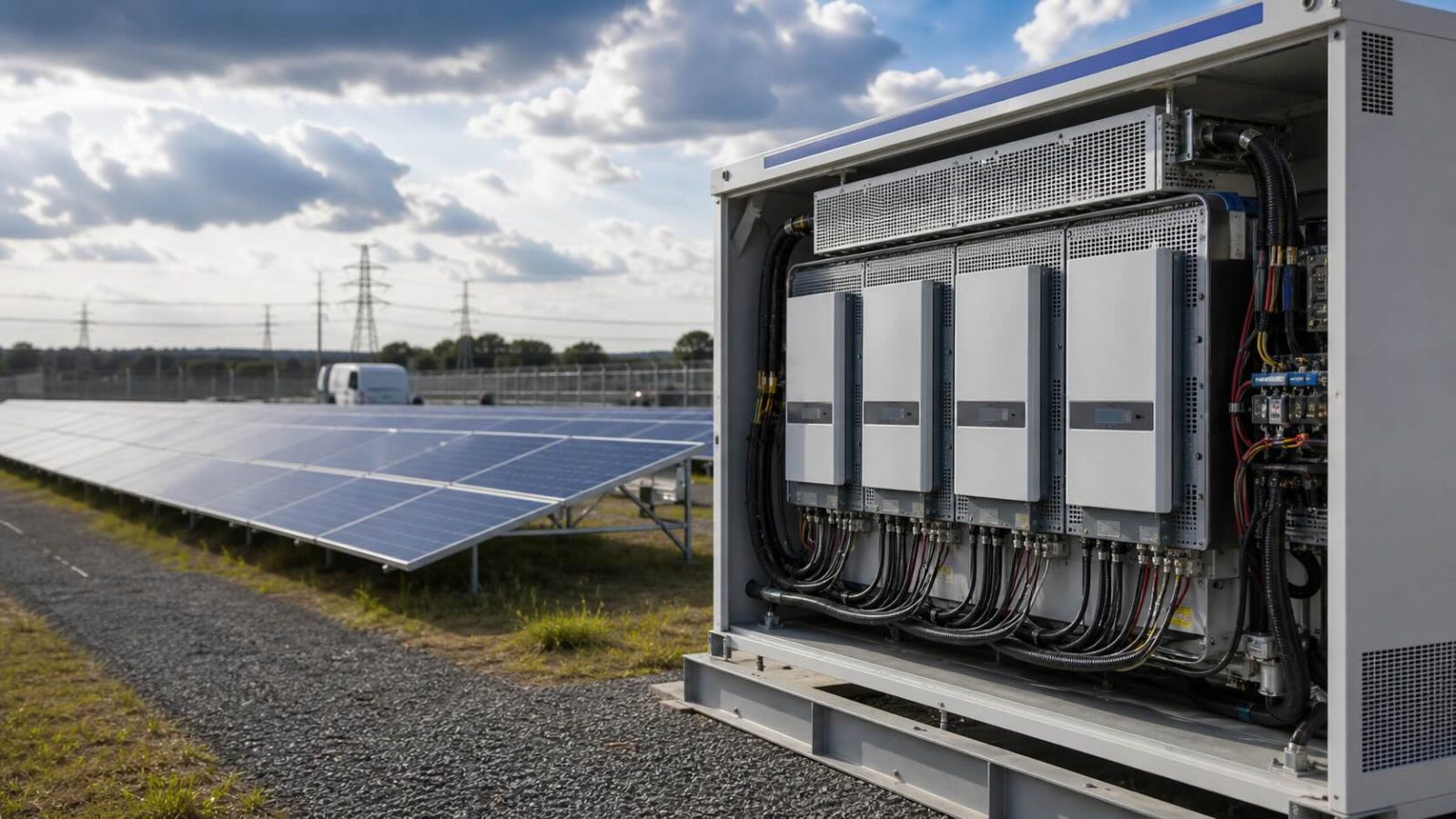
The issue is not solar panels themselves, but inverters: the equipment that converts electricity from solar or wind installations into usable power and helps manage connections to the grid. Inverters are increasingly treated as sensitive infrastructure because they are digitally connected, remotely managed and embedded inside electricity systems.
European policymakers want to reduce dependence on Chinese technology in strategic clean-energy supply chains. But companies and investors warn that restrictions on EU funding for Chinese-made components could slow projects in countries where public money is essential to make renewable investments viable. The warning was reported in direct Reuters coverage of the risk that EU curbs on Chinese components could halt renewables rollout in poorer countries.
Security versus deployment speed
The security argument is straightforward. Europe does not want critical power infrastructure dependent on suppliers that could be subject to foreign state pressure. Inverters can theoretically create cyber, data or operational vulnerabilities if remote-access systems are compromised or controlled by hostile actors.
That concern fits a wider EU shift. Brussels has already moved towards stronger economic-security tools, including public-procurement restrictions, foreign-subsidy scrutiny and supply-chain diversification. EU Today has recently covered how the Commission is seeking to reduce strategic dependence through digital sovereignty and supply-chain measures.
But the deployment problem is equally real. If Chinese inverters are cheaper, widely available and already built into project plans, removing them from publicly supported projects can increase costs, require redesigns and delay financing.
Uneven impact across the EU
The impact would not be evenly distributed. Wealthier member states may be able to absorb higher equipment costs or offer national support for alternative suppliers. Poorer member states, especially those relying on EU funds to build renewables, have less room.
That creates a risk that economic-security policy slows decarbonisation precisely where public finance is most important. The EU wants faster renewable deployment to cut fossil-fuel exposure, reduce emissions and improve energy security. Yet restrictions on low-cost components could make some projects harder to deliver.
The Commission’s Net-Zero Industry Act is designed to strengthen European manufacturing capacity in clean technologies. But European supply cannot be scaled instantly. Until alternatives are available at price and volume, restrictions can create bottlenecks.
A supply-chain realism test
The inverter debate is a realism test for EU industrial strategy. It is easy to call for de-risking from China. It is harder to decide who pays when de-risking raises costs.
If Brussels wants member states to avoid Chinese components in critical infrastructure, it may need to provide transition support, procurement guidance and a clear list of acceptable alternatives. Otherwise, the burden falls on project developers, local authorities and consumers.
There is also a timing issue. Renewable targets are already under pressure from grid bottlenecks, permitting delays and financing costs. Adding component restrictions without a sufficient transition period could slow delivery.
Not just protectionism
The EU should avoid framing the issue only as protectionism. There are legitimate cybersecurity and resilience concerns. Electricity systems are strategic assets, and remote access to grid-connected equipment is a serious matter.
But security policy must be implementable. If rules are too abrupt, they can undermine the energy transition. If they are too weak, they may leave critical infrastructure exposed.
The solution is likely to require risk-based rules: tougher standards for high-risk components, certification requirements, transparency on software and remote access, and support for European or trusted-country alternatives.
The difficult middle ground
Europe’s clean-energy transition has benefited from low-cost Chinese manufacturing. Europe’s economic-security agenda now seeks to reduce that dependence. The inverter dispute shows the difficult middle ground between those two facts.
Brussels can restrict risky suppliers, but it cannot wish away the cost. If the EU wants secure clean-energy supply chains, it must build them quickly enough that security rules do not become a brake on renewable deployment.
Post Views: 1,056










Leave a comment