
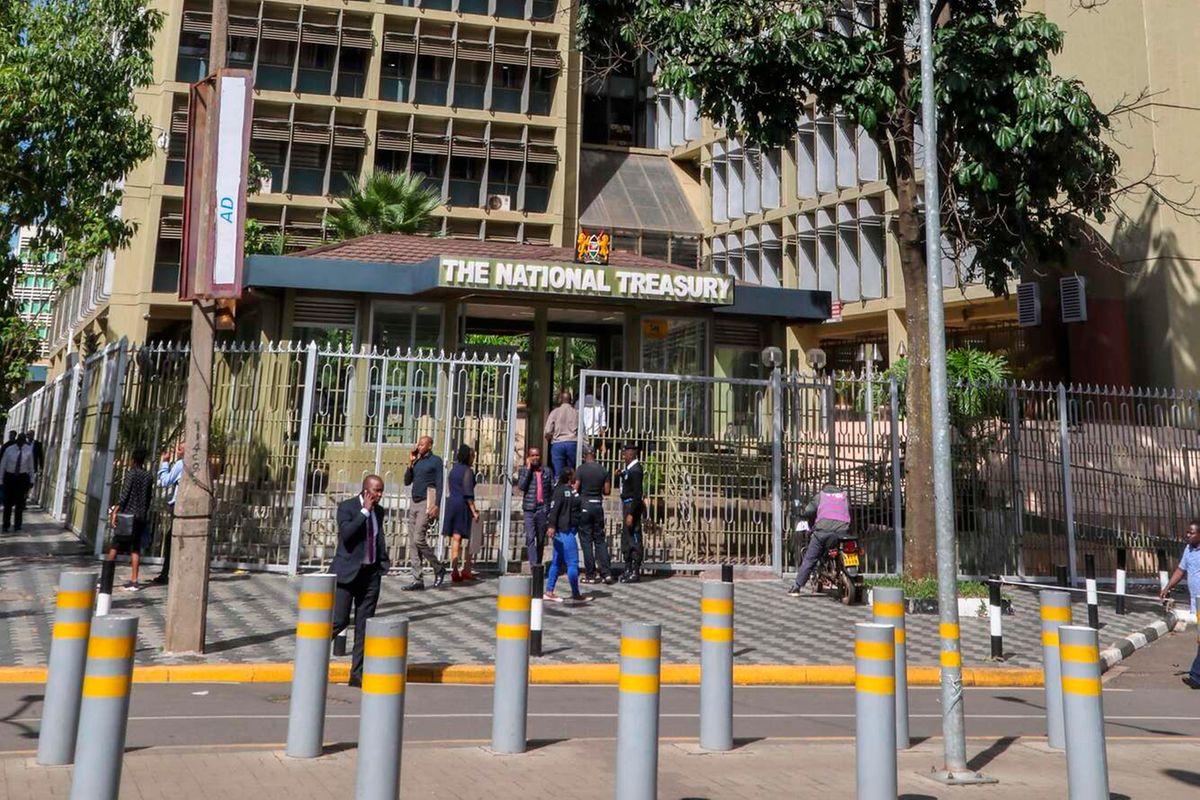
The government will extend the Treasury Single Account (TSA) framework to county governments from July, committing to a plan aimed at tightening control of public cash flows and the management of pending bills.
The rollout marks a major shift in how counties handle public money, moving away from fragmented bank accounts spread across commercial banks toward a more centralised cash management structure controlled through the National Treasury and the Central Bank of Kenya (CBK).
The reforms come as the government intensifies efforts to tighten expenditure controls, reduce pending bills, improve visibility of public cash balances, as well as easing pressure from expensive short-term borrowing amid growing fiscal strain.
What is the Treasury Single Account (TSA)?
The TSA is a unified structure of government bank accounts that allows public money to be consolidated and managed centrally instead of being scattered across multiple standalone accounts.
Under the model, ministries, departments, agencies, and now, eventually, counties, transact through linked accounts operating under a central treasury framework at the CBK.
The system allows the government to monitor cash balances in real time and optimise utilisation of available funds before resorting to borrowing.
Why is the government extending the TSA to counties?
The National Treasury says the move is intended to improve cash management, strengthen oversight of public funds, and tighten control of pending bills within devolved units.
For years, counties have operated numerous commercial bank accounts holding billions of shillings, even as suppliers remain unpaid and the Treasury borrows expensively to meet financing obligations. The fragmentation has complicated visibility over county cash positions and weakened accountability in expenditure management.
Treasury Cabinet Secretary John Mbadi says the extension will start with automation of county exchequer requisition processes before the devolved units progressively migrate into a TSA structure similar to that of the national government.
The reforms are also expected to support broader fiscal consolidation efforts as Kenya grapples with widening deficits, rising debt obligations, and constrained borrowing space.
How will county revenue collection change under the TSA system?
County governments currently collect own-source revenue such as parking fees, business permits and market charges through accounts held in commercial banks. Under the TSA system, these collections will no longer remain independently usable at department level once deposited.
Instead, revenues will be routed into a centralised structure where balances are visible and managed within the broader Treasury framework. This means counties will still collect money, but their ability to immediately deploy those funds locally will be significantly constrained.
What happens to existing county bank accounts?
Instead of functioning as independent spending accounts, county bank accounts will operate within a TSA-linked system where balances are either pooled or mirrored in real time at the CBK.
This means counties will no longer treat commercial bank accounts as standalone financial hubs.
They will instead function as controlled transaction points within a centrally monitored system, with the Treasury maintaining oversight of overall liquidity and usage patterns.
How will counties request and access funds for spending?
Under the TSA framework, counties will be required to submit formal payment requisitions through a standardised digital platform connected to the National Treasury. These requests will originate from county departments but must pass through a central validation process before cash is released.
Once a request is submitted, it is checked against available liquidity across government accounts, and approved payments are released into designated settlement accounts for execution.
How could the reforms affect counties and suppliers?
The government expects the TSA rollout to strengthen management of pending bills, which remain one of the biggest operational and political challenges facing counties.
Many suppliers have for years complained about delayed payments despite counties receiving regular exchequer disbursements from the National Treasury.
The reforms are set to improve payment tracking and reduce situations where counties hold cash in some accounts while contractors and suppliers remain unpaid elsewhere.
The transition could, however, also reduce flexibility over how individual departments manage funds, as cash utilisation will increasingly fall under centralised oversight structures.
The automation of exchequer requisitions is expected to standardise how counties request and process funds before eventual migration into the broader TSA architecture.
Why are commercial banks likely to feel the impact?
Commercial banks have historically benefited from large government deposits held by ministries, agencies and county governments across thousands of public sector accounts.
Those deposits provide banks with liquidity that can support lending, investments and treasury operations.
As public cash becomes increasingly consolidated under the TSA framework at the CBK, commercial banks could lose access to part of those balances.
The shift could particularly affect smaller banks that rely heavily on government deposits for liquidity support. The national government’s earlier TSA rollout already reduced some balances previously circulating within the banking system.
Will the TSA resolve Kenya’s public finance problems?
While the TSA can improve cash management and reduce waste linked to fragmented accounts, it does not automatically eliminate issues such as budget deficits, corruption, weak procurement practices or excessive spending. The reforms mainly strengthen visibility, coordination and control of available public cash.
Kenya still faces broader fiscal pressures driven by rising debt repayments, weak revenue collection and growing expenditure demands across both national and county governments.
Stronger cash management systems can, however, reduce unnecessary borrowing costs, improve payment efficiency and tighten accountability over public resources.













Leave a comment