
10th meeting of the Advisory Committee on Special Committee on Pensions
Professor Park Myung-ho and member Yoon Seok-myung
“We must be careful about the illusion of operating returns”
Emphasis on financial stability such as automatic adjustment devices
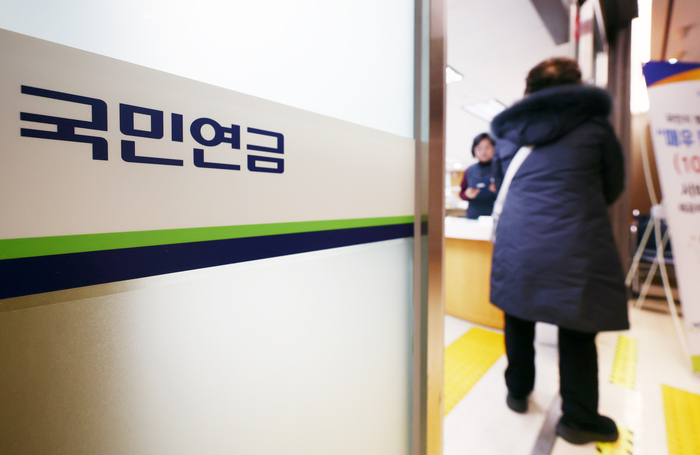
![[Photo = News1]](https://wimg.mk.co.kr/news/cms/202605/29/rcv.NEWS1.NEWS1.20260219.2026-02-19T140006_1007756181_SOCIETY_I_P1.jpg)
It is analyzed that public pension expenditures will exceed 15% of the total gross domestic product (GDP) in about 60 years due to changes in the demographic structure such as low birth rate and aging population.
Although the return on the national pension is also on the rise due to the recent surge in the KOSPI, it is pointed out that structural reforms are essential to ease the long-term financial burden.
On the 29th, the National Assembly’s Special Committee on Pension Reform held its 10th meeting of the private advisory committee to discuss such pension structural reform measures.
Park Myung-ho, an economics professor at Hongik University, a co-chairman of the private advisory committee, and Yoon Seok-myung, an honorary researcher at the Korea Institute for Health and Social Affairs, an advisor, stressed the need for urgent structural reforms for the sustainability of pension finances.
According to an announcement by honorary researchers Park and Yoon, the total salary expenditure of the national pension, basic pension, civil service pension, and military pension around 2085 is estimated to be 14.96% of the total GDP. In addition, if private school pension benefits and deficit compensation are combined, it is expected to exceed 15%.
According to government estimates, the ratio of national pension benefit expenditure to GDP after pension reform is expected to be 9.3% in 2085. The estimate was made by citing data submitted by the Ministry of Health and Welfare to the Special Committee on Pension during the pension reform in March last year. If the mandatory payment age is extended from 59 to 65, the vehicle is expected to exceed 10.6%, and if it increases to 67, it will exceed 11%.
In addition, if the basic pension system is maintained as it is, the share of expenditure is expected to be 3% of GDP between 2080 and 2085. In addition, the proportion of civil servants’ pensions was 1.21% in 2065, and that of military pensions was 0.15%. The figure includes financial support for deficit compensation.
National Pension Service’s performance raises concerns about deteriorating returns when the fund is exhausted
Professor Park and Yoon, honorary researchers, said, “The unrealized fund management profits, which have temporarily soared due to the recent boom in the domestic and foreign stock markets, are causing the illusion of structural existence,” and emphasized, “We should not forget the reality of long-term unsustainability of the system under the illusion of a good short-term financial market.”
He added, “In the period when the fund is quickly exhausted, the yield will inevitably evaporate due to large-scale asset sales and pressure to secure liquidity.”
He expressed his opposition to some claims that the national pension fund should be injected to compensate for future fiscal deficits.
Professor Park and Yoon, honorary researchers, criticized, “The argument to apply now to the national pension fund, which has enormous accumulation funds with astronomical national debt and deficit-ridden national finances, lacks logical justification.”
“In the event of dependence on general finances, there is a high risk that the fund’s independence will be undermined and the fund will be diverted for other purposes that are not directly related to pensions, depending on political decision-making,” he added.
In particular, he pointed out that 48.9% of the total assets were invested in various welfare projects for low-profit civil servants as of last year, citing the case of the financially supported civil servants pension.
He also argued that structural reforms that balance contributions and supply and demand are urgently needed for the sustainability of the national pension finances. The need to introduce an “automatic adjustment device” is mentioned as one of the reform measures.
The automatic adjustment device is a device that allows you to cut your pension amount if your finances are depleted due to changes in the demographic structure. This is a method of automatically adjusting the pension’s inflation rate to be lower than the actual inflation rate.
Professor Park and Yoon, honorary researchers, said, “This is a representative example of Norway, Japan, and Canada, which have considerable reserves, introducing automatic adjustment devices,” adding, “Two-thirds of OECD member countries have already introduced automatic stabilization devices.”
They suggested, “Future generations are destined to take on enormous debt along with the fear of depletion of funds,” adding, “By sharing the financial responsibilities of the current generation, we will be able to attract trust and participation from future generations.”
National pension premium rate rises to 13%, but OECD “needs to discuss bolder structural reforms”
Earlier, an international organization also predicted that Korea’s pension expenditure would increase at the fastest rate among major developed countries.
According to the April issue of the Financial Monitor report released by the International Monetary Fund (IMF) in April, Korea’s pension expenditure is expected to increase by 0.7% of its current gross domestic product (GDP) between 2025 and 2030. It is predicted that it will record the steepest increase among the “G20 advanced countries.”
The net present value of changes in pension expenditure by 2050 reached 41.4% of GDP, the highest among G20 developed countries.
Net present value is an indicator that evaluates investment value by converting cash flows that can be obtained in the future into present value. The IMF presented the difference between pension expenditure expected in 2050 and pension expenditure in 2025 converted to present value. This means that over the next 25 years, Korea’s pension expenditure will increase by 41.4% of its current GDP, converted into present value.
The OECD recently cited Korea’s pension reform as a major example of fiscal reform. According to the Ministry of Strategy and Budget, the OECD introduced major reform cases to secure member countries’ fiscal sustainability in its recently published ‘Restoring Public Finance’ report.
The OECD analyzed that member countries’ ratio of national debt to GDP rose from an average of 73% in 2007 before the global financial crisis to 110% last year.
In particular, in the pension sector, average pension expenditures in member countries have risen to 9.4% of GDP as of 2023, and countries are pushing for an extension of the retirement age, an increase in the pension premium rate, and the introduction of automatic adjustment devices.
The OECD presented a major example of pension reform that would gradually increase Korea’s national pension premium rate from the current 9% to 13% by 2033.
However, he evaluated that more drastic reforms are needed to cope with changes in the demographic structure in the future. “OECD countries agree on the need to restore fiscal soundness, but the current fiscal reform remains at an incremental level,” the OECD said. “Considering structural fiscal pressures such as aging, low growth, and increased security costs, more drastic discussions on structural reform are needed.”









Leave a comment