
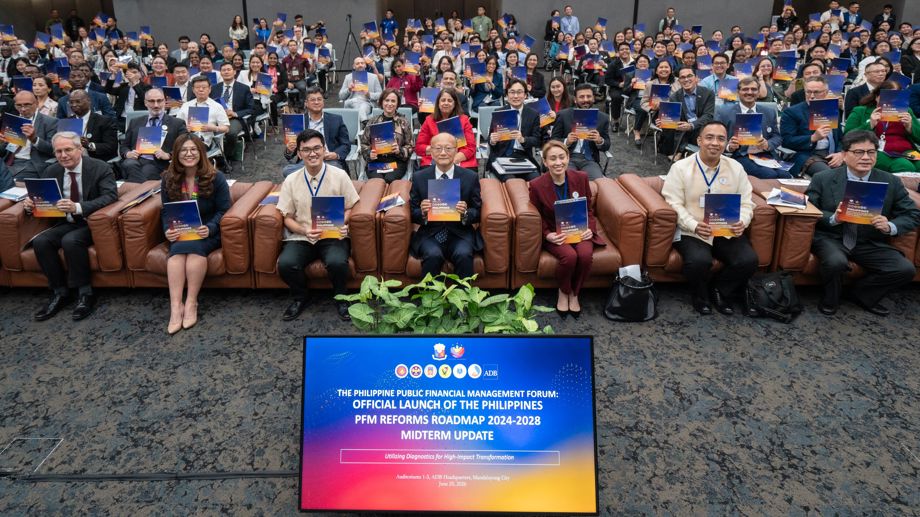
The Philippines has adopted a government-wide roadmap to reform the way public money is managed, with support from the Asian Development Bank (ADB), in an effort to improve public services, strengthen accountability and ensure that government spending delivers greater benefits for citizens.
The Updated Public Financial Management (PFM) Reforms Roadmap 2024–2028, together with its action plan, sets out clear priorities, responsibilities and measurable targets for how public funds are allocated, spent and monitored. The reforms are designed to channel more resources into essential public services, including healthcare, education, infrastructure and social protection.
ADB President Masato Kanda praised the government’s commitment to tackling complex public financial reforms through evidence-based planning, broad stakeholder participation and stronger accountability. He said the reforms demonstrate how every peso can be used more effectively to improve services, strengthen resilience and enhance the lives of Filipino people.
Reforms seek stronger institutions and better protection against corruption
ADB reaffirmed its zero-tolerance approach to corruption and said stronger institutions, tighter financial controls and greater transparency are essential to ensuring development financing reaches the people and communities it is intended to support. The updated reform programme moves beyond planning and into implementation by establishing clearer coordination among government agencies and defining accountability for delivering results. It also identifies the funding and technical support needed for implementation, outlines strategies to manage potential risks and introduces data-driven monitoring systems that will track progress and guide adjustments where necessary. The reform effort is being led by the Philippines’ Public Financial Management Committee, which includes the Department of Budget and Management, the Department of Finance and the Commission on Audit.
Broad consultation shaped the national reform agenda
The reform process began in 2023 with a nationwide self-assessment that engaged more than 1,100 participants, including government officials, local government representatives, financial practitioners, civil society organisations and development partners. The Public Financial Management Committee approved the assessment in June 2024 before submitting it to President Ferdinand R. Marcos Jr. in September of the same year.
In 2025, the government carried out a comprehensive Public Expenditure and Financial Accountability (PEFA) assessment alongside detailed reviews examining how public spending supports climate action, gender equality, disaster resilience and programmes benefiting children. These assessments identified both strengths and areas requiring improvement across the country’s public finance system, providing the evidence used to update the roadmap and its accompanying action plan.
The official launch of the updated roadmap at ADB headquarters on 25 June marks an important milestone. However, officials acknowledged that successful implementation will require sustained political leadership, adequate financial resources, effective coordination and consistent accountability. The Government and ADB said maintaining momentum throughout the reform process will be critical to strengthening public confidence in government institutions while ensuring public funds are managed more efficiently and transparently to deliver better outcomes for communities across the Philippines.











Leave a comment