
The explosive growth of artificial intelligence (AI) is rewriting the rules for semiconductor demand, with memory and storage chips emerging as the next pillars deployed across data centers, model training, and real-time inference.
Companies like Micron Technology (MU +15.40%) and SanDisk (SNDK +16.40%) have delivered jaw-dropping financial results and stock gains as AI systems become increasingly memory-hungry. Yet for many investors, these names look aggressively expensive after their respective run-ups.
A smarter path may lie in a dedicated exchange-traded fund (ETF) that spreads risk across the entire memory and storage ecosystem while keeping costs low and exposure passive. This balanced structure allows investors to ride secular AI tailwinds without betting the farm on any single stock.
Why are Micron and SanDisk stock rallying?
At its core, the boom in memory and storage chip stocks traces directly to how AI development works. Training and running large language models (LLMs) or generative systems requires enormous volumes of high-speed, high-bandwidth memory to move data between processors at lightning speeds.
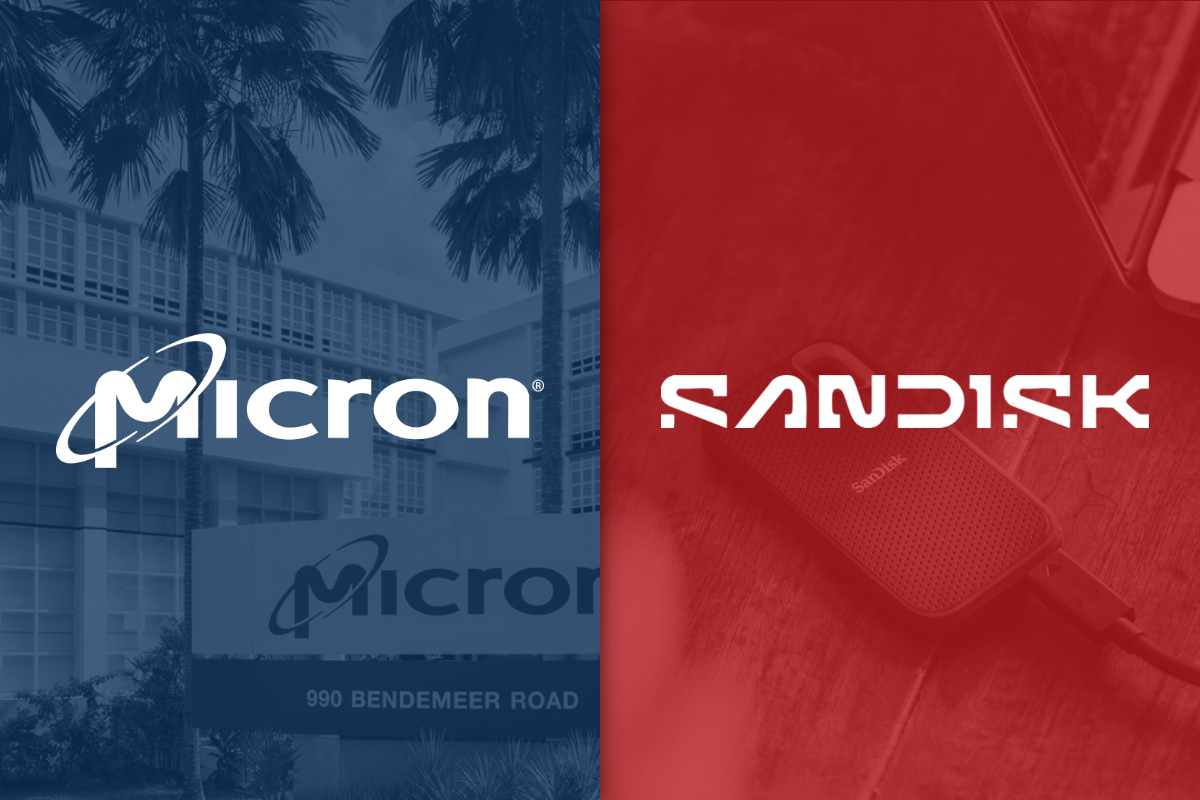
Image source: The Motley Fool.
Micron has capitalized on this theme with its leadership in high-bandwidth memory (HBM), a specialized DRAM variant that is layered directly beside graphics processing units (GPUs) in AI servers. As hyperscalers and cloud infrastructure providers accelerate capacity buildouts, Micron’s HBM3E and next-generation solutions have fueled explosive revenue growth and profit margin expansion far beyond its traditional PC or smartphone businesses.
SanDisk, meanwhile, is riding a complementary wave in NAND flash storage. AI workloads generate and store petabytes of data that need to be retained cheaply and reliably — from training datasets to inference deployment. SanDisk’s flash solutions deliver the density and endurance AI data centers require at scale, turning what was once a commodity business into a high-growth machine.
Both companies are forecast to generate blowout earnings over the coming years because AI demand is not a one-time spike but a structural supercycle: Every new model iteration and expansion of cloud ecosystems multiplies the need for both DRAM and NAND.
AI memory stocks come with valuation and volatility concerns
The price tags on Micron and SanDisk stock raise eyebrows. After sharp rallies, price-to-earnings (P/E) multiples look overextended and may assume continued record levels of AI infrastructure spending and flawless execution from both companies.
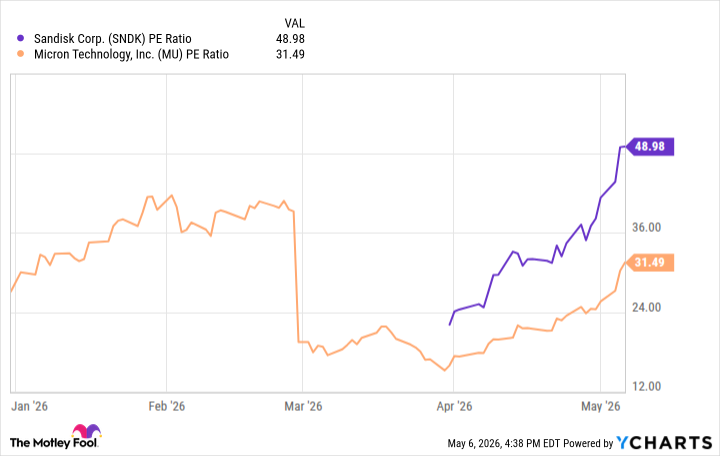
SNDK PE Ratio data by YCharts
Any slowdown in hyperscaler capex, a faster-than-expected ramp in chip supply, or even a temporary pause in model development could trigger a sharp reversion in their respective share prices. Given that memory pricing is notoriously cyclical, oversupply in one quarter could easily erase gains overnight.
Volatility only compounds the issue. Both Micron and SanDisk move materially on earnings releases, geopolitical headlines involving overseas supply chains, or shifts in customer inventory policies. Micron’s heavy bet on HBM ties it closely to the fortunes of GPU designers, while SanDisk’s storage focus exposes it to broader enterprise spending budgets.
For individual investors, this means stomach-churning drawdowns are very much a possibility. The emotional and financial toll of riding these ups and downs often leads to suboptimal timing decisions — selling at the bottom or chasing peaks.
Checking out the Roundhill Memory ETF
Enter the Roundhill Memory ETF (DRAM +13.43%), a vehicle engineered precisely for investors who want exposure to the memory supercycle without the concentration risk of single stocks. Launched just one month ago, DRAM currently holds the following positions:
- Micron Technology
- SK Hynix
- Samsung Electronics
- SanDisk
- Seagate Technology
- Kioxia Holdings
- Western Digital
- Windbond Electronics
This portfolio holds a number of leading pure-play names across the HBM, DRAM, NAND, and memory equipment value chains. One thing I really like about the fund’s composition is that investors also gain global exposure to this segment of the AI chip realm.
With an expense ratio hovering near 0.65% and a share price of about $50, the fund is reasonably priced for the AI memory sector exposure. And given that it is a passive ETF, it undercuts the cost and time of constantly rebalancing an individual portfolio.

Roundhill ETF Trust – Roundhill Memory ETF
Today’s Change
(13.43%) $6.25
Current Price
$52.80
Key Data Points
Day’s Range
$48.90 – $52.80
52wk Range
$26.14 – $52.80
Volume
41M
For passive investors, the DRAM ETF mitigates the need to monitor earnings calls or parse capacity announcements. In a market where timing single names is often a fool’s errand, DRAM offers diversified, low-maintenance participation in what I think will become one of the defining AI themes of the decade. It is a disciplined way to profit from AI memory without letting volatility or valuation concerns cloud your thesis.












Leave a comment