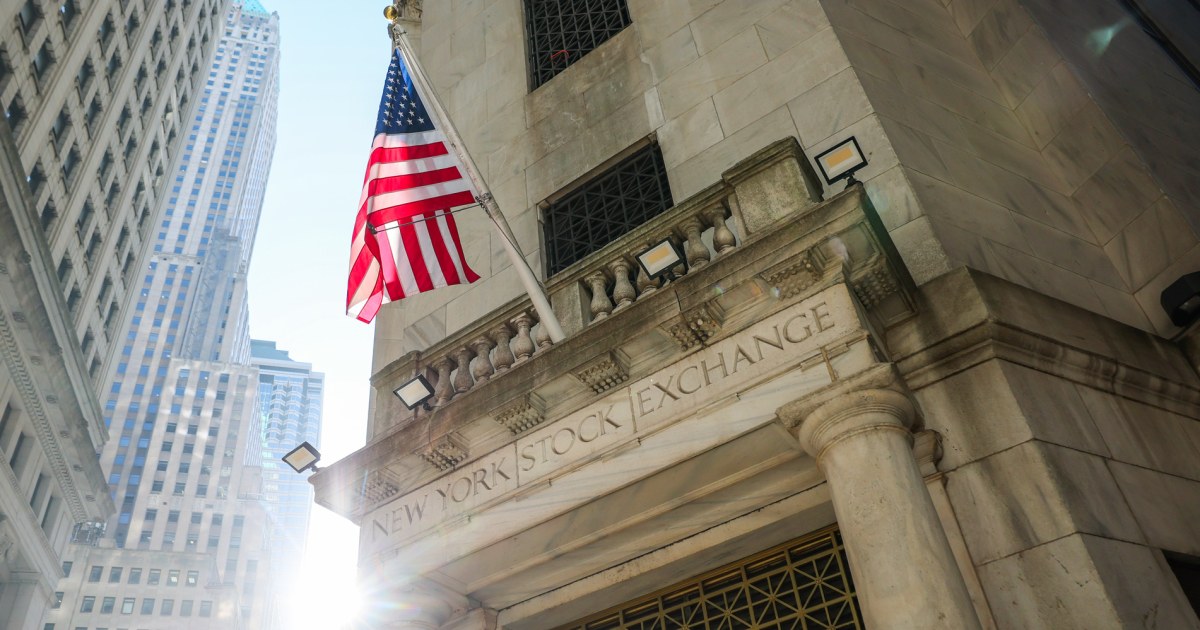
Stocks rose and bond yields fell sharply Thursday after a fresh read on business inflation showed prices were broadly flat in July.
The report fueled optimism on Wall Street that the Federal Reserve may hold off on raising rates this year, after all, even as inflation remains stubborn.
“The July report supports arguments for the Federal Reserve to maintain its current policy stance as inflation pressures show tentative signs of moderating,” PNC Financial Services Group senior economist Kurt Rankin wrote in a note. “While energy prices remain elevated relative to pre-shock levels and continue to influence inflation expectations, the June and July PPI reports provide the first evidence that those pressures may be beginning to ease.”
The S&P 500 jumped 0.6%, while the Nasdaq composite index jumped 0.8%. The Nasdaq 100, which is more concentrated index of the top non-financial stocks traded on the Nasdaq exchange, rose by more than 1%.
The Russell 2000, which tracks small and medium-size companies, also increased. Both the Russell and S&P 500 indexes briefly hit all-time highs in early trading.
U.S. Treasury bonds also jumped higher, which sent their yields tumbling. The 10-year Treasury yield fell as low as 4.61% before rebounding slightly. The 30-year Treasury yield, which had soared to nearly 5.3% in the wake of the Fed’s last meeting, traded around 5.2%.
Those falling bond yields could bring short-term relief to consumers looking to take out a mortgage, loan or refinance debt. Before the drops, the average 30-year fixed-rate mortgage was 6.74%, not far from its highest level this year. By the afternoon, that rate was 6.69%, according to Mortgage News Daily data.
The U.S. Treasury Department also auctioned $25 billion worth of 30-year bonds Thursday at 5.216%, their highest interest rate since 2001.
Earlier, the Bureau of Labor Statistics reported that the producer price index was unchanged from June to July, while falling from 5.5% in June to 4.7% in July on an annual basis.
Using that figure, Wall Street economists began projecting that the core personal consumption expenditures price index, the Fed’s preferred inflation reading, which will be released Aug. 26, would likely rise by only around 0.2%.
“Core PCE should ease to 3.2% [year-over-year] in July,” Citigroup economist Veronica Clark wrote in a note. However, she said that there was still a “risk it could stay at 3.3%.”
She added: “While these prices may rebound in August, we see few signs that higher input costs are pushing up final consumer selling prices.”
Gary Schlossberg, global strategist at Wells Fargo Investment Institute, called Thursday’s business inflation number “friendly,” adding that “slowing PPI inflation last month was well-balanced between core goods and (somewhat unexpectedly) services.”
By midmorning, as investors digested all of this data, bond traders backed off from betting that the Fed would hike rates this year.
However, shortly after the data was released, Cleveland Federal Reserve President Beth Hammack reiterated her frequent call to raise rates.
“I think that we need to act now because I think we need to bring inflation back down to that 2% objective faster than what a longer-term glide path would say with interest rates at this level,” she said, referring to the Fed’s long-held target for inflation.
Hammack was also one of three Fed officials who dissented during the central bank’s most recent interest rate meeting, wanting a rate hike instead of holding rates steady.
The Fed’s policy-setting committee is scheduled to make its next interest rate decision in mid-September.








Leave a comment