

The plan was announced in Liverpool but has its roots firmly in Westminster. The Your First Home scheme, unveiled by prime minister Andy Burnham at last week’s Labour Party conference, will resurrect financial support for first-time buyers. It can be seen as a replacement for the previous Help to Buy scheme, which closed to applicants in October 2022, and is something the housebuilding industry has long been lobbying for.

Home ground: the PM has vowed to help first-time buyers without access to the ‘bank of mum and dad’
The basic mechanics of Your First Home are, in theory, simple. Eligible first-time buyers in England will be able to purchase a new-build home with a deposit of just 2.5%. The government will provide an equity loan worth 20% of the property’s value, interest-free for an initial period.
As Burnham outlined in his conference speech, the aim is to help those who do not have the ‘bank of mum and dad’ to rely on for their first home purchase.
However, it will be the mechanics of how the new scheme is structured that will determine its success in boosting the housing market.
Angus Irvine, partner and head of Rapleys Living, the property adviser’s residential agency team, believes Your First Home will provide a welcome jolt for the market, but not a silver bullet.
The industry will want to see lessons have been learned from Help to Buy
Angus Irvine, Rapleys Living
“The industry will also want to see that lessons have been learned from Help to Buy,” he says. “That scheme helped hundreds of thousands of households on to the ladder, but was criticised for pushing up new-build prices and leaving some buyers overstretched. Some thought it should have been called Help to Sell. The government certainly did well out of it.
“For these reasons, there are significant numbers of naysayers over initiatives like this. But we shouldn’t forget that the government will get up to £2bn returns from the scheme – assuming all payments are made – and that money is returned to taxpayers. Either way, getting the design right this time matters.”
Building confidence to buy
Chris Gardner, chief executive of development finance lender Atelier, says the new scheme appears to have a strong basis. “By offering 2.5% deposits, plus a government-backed equity loan of 20% of the property’s value, the confidence-to-buy gap should begin to close,” he says.
However, Gardner is concerned about potential ambiguity around any proposed income cap for applicants to the scheme.
“Earlier schemes benefited from broad eligibility criteria that maximised access, whereas income restrictions risk limiting participation, unless they are tailored to regional incomes and the affordability pressures facing first-time buyers across England,” he says.
“We hope the government properly consults with developers, development financiers and mortgage lenders to ensure that the scheme works end to end.”
According to one unnamed housebuilder, the new stimulus from Your First Home could result in more homes being built that fit a first-time-buyer profile within a relatively short space of time.
This is because big housebuilders often gain consent for schemes in phases, and as they build multi-year developments, planning permissions can be tweaked without needing a whole fresh consent.
“We monitor what is moving quickly and what are slow sellers,” she says. “If we have slow-selling units on a site, on anything we haven’t started, we’ll go back and modify it.”
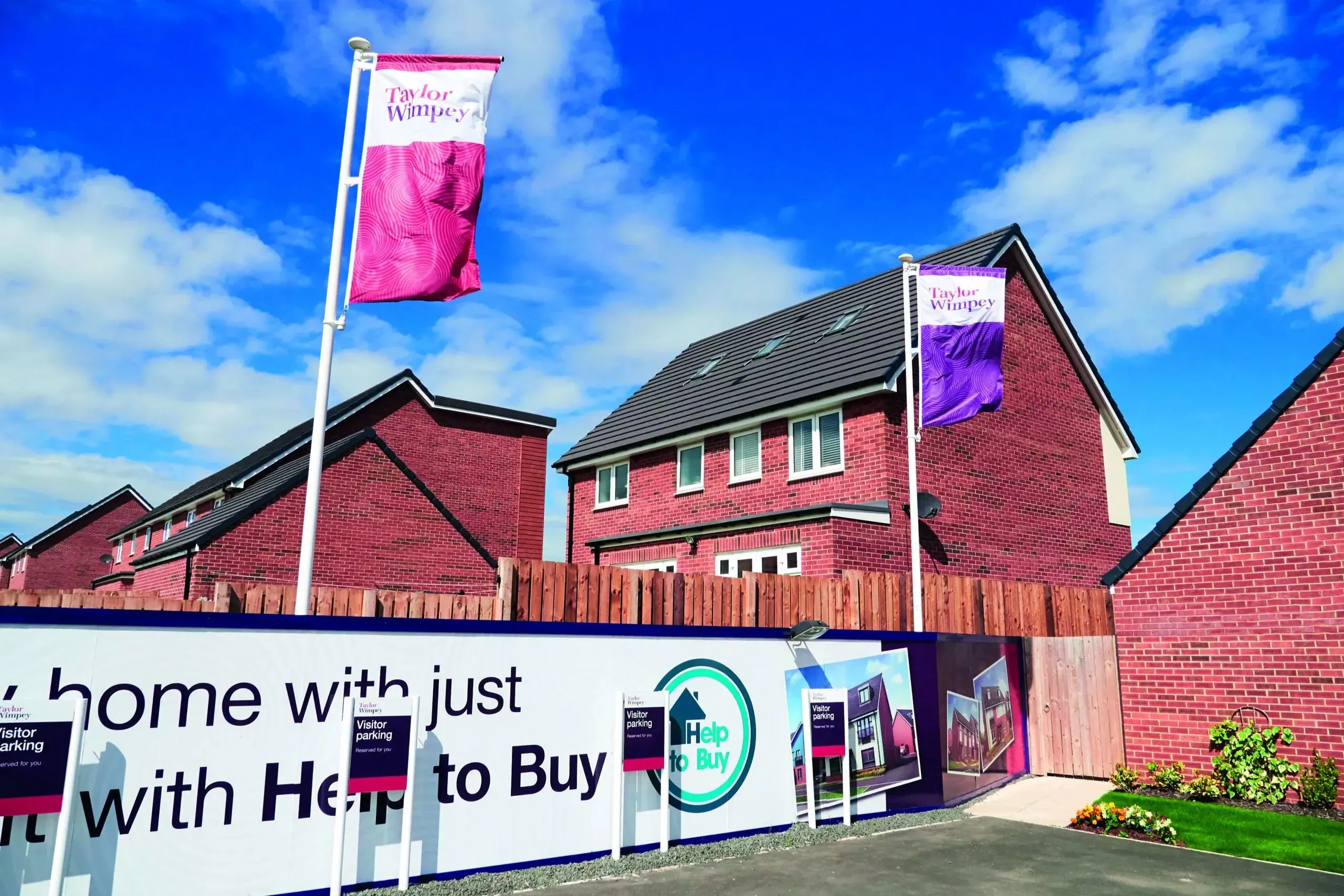
Help to Sell: some argue that the Help to Buy scheme helped to inflate house prices
She explains that this involves using a Section 73 notice to vary an existing planning consent, effectively “going back to a local authority and saying ‘look, we want to swap some house types around’”.
She adds: “Essentially, we are building what the market demands. Having built stock that isn’t selling doesn’t help anybody.”
Meanwhile, while there is some evidence to back the argument that reintroducing help for first-time buyers will be a stimulus that pushes up prices, it is hard to single out the extent to which prices were affected by Help to Buy, among other factors.
To understand the impact of Help to Buy, and possibly provide an evidence base for the new scheme, the Ministry of Housing, Communities and Local Government commissioned Verian, Sheffield Hallam University and Alma Economics to evaluate the scheme’s influence on prices in England between 2013 and 2023.
This study, published last month, notes that, “on average, the price for a home bought through the Help to Buy scheme was around 1% more expensive than another new-build property with similar characteristics in the same area”. The results also reveal that new home prices in London may have been inflated by 2% over the first phase of the programme.
But one housing source tells Property Week that the 2% figure can be misleading, as it only accounts for the impact on new-build homes. The secondary home market was not part of the Help to Buy scheme and was less affected.
Earlier schemes benefited from broad eligibility that maximised access
Chris Gardner, Atelier
What has perhaps been less discussed is the overall benefits of Help to Buy. The same study reveals that the scheme is one of the best value-for-money programmes introduced by government in recent years.
The report states: “The scheme is estimated to have generated a net present social value of £25.1bn. Approximately £28.6bn of benefits are derived from the support the scheme provided to increase new housing supply estimated to be attributable to the Help to Buy scheme.”
So, for the Burnham government, which has stated an aim to boost growth “in every postcode”, Your First Home may look like a no-brainer – especially if it creates less price inflation than some expect.
One housebuilding source tells Property Week that volume of sales is key to some housebuilders’ business model: “What Your First Home may do is increase the speed of sales. That is especially true for some of the partnership housebuilders, the Vistry, Keepmoat and Lovells of this world.”
Pace of sales is key
Irvine agrees, noting that on many sites the main constraint to housing is not gaining planning consent, but absorption, meaning the pace at which new homes can be sold.
“A housebuilder may hold a perfectly good consent, but if it cannot be confident of selling homes at a reasonable pace, it will not commit the capital needed to build them at scale,” he adds. “And that’s without considering the sheer volume of regulatory compliance required before even considering starting on site.”
While many in the industry have welcomed the Your First Home scheme, not everyone is convinced it will work, partly because the world has changed since Help to Buy was launched in 2013.
With the housing sector having been hit by Brexit, Covid, the Iran war and rising global interest rates in the past 10 years, Noble Francis, economics director at the Construction Products Association (CPA), warns that Your First Home may not have the same impact as its predecessor.
If the capital wants to invest, what is stopping us from building homes?
Anne Breen, Aberdeen Investments
“When Help to Buy was announced, there was a sustained recovery from a low base,” he wrote in a post last week. “Help to Buy loans took off gradually, as government signalled to potential homebuyers it would underpin housing, boosting homebuyer confidence.”
He added: “There was funding stimulus with the Funding for Lending Scheme and the initial Help to Buy, and interest rates were at historic lows.”
According to Francis, additional costs for housebuilders since Help to Buy ended, partly linked to recent government regulations, haven’t helped. He cites the residential property developer tax, biodiversity net gain, water and nutrient neutrality, Section 106 and Community Infrastructure Levy (CIL) payments.
Further upcoming costs for housebuilders include the Building Safety Levy, introduced this month, and the Future Homes and Buildings Standards, which will be enforced from next March.
Francis isn’t the only one who has warned of the greater cost of housebuilding. Research from UK Property Development shows that out of the 522,714 homes currently listed for sale across Great Britain, only an estimated 42,162 are new-build properties, meaning they account for only 8.1% of all available listings.
More private sector input
Gardner is keen to see further details of the scheme, but acknowledges that the private sector may be asked to provide more in terms of input than it did for the previous scheme.
Some housebuilders may need more support than others, he adds. “The government has announced that developers will be required to contribute, and, as with understanding regional disparities, it’s essential that SME developers are acknowledged and contribute proportionately.
“With SME builders’ share of England’s housing delivery having fallen from 40% to just 10% in the past few decades, any unfair cost burden risks [damaging] one of the sector’s most important sources of local, nimble housing delivery.”
It can be argued that Labour has spent a considerable amount of time looking at how planning reform can unlock new development. However, Anne Breen, global head of real estate at Aberdeen Investments, says this alone hasn’t been enough to bring more investors into the market.
“Planning delays, policy uncertainty and inconsistent regulation continue to create friction for investors whose investment horizons are measured in decades rather than years,” she says. “Other markets face challenges too, but many are finding ways to reduce those barriers.
“The UK remains an outlier more often than it should be. Perhaps the biggest mistake we make is treating housing as a collection of separate problems,” Breen says, adding that investors are looking to commit, but waiting for “confidence in the rules”.
She adds: “From where I sit, the more important question is this: if the capital already wants to invest, what is still stopping us from building the homes that people need?”
The prime minister and a government still committed to hitting its 1.5-million-homes target in this parliament will be hoping Your First Home completes another piece of the housing jigsaw.





Leave a comment