
The playbook that worked for decades has stopped working.
That’s the case Adam Parker is making. The founder of Trivariate Research and former Chief US Equity Strategist at Morgan Stanley returned to Ticker Take this week with a question every investor needs to think about: if the market sells off, what actually protects you?
Most defensive stocks aren’t defensive anymore.
The playbook that worked for decades has stopped working.
That’s the case Adam Parker is making. The founder of Trivariate Research and former Chief US Equity Strategist at Morgan Stanley returned to Ticker Take this week with a question every investor needs to think about: if the market sells off, what actually protects you?
Twenty-five years ago, that question had a clean answer. You bought staples, utilities, telecoms and pharma. Those traditional defensive sectors together made up about 30 per cent of the S&P 500.
Today, they account for closer to 10 per cent. And many of the names that did the heavy lifting back then have spent the last few years missing earnings more often than the rest of the market.
Parker’s blunt metaphor: “It’s like hitting an iron off the tee to play safe and then hooking it out of bounds anyway.”
So his framework for the new defensive names isn’t sector-based. He starts with stocks that have positive earnings revisions over the past six months. Then he layers in low beta that has actually held up in real market downturns, narrow analyst dispersion, positive forecasted earnings growth, and reasonable valuations. Consistent dividend growth helps. The goal is stocks that protect capital when the market sells off, not ones that just sound defensive on paper.
With that framework in mind, here are the 7 stocks he highlighted.
The biggest health insurer in America. The stock had a brutal 2024 before bouncing back hard, but Parker’s reason for owning it doesn’t hinge on the bounce. It hinges on pricing power. “I run a small business,” he told us. “We use UnitedHealth. Guess what? They have massive pricing power over me.” Parker expects the company to keep raising prices on employers in the range of 7 to 9 per cent a year.
Not a pure defensive name, but Parker argues it earns its place on the list anyway. Microsoft is so deeply embedded in how businesses operate, from Outlook and Excel to LinkedIn and code storage, that customers can’t easily walk away. “It’s hard for me to see a collapse in their earnings,” he says. In a downturn, that kind of stickiness is what defense is supposed to look like.
Along with Mastercard, one of the most reliable compounders in the market. Parker points out that Visa has compounded at a high rate since the Durbin amendment took effect in 2011, holding up through multiple cycles. Concerns around stablecoins and consumer spending haven’t broken the model. In a big market decline, Parker thinks the global payments network is exactly the kind of business that protects capital.
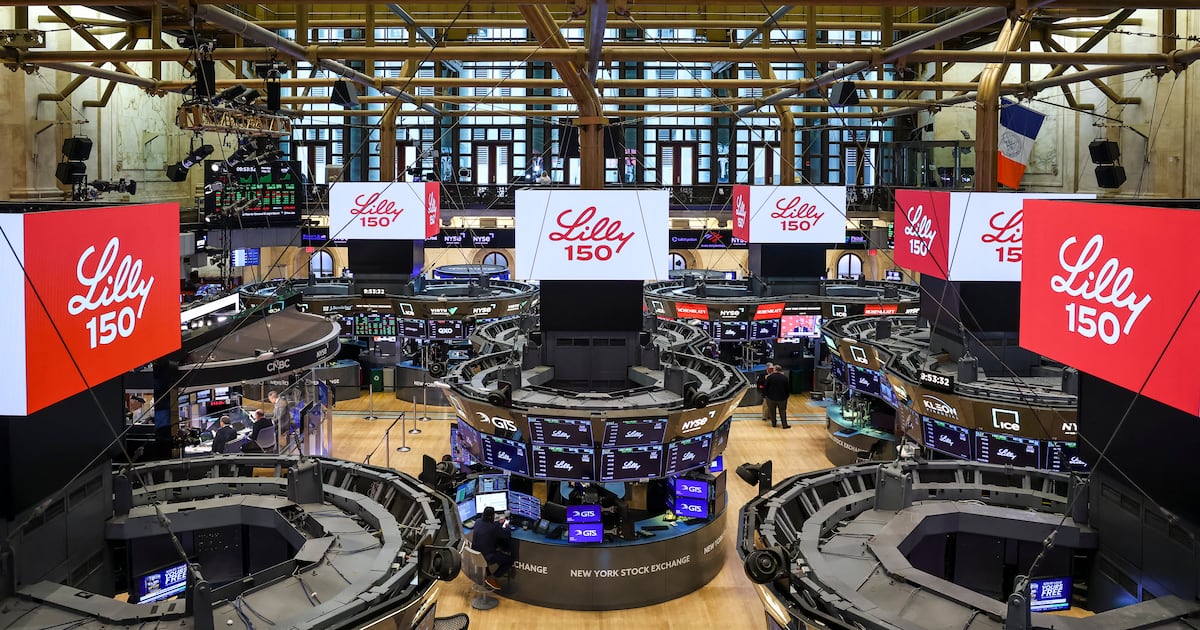
Parker compares the GLP-1 opportunity to the early days of AI. People thought it was overhyped. He thinks the data shows otherwise. Over time, he sees the drugs becoming easier to take, with fewer side effects, available in pill form, and accessible to more patients. “If 40 per cent of America is obese and 70 per cent are overweight,” he says, “there’s just a lot of opportunity.” He expects Lilly to be advertising those drugs for years to come.
A diversified pharma giant that gets less attention than its size warrants. Parker likes the mix: Humira and a strong immunology franchise, growing oncology, and consumer products including Botox. Owning large healthcare without AI or semiconductor exposure is exactly the kind of defense Parker is looking for.
Abbott Laboratories (ABT)
A different shape of healthcare exposure: medical devices, diagnostics, nutrition and cardiovascular products. Parker views it as a complement to the more traditional pharma names on his list, with the same broad healthcare tailwinds and a different operating profile.
The snack giant behind Oreo, Chips Ahoy, Toblerone, Swedish Fish and Sour Patch Kids. “All the food that you try not to eat,” as Parker puts it. He sees it as one of the better names in consumer staples, with potential for above-GDP growth and margin expansion, and a modest hedge against the GLP-1 trend reshaping consumer behaviour.
The Ticker Take
Parker isn’t telling investors to abandon the idea of defense. He’s pointing out that the names that used to provide it often don’t anymore.
That’s why this list looks the way it does. There’s still healthcare here. But there’s also a software giant, a payments network, and a managed care company. If you’re trying to play defense in this market, you need a different playbook.
Jon Erlichman is a BNN Bloomberg contributor and the host of Ticker Take on YouTube.






Leave a comment