
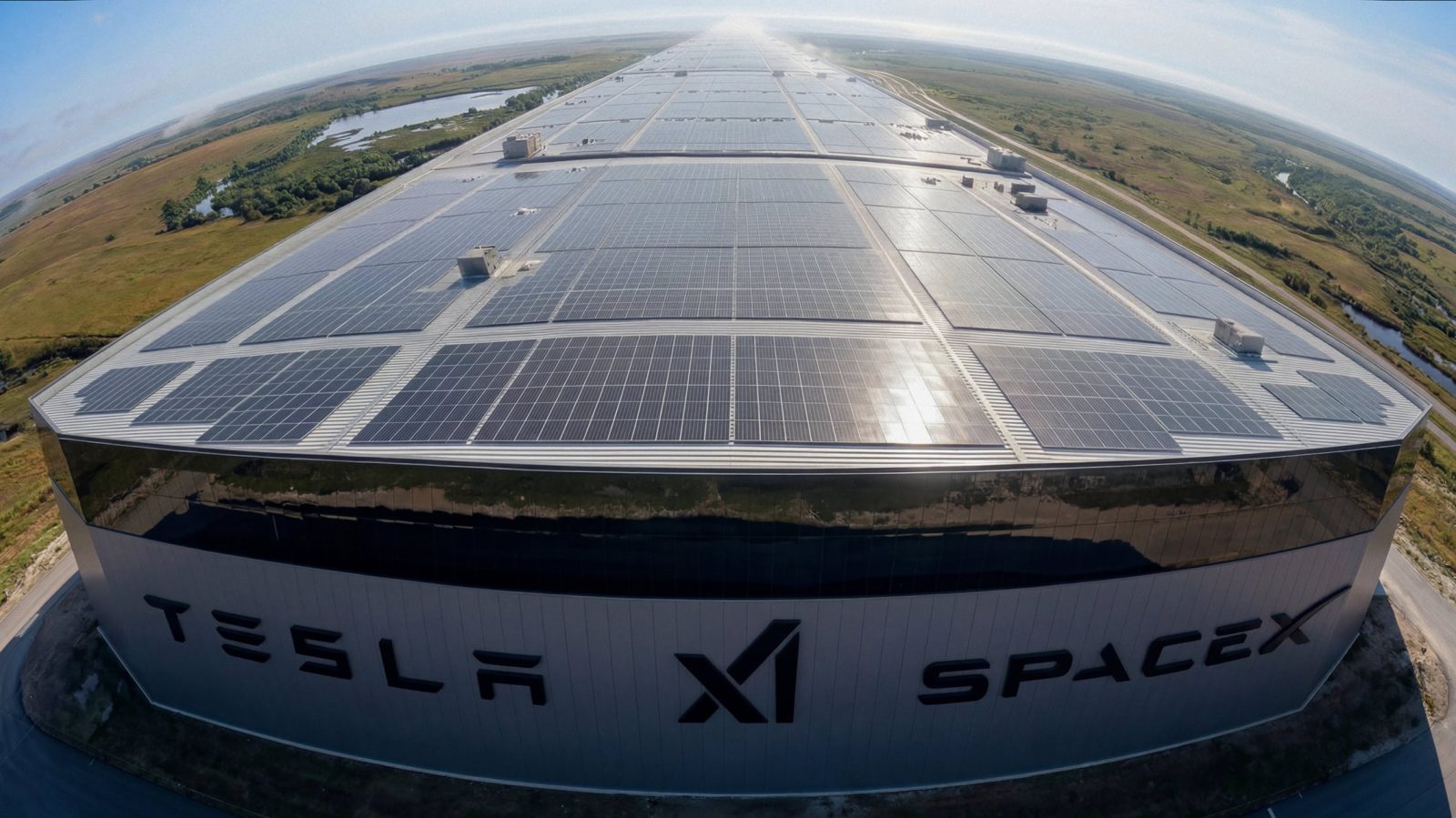
SpaceX released renderings of its 100,000,000 square foot Terrafab facility last week, a building roughly 15 times the size of the Pentagon and designed in part to break the memory oligopoly controlled by Micron, SK Hynix, and Samsung. That threat sharpens the question for anyone holding semiconductor exposure inside a retirement account: should you own Micron Technology (Nasdaq: MU | MU Price Prediction) or Lam Research (Nasdaq: LRCX) right now?
Micron has the bullseye on its back. Lam sells the deposition and etch tools every new fab, including Terafab, will need. That distinction matters more than the shared “AI memory” label suggests. SemiAnalysis estimates Musk’s 10-gigawatt plan could command $300 billion to $500 billion in 2027 capital spending, and virtually none of that hurts Lam. To the contrary, much of it could land in Lam’s order book.
Yield and Capital Returns: Lam Wins
Neither Micron nor Lam is a dividend stalwart, but retirees still care about the discipline behind the payout. Micron pays a $0.15 quarterly dividend on a stock trading near $850, a yield of roughly 0.06%. Lam pays $0.26 quarterly and yields 0.34%, backed by a longer history of consistent raises and aggressive buybacks. Micron has repurchased $650 million over nine months, respectable but a fraction of Lam’s pace. Advantage Lam.
Volatility and Cyclical Risk: Lam Wins Again
This is where retirement portfolios live or die. Micron shares have traveled from a 52-week low of $113.28 to a high of $1,255, with a beta of 2.213. GAAP gross margin swung from 37.7% to 84.6% in a single year. That is textbook late-cycle memory behavior, and precisely the pricing power Terafab is designed to attack. One Reddit post making the rounds compared Micron’s setup with a June 2000 Forbes profile published one month before the dot-com bubble burst.
Lam’s beta of 1.865 is still elevated, but the underlying business is steadier. Quarterly revenue climbed from $5.32 billion to $5.34 billion, $5.84 billion, and then $6.72 billion, with gross margin reaching 51.7%. Sales are also spread across China, South Korea, Taiwan, Japan, and the U.S. Terafab does not have to break the memory oligopoly for Lam to win. Lam can sell into the project itself and again when incumbents defend their position by expanding.
Growth Trajectory: Micron Wins
On raw acceleration, this is not close. Micron’s Q3 FY26 revenue hit $41.46 billion, up 345.7% year over year, with non-GAAP EPS of $25.11 per diluted share against a $20.28 consensus. Guidance for Q4 calls for $50.0 billion in revenue and $31.00 EPS. Lam’s Q4 FY26 grew 30% to $6.72 billion, with EPS of $1.82. Both are strong, but Micron is compounding faster by an order of magnitude. Advantage Micron, with the caveat that this is the top of a cycle Musk is openly targeting.
The Verdict
For a retirement-focused investor, Lam Research is the winner. Two of the three dimensions that matter most to a portfolio meant to fund living expenses, income durability and drawdown risk, favor Lam decisively, and the third, growth, favors a Micron earnings report that is almost certainly a cyclical peak.
Micron’s forward P/E of 5.5 looks tempting until you remember cyclical stocks look cheapest at the top. Lam trades at a richer forward P/E of 33.2, but the earnings behind that multiple are far more repeatable, and Terrafab’s $300 to $500 billion in projected 2027 capex flows, per Semi Analysis, directly into Lam’s product catalog.
Growth-oriented investors with a long runway and a tolerance for 50% drawdowns have historically used Micron as a vehicle for the AI memory upcycle. Retirement-focused portfolios may find the picks-and-shovels exposure more suitable, considering Lam gets paid either way.
Contact [email protected] for any questions or corrections.












Leave a comment