
The June Climate Meetings, being held in Bonn from 8 – 18 June, offer a critical opportunity to deliver the push needed to move the world to a low-carbon future
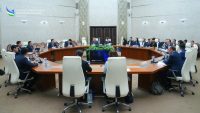
UN climate negotations meeting in Bonn. Photo Credit: Mark Lutes / WWF.
Bonn, Germany (1 June 2026) – Governments meeting next week in Bonn to speed up climate action must send a strong signal that they are ready to move from deliberation to delivery, says WWF. All eyes are now on whether countries will turn their Paris promises into faster cuts to emissions, stronger protection for people and nature, and more finance where it is needed most.
Against a backdrop of geopolitical tension, recent moves in Colombia and at the United Nations have sent a clear signal: stronger climate action is both urgent and possible.
At the Santa Marta conference in Colombia, 57 countries launched a coalition to speed the shift away from coal, oil and gas, moving the debate from promises to delivery.
At the UN General Assembly, 141 countries backed a resolution supporting the International Court of Justice’s landmark climate opinion, giving political direction for countries to align laws, policies and international cooperation with clear climate obligations.
Building on the growing momentum, countries must now match the pace with measurable, investable transition plans that put the world on a low-carbon pathway. That means a just, fair, and equitable transition away from fossil fuels, backed by sufficient finance to drive the shift and support people and countries through it. It also means strengthening resilience, improving the features of national climate plans, and backing initiatives launched at previous COPs, including roadmaps for moving away from fossil fuels and halting and reversing deforestation.
Bonn must set the stage for delivery at COP31 in Antalya, Türkiye, this November. Yet that task is unfolding in a fractured geopolitical landscape and under mounting global economic pressure, making consensus on critical issues even harder to reach.
Against that backdrop, Manuel Pulgar-Vidal, WWF Global Climate and Energy Lead and COP20 President, said: “The fight now is no longer over decisions, but delivery. Negotiators must show they can rise above today’s global pressures and answer the world’s call for a safe, liveable future for all. The UN climate talks remain the central forum for setting direction, coordinating action, and holding countries to account. But coalitions and parallel initiatives can turn political signals into real-world delivery, faster.”
WWF has outlined priority areas where progress must accelerate during the Bonn negotiations:
Dermot O’Gorman, WWF-Australia CEO, said: “We must maintain momentum on a just transition away from fossil fuels through Bonn and onto COP31. As incoming President of Negotiations, Australia needs to back Pacific climate leadership and help keep the world aligned with the goal of stablising warming to 1.5°C. Now is the time to bring governments, finance, and communities together to turn commitments into action for people and our planet.”
Ömür Kula, WWF-Türkiye CEO said: “As the incoming COP31 President, Türkiye has a unique responsibility to lead by example. This requires significantly strengthening climate ambition at home. Revising its NDC in line with the 1.5°C goal and its long-term net-zero target is essential to demonstrate genuine commitment to climate action.
“Türkiye must also put forward a clear and time-bound roadmap for a just transition away from coal. The geopolitical context has also exposed the vulnerabilities of fossil fuel–dependent energy systems, demonstrating that continued reliance on fossil fuels is not only environmentally damaging, but also economically and politically unsustainable. Türkiye has the responsibility and opportunity to demonstrate the leadership that this moment demands.”
For further information, contact news@wwfint.org









Leave a comment