
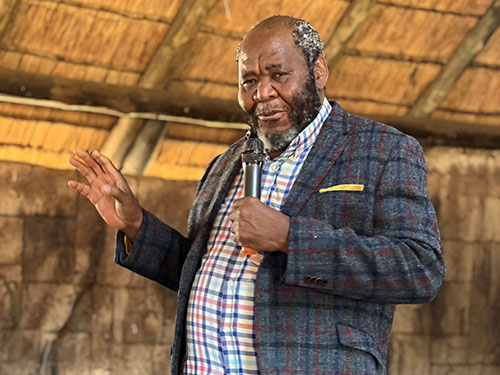
Students gained practical public procurement knowledge, governance insights and workplace-ready skills during two Work-Integrated Learning (WIL) Bootcamps hosted by the Tshwane University of Technology’s Department of Public Sector Finance. The initiative equipped future public finance professionals with valuable industry competencies while strengthening the connection between academic learning and professional practice.
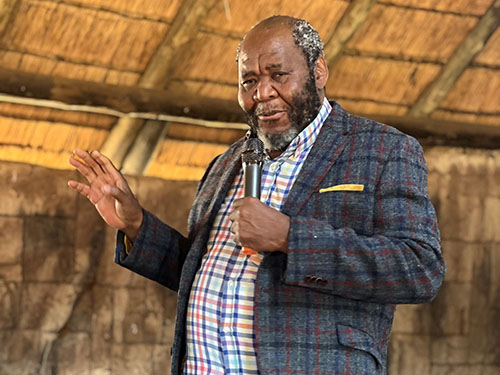
Dr Padi Lehohla delivering the keynote address at the Public Sector Finance WIL Bootcamp.
Committed to bridging the gap between academia and industry, the Department hosted the Work-Integrated Learning (WIL) Bootcamps. Which catered for first and second-year students and Advanced Diploma students, respectively.
Themed, Empowering Public Procurement Through Knowledge and Integrity, the bootcamps prepared students for workplace realities by focusing on public procurement fundamentals, governance, compliance and ethics.
Sipho Maluleke, Head of the Department of Public Sector Finance, encouraged students to embrace the opportunity and maximise the value of learning from industry experts.
“At University level, the focus is generally more on theory. We give you the information and knowledge on legislation, but applying it in practice is different. We are hosting these training interventions to bridge the gap. Industry experts are here to help capacitate you, so that over and above the qualification you obtain, you will also have a certificate of competence that demonstrates your skills in a specific area,” he said.
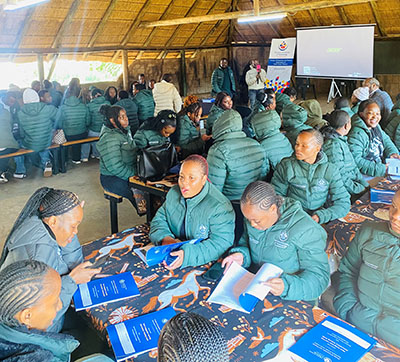
Students attending the sessions
The junior student sessions focused on budget reporting and financial compliance, while senior students explored local government structures, including metropolitan, district and local municipalities. They also examined public procurement regulations, governance requirements and ethical conduct in the public sector.
Dr Pali Lehohla, former Statistician-General of South Africa, delivered the keynote address and challenged students to consider the legacy they will leave in public service. He encouraged future financial management professionals to contribute positively to the country and to uphold integrity in managing public resources.
“Part of your responsibility as people who are in financial management is to stop the bleeding. That is the essence of my discussion with you. How are you going to stop the pain?” he asked.
Dr Lehohla also highlighted the importance of literacy as a foundation for development, noting that technology alone cannot address societal challenges.
Although you literally have global information at your fingertips, there are preconditions for success. Those things are not technological. They have to do with literacy, how literate we are as a society, how we promote literacy and how we access it,” he said.
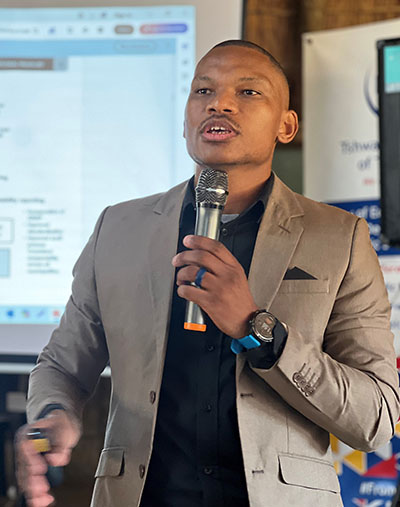
Heinrich Salome facilitating the sessions at the WIL Bootcamp.
Heinrich Salome, a Registered Professional Accountant, facilitated a three-day engagement session focusing on municipal structures, service delivery and public procurement processes. He explained the role municipalities play in maintaining infrastructure and delivering essential services to communities.
Salome also guided students through bid adjudication processes, highlighting how procurement decisions are evaluated to ensure fairness, transparency and accountability. He further explained the importance of Integrated Development Plans (IDPs) in helping municipalities identify and prioritise community needs.
“The IDP consists of projects a municipality wants to implement based on the needs of the community. It is similar to demand management, which focuses on the needs of society,” he said.
The bootcamps concluded with team-building activities that strengthened teamwork, communication and problem-solving skills, ensuring students left better prepared for professional environments and future careers in public finance.

Students taking part in the teambuilding activities.





Leave a comment