
By Allyson Dix
For Glasgow News 1
Barren County residents continued to voice their opinions on countywide land use regulations and zoning on Monday evening, with concerns ranging from potential hyperscale data center development and the protection of Mammoth Cave National Park to property rights and the future of agriculture.
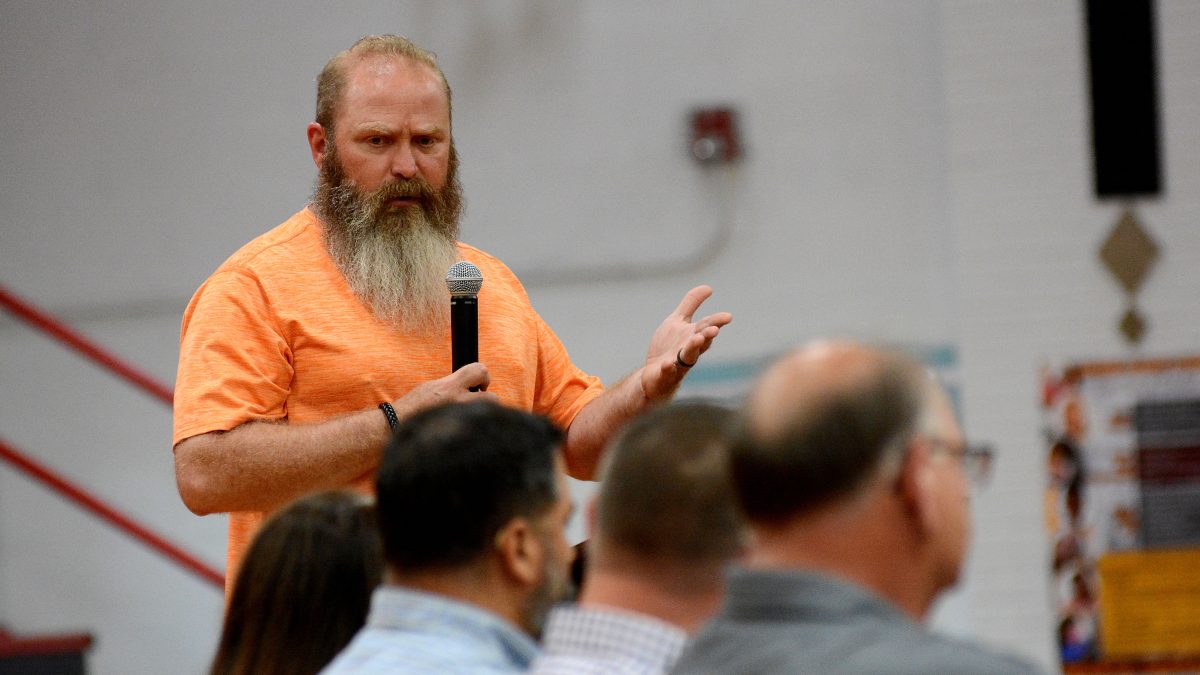
During the third town hall meeting on Aug. 10 at Park City Elementary School, Magistrate Ronnie Stinson urged attendees on several occasions to share input on what citizens want when it comes to zoning.
In late July, most magistrates told Glasgow News 1 that feedback from their constituents on countywide zoning has been limited outside of public meetings.
While zoning encompass all parcels in Barren County and place them into different classifications, many speakers continue to raise concerns over potential hyperscale data center development in the county, particularly because of Barren County’s proximity to Mammoth Cave National Park.
“It’s almost like an impending death,” Judy Scott, a lifelong resident of Barren County, said about data center development. “To think about the blob of a building being built right in the front door of Mammoth Cave breaks my heart.”
Bruce Gentry, a lifelong resident of Cave City, noted his concerns about the national park as well, including the water that flows to the cave system.
“All I’ve ever known is Mammoth Cave National Park, what it does for our community, and what it’s done financially for people, for everyone that lives in the area,” Gentry said, noting several concerns with the karst terrane and watershed district that he said surrounds Mammoth Cave, including potential contaminants such as fertilizers, pesticides, sewage contamination, and other hazardous materials.
In June, Barren County Judge-Executive Jamie Bewley Byrd announced plans to meet with Barclay Trimble, superintendent of Mammoth Cave National Park, to discuss concerns about a proposed data center in Cave City. Byrd has stated several times since then that the meeting was halted after the park raised concerns because it had been publicly announced.
Judy Crabtree, a Glasgow resident and a vocal opponent of data center development in Barren County, said Mammoth Cave’s cave shrimp may be the only saving grace for halting local large-scale industrial development.
“Arguing, blaming, even putting facts on Facebook will not work,” Crabtree stated. “I believe the only thing we have that might actually stop a data center in Barren County is cave shrimp.”
Mammoth Cave is the only known home for the Kentucky cave shrimp, according to the National Park Service. These small, transparent creatures are rare, and their conservation status is endangered, meaning they are at risk of extinction. Crabtree said these creatures are the number one most endangered species in Mammoth Cave.
She also encouraged citizens to organize and create a committee to lead the effort, with help from officials, to stop hyperscale data center development.
Jennifer Graves shared concerns about more than data center development as she addressed several matters county officials are considering, including the proposed higher tax rate of 12.4-cents per $100 of assessed value rather than the lower, compensating rate.
“Before asking property owners for more, why hasn’t anything been cut? What spendings have been reduced? Now there’s discussion of additional hotel tax, why? Where will it go? How much will it raise? We’re restructuring tourism. Why? Who asked for that?” Graves stated, among other questions.
Anthony Huff, a lifelong Barren County resident, said he and his family oppose countywide zoning, noting he doesn’t want someone else controlling what he does on his own property.
“My opinion is no, my family says no,” Huff said. “I don’t want nothing to do with planning and zoning coming to the county.”
Former Barren County Judge-Executive Micheal Hale said that during his time as an elected official, he was privy to information that a lot of people were not privy to and that hard decisions sometimes had to be made.
Hale, like Huff, said he was opposed to land use regulations and zoning in the county.
He told the magistrates present – Stinson, Jeff Botts, Brad Groce, Marty Kinslow, Tim Coomer, and Derek Pedigo – that they must be “firm, fair, and consistent” as they navigate the decision on whether to implement countywide zoning.
“The consistency part of it is just because so-and-so, who has influential people and they have a big bank account, they’re no different than the person over here that’s struggling to pay their bills…and you can’t just put it all off on [Director of Joint City-County Planning Commission] Kevin [Myatt] because if that fiscal court births this, the fiscal court can take it away, according to KRS 100,” Hale said.
Hale also questioned whether it would be fair for someone who moved into the area after zoning was implemented to be prohibited from a particular practice while an existing property owner was allowed to continue it under grandfathering provisions.
Paula Pedigo, a longtime advocate of preserving farmland in Barren County, asked Byrd to commit to several items, including disallowing any tax abatement incentives for data centers; not seeking federal dollars to alleviate infrastructure costs for a developer; requiring energy sources be in place and operational before a data center can proceed; instructing the county attorney to draft a moratorium on data centers; and providing support for any legal challenges that may arise from implementing one, among other requests.
Bob Snee asked county officials to consider a model ordinance developed by the University of Kentucky for karst terrane as they navigate the drafting of a local ordinance through the newly formed Land Use Committee. He also requested consideration of the Kentucky Resource Council’s draft ordinance for high-energy facilities.
Lastly, Snee requested that county officials publish draft ordinances online for public review to garner feedback during the process, similar to a move made by another county. “Would it be possible for Barren County to put the draft ordinance out on a website so everybody here has a chance to read it, look at it, make comments, ask questions about it if they have concerns?”
Karst is terrane formed from the dissolution of soluble rocks, such as limestone. According to the U.S. Geological Survey’s Geology and Ecology of National Parks, Mammoth Cave has one of the most famous karst topographies in the world.
Some citizens voiced apprehension about land use regulations because of Barren County’s agricultural landscape and practices. The county consistently leads in key agricultural statistics in the state, including having the most cattle and the most farms while also leading in other areas such as tobacco production.
Ken Wininger, a fifth-generation farmer, said he is ambivalent about county zoning and noted that while the county currently has magistrates and a judge-executive focused on preserving agriculture, that may not be the case in the future.
“Say ten years from now or so, if we get a different magistrate and judge that’s not for agriculture, then it could all be in vain,” Wininger said.
Rebecca Tracy said both sides of her family have been farmers for seven generations and supports regulations to protect the communities from harmful economic developments.
“I have generally been opposed to zoning in the county, but I feel like what we need is not comprehensive zoning, but I think what we need is proposed regulations to protect the community…to stop harmful economic developments in our cities and our county,” Tracy said.
Discussions are expected to continue on land use regulations with the fourth and final town hall meeting slated for Thursday, Aug. 13, from 5 p.m. until 7 p.m. at Hiseville Elementary School.
Additionally, the Barren County Land Use Committee will host its first meeting on Aug. 20 at 6 p.m. in the council chambers of the Luska J. Twyman Municipal Building, formerly known as Glasgow City Hall.
The committee is tasked, alongside a hired consultant with Kentucky Steward LLC, to draft the language for a zoning ordinance.
These meetings are open to the public.









Leave a comment