
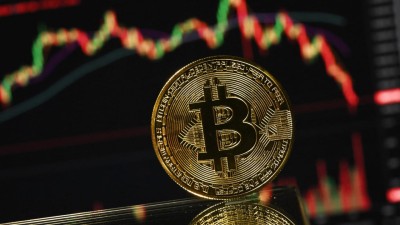
Bitcoin’s growth is slowing down. The price is holding near $77,000–78,000 but cannot consolidate above local highs. The market is shifting to a more cautious mode amid signals from Japan and escalating tensions around the Strait of Hormuz.
The momentum that began at the end of March from the $65,000 zone has weakened. Now the market is searching for a new driver, and the macro background is becoming less favorable.
Bitcoin Fails to Hold Gains Above $78,000
BTC climbed to $78,700 but could not stay above that level. During the Asian session, the price pulled back and remains in the range. This is the first signal that buyers are losing control over the short-term movement.
Ethereum is behaving weaker. ETH is declining faster and is trading around $2,300, which reinforces the overall cautious sentiment in the market.
Inflation in Japan Increases Pressure
Fresh data from Japan became a key factor. The services sector price index rose by 3.1% year over year, above expectations. Core inflation also accelerated to 1.8%, the first increase in five months.
This is changing expectations for Bank of Japan policy. The market is starting to price in a more hawkish signal from the regulator and a possible rate hike in the coming months.
Bank of Japan May Shift the Global Balance
If the Bank of Japan moves to tightening, it will affect not only the local market. The yen is traditionally used as a funding currency for buying risky assets.
Its strengthening could lead to the closure of such positions. This reduces liquidity in the global system and increases pressure on assets like bitcoin.
Oil Rises, Inflation Risks Intensify
An additional factor is the situation in the Middle East. Disruptions in supplies through the Strait of Hormuz have already impacted oil. WTI prices have risen more than 40% since the start of the conflict and have approached $96.
For the global economy, this means rising costs. For central banks, it means the need to maintain tight policy for longer.
The Strait of Hormuz Remains a Key Oil Supply Risk Point
About 20% of the world’s oil supplies pass through the strait. Any restrictions immediately affect prices and inflation expectations.
The situation is becoming more complicated. The military estimates that demining the strait could take months after the conflict ends. This makes the energy factor a long-term rather than a short-term risk.
The Fed Faces an Additional Constraint
Rising energy prices make the Fed’s task more difficult. Even if the economy slows, inflation may remain above target.
This reduces the likelihood of a rapid rate cut. That means the risk asset market does not get the easing it was hoping for.
The Market Enters a Waiting Phase
Bitcoin is now caught between two forces. On the one hand, there is accumulated growth and a positive backdrop in recent weeks. On the other, there are increasing macroeconomic constraints.
As a result, the price stops moving directionally. A range is forming and sensitivity to news is increasing.
Key Levels Remain Unchanged
Support is forming in the $72,000–75,000 area. Above, the key barrier remains the $80,000 zone. Without a strong argument, a breakout upward looks difficult. But there is also no strong selling pressure yet.
What’s Next?
The next event is the Bank of Japan meeting. Any hint of tightening could increase pressure on global markets. At the same time, the market is watching developments around Iran and oil supplies.
For now, the picture is neutral with a cautious bias. Bitcoin is holding its position, but to continue growing, a new factor is needed that can outweigh the macro background.
Read More: Options Expiry for $10 Billion Casts Doubt on BTC and Ethereum Moves











Leave a comment