
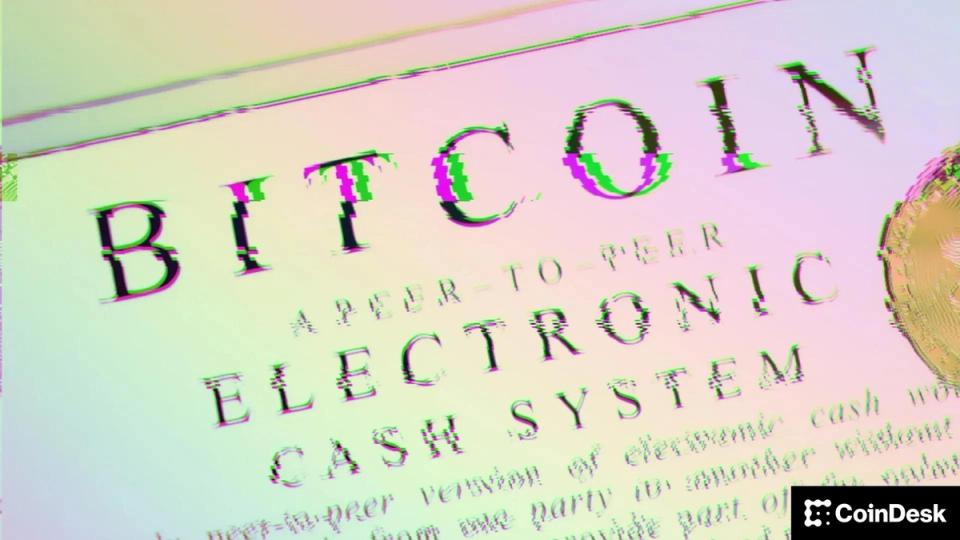
Paul Sztorc is not trying to move Satoshi Nakamoto’s bitcoin.
That is the narrow fact getting lost in the backlash around eCash, a proposed Bitcoin fork scheduled for August at block height 964,000. The new chain would copy Bitcoin’s history up to that point, giving BTC holders an equivalent balance on the forked network. Hold 4.19 BTC, get 4.19 eCash.
This would follow the standard fork playbook. Bitcoin Cash did it in 2017, and Bitcoin SV followed later. Both copied Bitcoin’s ledger, changed the rules and in the hopes that the market will care.
eCash is different because of what it plans to do with Satoshi’s copied coins.
The roughly 1.1 million BTC attributed to Bitcoin’s pseudonymous creator Satoshi Nakamoto sits in dormant addresses often linked to the Patoshi pattern, an early mining fingerprint widely believed to trace back to Satoshi though never conclusively proven.
On a normal one-to-one fork, those addresses would receive roughly 1.1 million eCash. Sztorc’s plan would allocate 600,000 eCash to those addresses and redirect the remaining 500,000 eCash to investors who fund the project before launch.
Sztorc, CEO of LayerTwo Labs, pushed back on the theft framing in a Monday X post.
“We do not take any of Satoshi’s BTC,” he wrote. “BTC balances are untouched by eCash. To move BTC, you always need BTC software and the BTC private key. We lack both.”
But Satoshi’s untouched holdings function as Bitcoin’s foundational guarantee, the proof that even the network’s creator never moved his coins because the rules apply to everyone equally. Selling claims on a forked-chain version of those holdings to fund a new project is the part that reads as theft, even when no theft is technically occurring.
That turns the dispute into a property-rights fight, even if the property exists only on a new chain.
“Bitcoin was created to preserve and protect inviolable property rights for everybody on earth,” Beau Turner, CEO of mining firm Abundant Mines, said in an email to CoinDesk. “Any proposal that seeks to evolve or improve it by violating the property rights of the creator of that network is such a serious ethical misstep that it’s hard to believe it would even be considered.”
The timing makes the fight sharper. Bitcoiners have already spent recent weeks arguing over proposals to freeze or restrict old quantum-vulnerable coins, including addresses believed to belong to Satoshi. Those debates put dormant balances, immutability and social intervention back at the center of Bitcoin culture.
That is why the eCash fight is landing in a market already primed to treat any intervention around Satoshi-linked coins as radioactive. Vijay Selvam, author of Principles of Bitcoin, argued that even proposals framed as protective measures risk damaging Bitcoin’s core monetary promise if they create a precedent for treating dormant coins differently.
“Freezing Satoshi’s coins under any circumstances sets a precedent that irreparably damages Bitcoin’s monetary properties,” Selvam wrote on X. “With such a precedent, how can Bitcoiners ever feel confident that their money is safe into the distant future without feeling the need to constantly monitor the news to see if miners are going to rug them?”
Selvam compared the issue to gold’s durability, arguing that bitcoin should offer similar confidence across generations. “If you set a rug-pull precedent for Bitcoin, you’d forever kill its claim to being durable and immutable digital gold,” he wrote. “You’d destroy confidence in its timeless integrity.”
Why propose eCash?
Sztorc has previously spent years pushing Drivechains, a proposal that would let developers add sidechains to Bitcoin through proposals BIP300 and BIP301. The Bitcoin Core community has not agreed to adopted it, and the eCash fork now functions as both an exit plan and pressure tactic.
He has said he would call it off if Bitcoin activates those proposals before August. There is no sign that will happen.
This is why people care even if eCash never becomes economically relevant. Bitcoin forks mostly fail in market terms, but they still test Bitcoin’s social assumptions.
Bitcoin Cash and Bitcoin SV copied the ledger and kept trading, but neither came close to displacing BTC. eCash may end the same way. The difference is that its launch forces a cleaner question than block size ever did: can a fork claim Bitcoin’s moral inheritance while rewriting the most famous untouched balance on the copied chain?







Leave a comment