
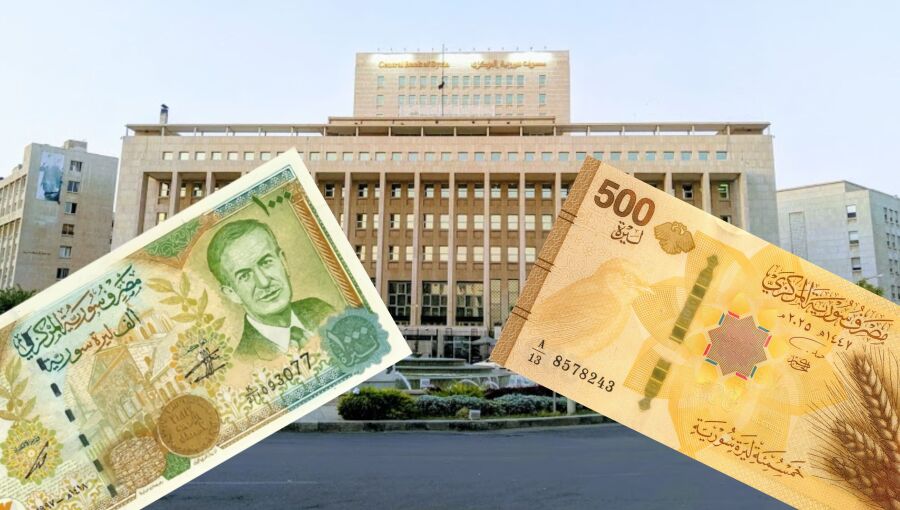
The Central Bank of Syria (CBS) has extended the deadline for exchanging old Syrian banknotes by an additional 30 days, giving citizens and institutions more time to complete the currency replacement process, SANA reported on May 31.
Syria’s new currency entered circulation on January 1, removing two zeros from the Syrian pound in a redenomination aimed at restoring financial stability and attracting investment following years of war and hyperinflation.
In a statement published on Telegram, CBS said the extension will take effect from July 1 and will apply to all categories of old currency covered under previous exchange regulations issued in late 2025 and early 2026.
The decision follows an earlier extension announced at the beginning of June, when authorities prolonged the exchange period from June 1 to 30 June in response to what the bank described as good progress in the nationwide replacement programme.
The central bank instructed all authorised financial institutions to continue exchanging the designated old banknotes from Monday onwards, ensuring uninterrupted access to the process during the extended period.
Under the latest decision, a provision contained in a previous directive issued in April 2026 has also been revoked, although the bank did not provide further details on the amendment.
The currency exchange programme forms part of broader efforts by Syrian monetary authorities to withdraw older banknotes from circulation and replace them with updated currency issues. Officials have repeatedly urged the public to complete exchanges through authorised channels before the final deadline.
The Central Bank of Syria initially issued implementation instructions for Decree 293 of 2025, setting the exchange rate at 100 old Syrian pounds to one new Syrian pound.
Both currencies were initially meant to circulate during a 90-day transition period that can be extended and comes as part of a wider redevelopment of the economy under the new Turkish-backed al-Sharaa regime in Damascus.
Bank deposits will be automatically converted at the same value after removing two zeros from the old currency, preserving depositors’ rights.
Researcher Karam Khalil said changing the currency and removing zeros is not a superficial decision but a necessary step to reorganise currency size, restore accounting clarity and reduce the burden of nominal inflation.











Leave a comment