
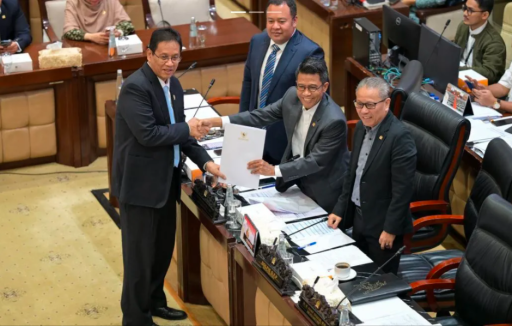
Draft bill raises governance and transparency questions
Non-governmental organizations (NGOs) have criticized Indonesia’s proposed International Financial Center (PFII) in Bali, warning that the draft legislation could undermine the country’s ability to attract green investment by prioritizing flexibility and secrecy over transparency and governance.
The draft bill proposes that Indonesia’s sovereign wealth fund, Danantara, provide the initial capital for the PFII, while allowing additional funding from other legally recognized sources. However, critics argue that the legislation does not clearly define Danantara’s legal status or authority after the capital injection. The bill also leaves unanswered whether Danantara would become a shareholder, a capital provider without voting rights, or an investor.
The proposed financial center aims to position Indonesia as a global investment hub by offering flexible transaction rules, special purpose vehicles (SPVs), trusts, family offices, and various tax incentives. However, the draft lacks explicit provisions governing transparency, corporate governance, and conflict-of-interest management between Danantara as the initial financier and companies operating within the PFII ecosystem.
NGOs warn of weaker appeal for sustainable investors
According to Bhima Yudhistira, Executive Director of the Centre of Economic and Law Studies (Celios), emphasizing investment flexibility without strengthening governance standards risks making the financial center more attractive to capital seeking tax efficiency rather than sustainable investment.
“If the PFII emphasizes flexibility and various investment facilities without strengthening governance, there is a risk that this financial center will instead become more attractive to capital focused on tax efficiency,” said Bhima, on Friday, July 10, 2026.
Bhima also argued that Indonesia cannot simply replicate the models of the Dubai International Financial Centre (DIFC) or Abu Dhabi Global Market (ADGM), despite frequent comparisons by the government.
He said Indonesia still needs to finalize the incentives offered under the PFII while ensuring tax authorities and financial regulators have sufficient capacity and independence to enforce regulations effectively.
Calls for renewable energy focus
Environmental groups also expressed concern that the PFII could become a new financing platform for government priority projects that remain heavily reliant on fossil fuels, despite tightening global financing for fossil fuel developments.
Trend Asia energy campaigner Novita Indri said the PFII should instead become a financing instrument for equitable renewable energy projects rather than moving away from sustainable finance.
“Therefore, the PFII is expected to truly become a financing instrument for fair renewable energy projects, not the opposite, moving away from sustainable financing.”
Meanwhile, CERAH Executive Director Agung Budiono said the PFII bill should accelerate Indonesia’s energy transition instead of merely creating broader investment opportunities without clear direction.
He urged policymakers to establish regulatory safeguards that prioritize green investment, adding that Danantara should serve as a driving force for renewable energy investment rather than continuing to dominate financing for fossil fuel projects.











Leave a comment