
Positive Money’s push for central bank digital currencies has sharpened a debate that London and Brussels continue to tiptoe around: should public money be rebuilt for the digital age? The question matters everywhere, but nowhere more than in Africa. The African Continental Free Trade Area has created the world’s largest single market by membership — yet its arteries remain clogged. Cross‑border payments still crawl through correspondent banks, FX spreads, and the rent‑seeking of retail institutions. The result is a cruel paradox: free trade in principle, expensive trade in practice.
Central bankers across Africa — over to you, Joe Lartey. As the legendary GBC commentator would say, the ball is in your court. Ghana has both the mandate and the moment.
Public Infrastructure, Not Private Tollgates
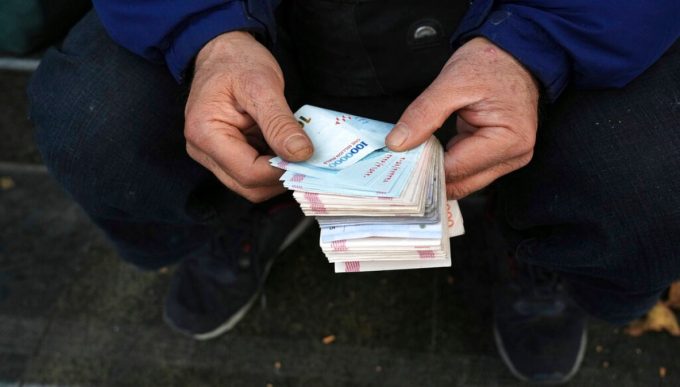
A CBDC is not merely “digital cash”. It is central bank money issued as a bearer instrument on a digital rail — and that distinction is decisive. Today, cross‑border payments settle in commercial bank money, hopping through intermediaries that each extract a fee. For the SME trader moving shea butter from Kumasi to Abidjan, those fees erode margin and competitiveness.
A multilateral CBDC bridge — an mCBDC linking sovereign currencies — strips out those layers. Settlement moves from days to seconds. FX losses shrink. The gains flow directly to traders, farmers, and informal‑sector entrepreneurs. Public money serving public purpose.
This is the core insight behind the common‑good case for CBDCs: money creation and payment rails are public goods. They should not be surrendered to oligopoly by default.
Ghana Already Proves Interoperability Works
Africa does not need to import theory. Ghana already operates one of the continent’s most advanced interoperable mobile money ecosystems, regulated by the Bank of Ghana. MTN, Telecel, AirtelTigo and bank wallets settle instantly across networks. The technical logic and regulatory discipline are proven.
An mCBDC simply extends that logic across currencies rather than networks. If Ghana’s eCedi can speak seamlessly to Nigeria’s eNaira and Kenya’s forthcoming CBDC, AfCFTA stops being a customs agreement and becomes a payments union. That is how you lower the transaction cost of integration itself.
Monetary Sovereignty Without Fragmentation
Critics warn that CBDCs risk dollarisation or surveillance. The opposite is true when interoperability is designed upfront. Coordinated standards allow each central bank to retain monetary sovereignty while enabling cross‑border utility. Retail banks remain as regulated wallet providers and distributors. They lose their tollgate status, not their relevance.
An interoperable CBDC system also expands access for the unbanked through tiered wallets and agent networks. No dollarisation by default. No surrender of policy space. Instead, sovereignty expressed through collaboration rather than isolation.
The Accra Advantage
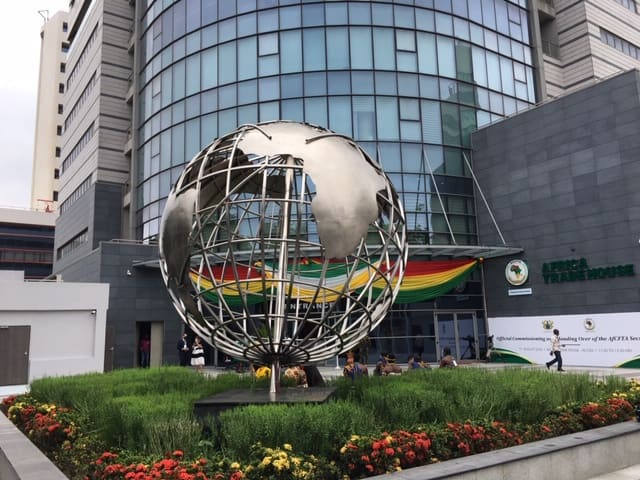
Ghana’s advantage is not only technical. The AfCFTA Secretariat sits in Accra. The policy scaffolding and the proof‑of‑concept are both on Ghanaian soil. While the UK and EU debate CBDC design principles, Africa can lead by building interoperability first.
This is not a call for a single “Afro‑CBDC”. Uniformity would suffocate the innovation that keeps monetary policy responsive to local conditions. It is a call for coordinated standards, shared rails, and governance that prioritises the common good over private extraction.
The Play Is Now
Joe Lartey’s voice was known for precision under pressure. He would describe the game, then hand responsibility back to the players. The game here is AfCFTA. The players are Africa’s central bank governors.
The ball is in your court. Build the rails. Set the standards. Anchor trade in public money. If Africa gets this right, we will not merely trade more — we will trade differently, on terms we set, through infrastructure we own, for prosperity we share.
The moment is now. Ghana has the ecosystem. Accra has the Secretariat. African central bank bosses, “Over to you, Joe Lartey!”








Leave a comment