
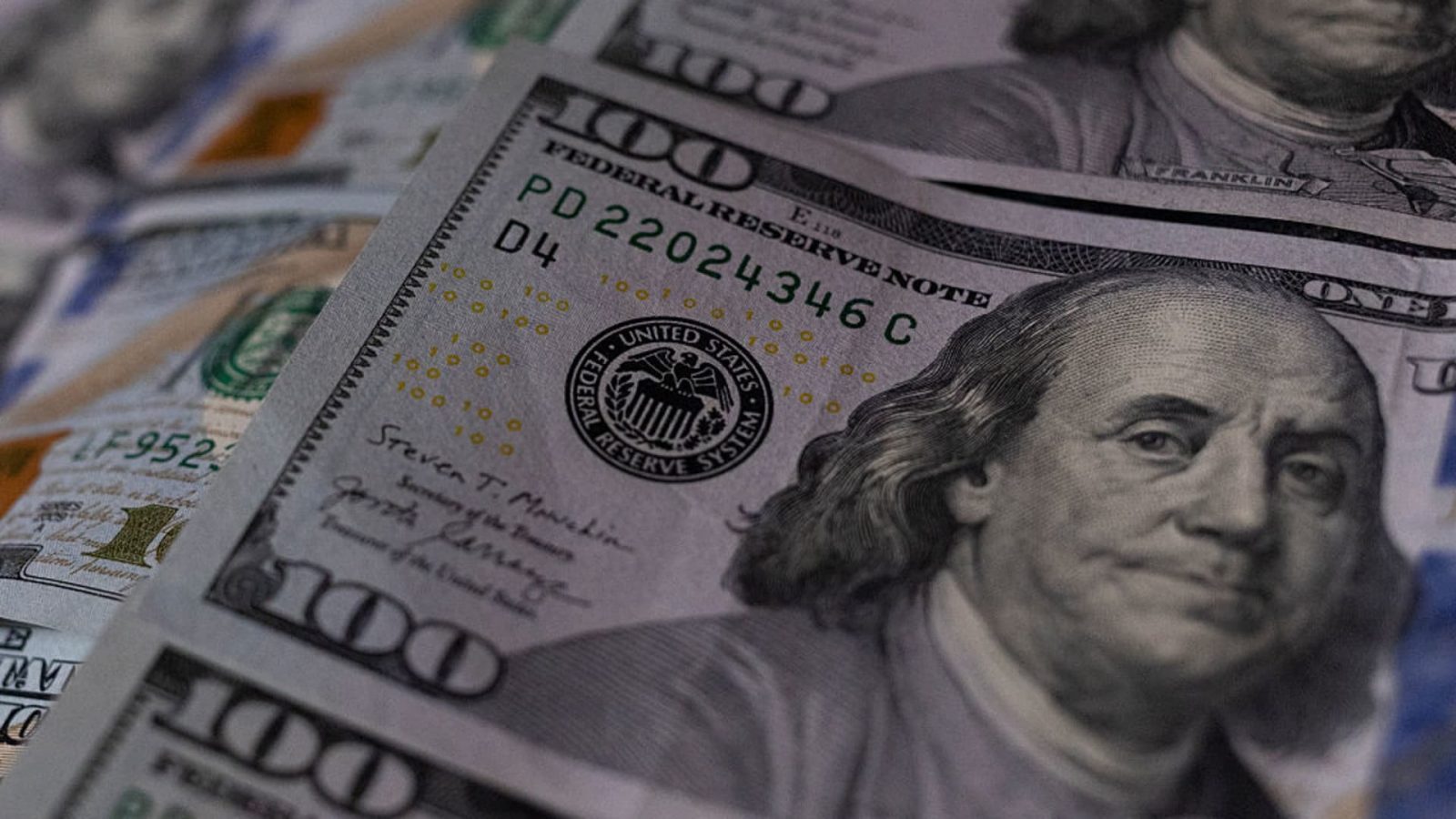
U.S. one hundred dollar bills are shown in Buenos Aires, Argentina, on April 15, 2026.
Matias Baglietto | Nurphoto | Getty Images
The U.S. dollar was steady on Monday as wavering hopes of a deal to end the Middle East war left investors on edge ahead of a slate of central bank meetings later this week.
The Japanese yen was pinned just beneath the crucial 160 level ahead of the Bank of Japan’s policy decision later in the week.
Sentiment got a lift overnight after Axios reported, citing sources, that Iran gave the U.S. a new proposal through Pakistani mediators on reopening the waterway and ending the war, with nuclear negotiations postponed for a later stage.
Some analysts have argued that a potential nuclear deal remains the main sticking point, as any agreement that leaves Iran’s nuclear program largely unchanged could be politically damaging for the U.S. President at home.
“Given the experience about two weeks ago, when similar hopes (of reopening of the Strait of Hormuz) had already surfaced but were dashed again within 24 hours, market euphoria is likely to be much more muted this time,” said Thu Lan Nguyen, head of forex commodity research at Commerzbank. The Strait of Hormuz normally carries a fifth of global oil and gas shipments.
The dollar benefited in March from safe-haven flows as the war erupted but shed most of those gains on hopes of a peace deal this month. It has steadied in recent days after U.S.–Iran talks stalled.
“There is another aspect of the negotiations that matters: Iran is pressing for economic sanctions to be lifted,” Commerzbank’s Nguyen added.
Brent crude futures were up 2.6% at $108 a barrel. The dollar index, which measures the U.S. currency against six major peers, was at 98.41, down 0.1% on day. The Federal Reserve is widely expected to hold rates steady this week.
“The Fed may be inclined to warn of the need for rates to stay unchanged for longer,” said Chris Turner, head of forex research at ING, arguing that could be mild positive for the dollar.
Euro watched energy prices
The euro rallied from $1.15 to around $1.18 after the ceasefire announcement in early April. The U.S. is less exposed to the adverse impact of surging oil prices than the euro area and Japan, which are both heavily dependent on oil imports.
While markets believe the central bank is inclined toward a more hawkish stance to address the energy shock, they expect policymakers to leave rates on hold at this week’s meeting. The single currency was up 0.1% at $1.1734.
BOJ intervention risks
The BOJ is also expected to keep interest rates steady on Tuesday but signal its readiness to hike as soon as June.
Unlike last year when higher U.S. tariffs forced a pause in its rate-hike cycle, the BOJ will stress its resolve to keep raising rates as the energy shock risks fueling broad-based inflation, sources familiar with its thinking told Reuters.
The Japanese yen rose 0.07% to 159.26 per U.S. dollar, just shy of the crucial 160 level that traders worry could prompt intervention by Tokyo in the currency markets.
Analysts said that any dovish signals from BOJ Governor Kazuo Ueda during the press conference could weaken the yen further and prompt Japanese authorities to intervene in support of the currency.
Gregor Hirt, global CIO for multi asset at Allianz Global Investors, said the resumption of the hiking cycle hinges on geopolitical stabilization, noting that if tensions eased and the Strait of Hormuz became navigable again, hikes would probably be back on the table by summer.






Leave a comment