
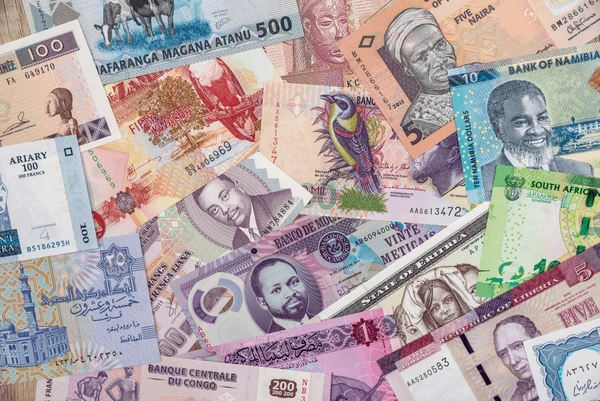
African currencies delivered mixed performances against the US dollar in May 2026 as inflation concerns, global market uncertainty and shifting capital flows continued to shape foreign exchange markets across the continent. While several currencies remained under pressure, a handful recorded gains, supported by stronger export earnings, improved foreign exchange inflows and central bank interventions aimed at stabilising local markets.
According to data compiled by Nairametrics from central banks across Africa, the Zambian kwacha emerged as the continent’s best-performing currency in May, appreciating by 2.91 percent against the dollar. The Egyptian pound followed with a 2.61 percent gain, while the Namibian dollar strengthened by 2.57 percent. The South African rand appreciated by 2.56 percent, while the Seychellois rupee, Eswatini lilangeni and Lesotho loti each gained 2.53 percent during the month.
1. Zambia – Zambian Kwacha (+2.91%)
The kwacha ranked as Africa’s strongest-performing currency in May, supported by improved investor confidence and stronger copper export earnings, which remain a major source of foreign exchange for the country.
2. Egypt – Egyptian Pound (+2.61%)
Egypt’s pound strengthened as the country continued implementing economic reforms backed by international financial institutions, helping to improve market confidence and foreign capital inflows.
3. Namibia – Namibian Dollar (+2.57%)
The Namibian dollar posted one of the strongest gains on the continent, benefiting from regional currency stability and improved trade performance.
4. South Africa – South African Rand (+2.56%)
The rand gained ground amid improving investor sentiment and support from commodity exports, which continue to play a major role in South Africa’s economy.
5. Seychelles – Seychellois Rupee (+2.53%)
The rupee benefited from stronger tourism activity and foreign exchange inflows, helping to support currency stability.
6. Eswatini – Eswatini Lilangeni (+2.53%)
The lilangeni recorded gains largely due to its close link with the South African rand, which also strengthened during the month.
7. Lesotho – Lesotho Loti (+2.53%)
Like Eswatini, Lesotho’s currency benefited from regional monetary stability and its peg to the South African rand.
8. Botswana – Botswana Pula (+0.97%)
Botswana’s pula maintained modest gains as prudent monetary management and a relatively stable mining sector continued to support the economy.
9. Democratic Republic of the Congo – Congolese Franc (+0.94%)
The Congolese franc appreciated slightly, supported by mining exports and improved foreign exchange inflows.
10. Morocco – Moroccan Dirham (+0.53%)
The dirham recorded the smallest gain among the top 10 performers but remained supported by Morocco’s managed exchange rate system, tourism revenues, remittances and diversified exports.
Analysts say the latest rankings show how commodity exports, tourism receipts, monetary policy decisions and investor confidence continue to influence currency performance across Africa. Some economies are actually benefiting from stronger external balances and reform efforts, some others remain vulnerable to inflation pressures, debt challenges and global economic uncertainty.












Leave a comment