


A Canadian forensic auditor has concluded that the global financial system has entered structural default, warning that $350 trillion in worldwide debt has crossed a threshold that makes full repayment mathematically impossible within the current monetary architecture.
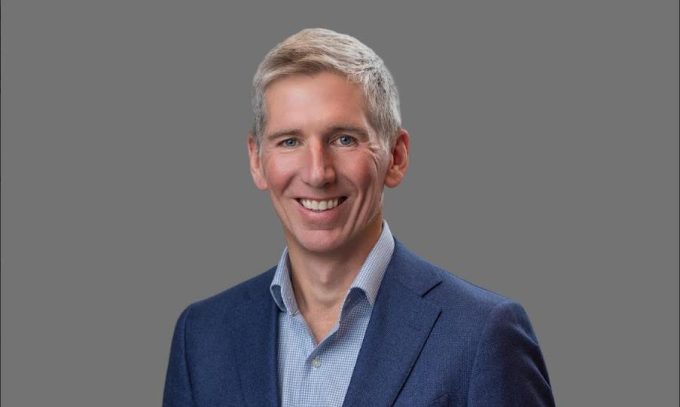
Dmitri Maxim, a Certified Management Accountant with 30 years of experience across banking, technology, and corporate finance, spent 17 years applying the same forensic discipline he used in professional practice to the global financial system itself. His findings appear in a 444-page report titled MARPOLE: Return of Measure.
“The system was designed so that the debt cannot be repaid,” Maxim said in a written interview, grounding the claim not in forecasting but in what he describes as a structural arithmetic flaw baked into how money is created.
His central argument is that the monetary mechanism produces the principal of every loan but never the interest required to service it. When $100 enters circulation at 5% interest, $105 is owed. The missing $5 was never created. To cover that gap, borrowers must take out new loans, each carrying its own interest obligation. Maxim contends this makes total system debt permanently greater than the total money supply.
The numbers he cites underscore the scale of the problem. Global debt stands at approximately $350 trillion, equivalent to 350% of global gross domestic product (GDP). At a blended interest rate of 4.6%, annual debt service alone consumes $16.1 trillion, representing 14.2% of total global economic output. He derives these figures from data published by the International Monetary Fund (IMF), the Bank for International Settlements (BIS), and the Institute of International Finance.
Maxim argues today’s debt cycle differs fundamentally from the post-World War II period often cited as a precedent. Post-war borrowing financed factories, infrastructure, and reconstruction, placing productive assets on the other side of the ledger and creating a clear growth path for repayment. Today, he argues, new debt largely services interest on the previous round of debt rather than generating fresh productive capacity.
On the structure of sovereign debt markets, Maxim raises concern about the retreat of central banks as primary bond buyers. Hedge funds and leveraged private investors have moved into the gap, and Maxim warns these actors can exit positions within hours during volatility. He argues this replaces a long-term stabilising force with an amplifier capable of triggering sudden, disorderly repricing of government debt. He also flags the shortening maturity profile of US Treasury issuances as a compounding risk, requiring more frequent refinancing events against an increasingly volatile buyer pool.
Maxim identifies African nations, alongside those in Latin America and South Asia, as carrying some of the sharpest exposure to a deteriorating global borrowing environment. He argues that structural adjustment programmes pushed many of these countries into dollar-denominated debt, forcing them to sell real resources to obtain dollars and then effectively lend those dollars back to the United States by holding Treasury bonds. Rising borrowing costs deliver what he calls a double penalty: higher debt service combined with export commodity prices set on exchanges in London and New York.
On policy options, he is direct. Within the current monetary architecture, he argues there are none that resolve the underlying equation. Inflation quietly transfers wealth from savers to debtors. Austerity shifts costs onto the most vulnerable. Neither addresses what he frames as a design problem rather than a policy failure.
Looking ahead, Maxim describes the period between now and 2030 as decisive. He argues the design of whatever monetary infrastructure replaces the current system will determine the distribution of economic power for the following half century, and urges observers to watch not the debt figures but who is writing the code for the system that follows debt restructuring.
Maxim founded Marpole.ai, a collective intelligence network he describes as the operational response to his audit’s conclusions. He is based in Vancouver, British Columbia.












Leave a comment