
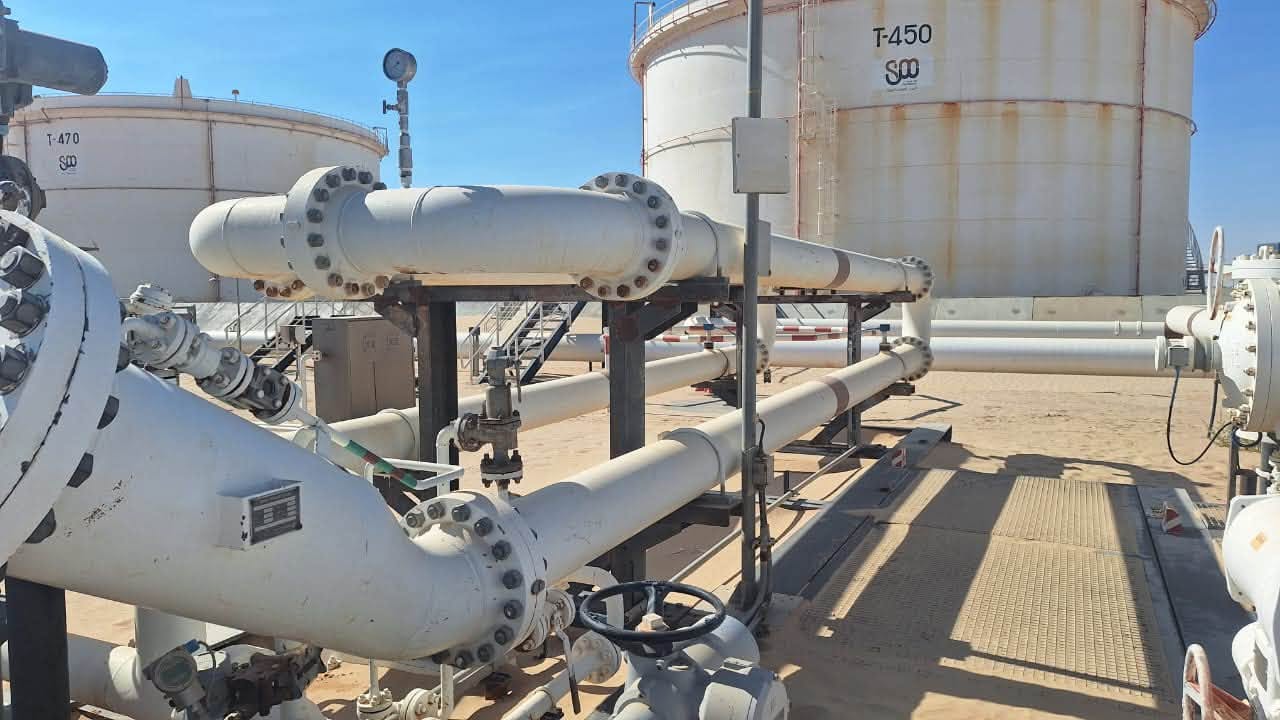
The National Oil Corporation has announced an ambitious objective: increasing Libya’s crude oil production to 2 million barrels per day by 2031. From a technical perspective, this target is achievable. However, it will require an estimated USD 36 billion in investments over the coming years.
The first question that naturally arises is: Where will the money come from?
In my view, this is the wrong question.
The real challenge is not the availability of capital—it is the institutional structure of Libya’s oil sector.
Today, the National Oil Corporation (NOC) and its subsidiaries rely almost entirely on government funding. Under the current structure, these companies lack the legal and financial independence required to borrow from commercial banks, access capital markets, issue debt instruments, or secure long-term project financing. In other words, despite controlling world-class assets and significant hydrocarbon reserves, they are not bankable.
This is why achieving the 2 million barrels per day target requires institutional reform before it requires financing.
The solution lies in fundamentally restructuring the sector in line with international best practices. The National Oil Corporation should be transformed into an independent state-owned holding company, similar to Sonatrach in Algeria, Saudi Aramco in Saudi Arabia, and ADNOC in the United Arab Emirates.
As a holding company, NOC would manage its investments and financial resources independently, operate on commercial principles, and fulfil its obligations to the state by paying royalties, concession fees, taxes, and dividends, rather than relying on annual government budget allocations.
At the same time, the producing subsidiaries should become financially independent corporate entities with their own balance sheets, audited financial statements, professional governance structures, and accountable boards of directors. They should generate their own cash flows, pay corporate taxes on their profits, and manage their finances independently.
Once these companies become bankable, the entire financing landscape changes. Instead of depending on government funding, they would be able to raise capital through commercial bank loans, bond issuances, project finance, structured financing, and strategic partnerships—just as leading national oil companies around the world do today.
Such a transformation would not only provide the financial capacity needed to achieve the production target of 2 million barrels per day, but would also create a more efficient, transparent, and sustainable oil sector. It would reduce pressure on public finances, attract billions of dollars in investment, and allow the sector to finance its own growth rather than relying on the national budget.
Most importantly, this proposal is not about privatization. Ownership of Libya’s natural resources would remain entirely with the Libyan state. The objective is simply to modernize the governance and financial structure of the sector by creating commercially managed, state-owned enterprises capable of competing, borrowing, investing, and growing while continuing to serve the national interest.
Libya does not suffer from a shortage of oil wealth. What it lacks is a modern institutional framework that allows this wealth to finance its own development. Once the structure is reformed, financing will no longer be the obstacle—it will become the natural outcome of a credible, commercially driven sector.
Naaman Elbouri is a leading Libyan banker having been chairman of the privately-owned Al-Saray Bank for Trade and Investment (ATIB). He is currently the Chairman of Tadawul, the leading private sector fintech company in Libya.









Leave a comment