
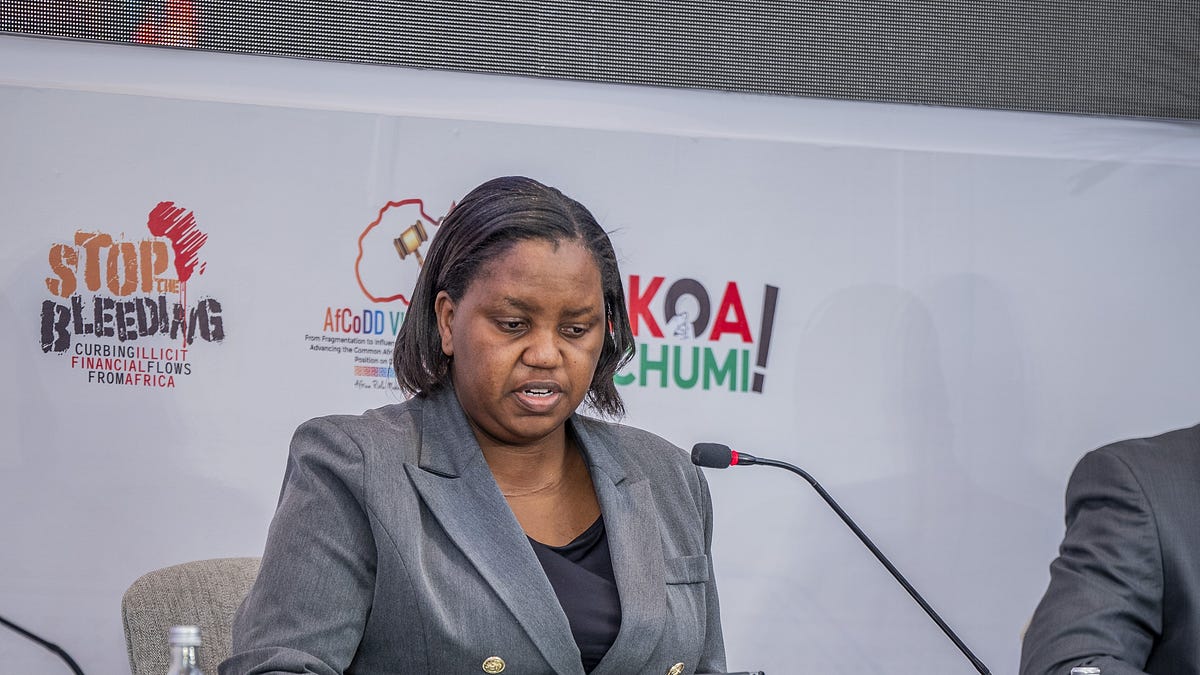
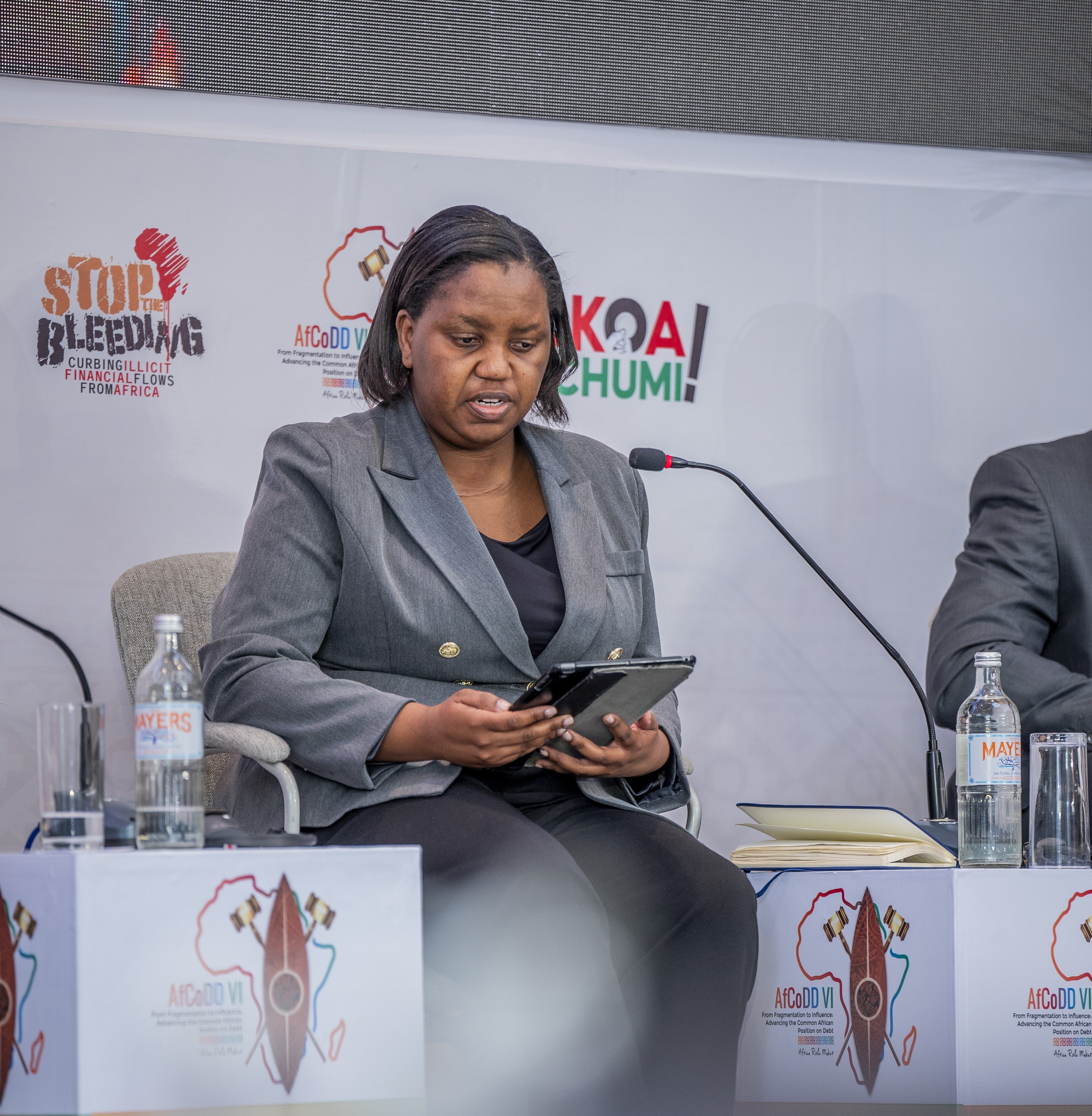
NAIROBI, Kenya — Malawi sees its International Monetary Fund programmes and the Common African Position on Debt as complementary frameworks, but says restrictive financing conditions can limit the country’s ability to pursue its long-term development priorities, a senior government economist said Wednesday, writes Winston Mwale.
Chikondi Phiri, principal economist in Malawi’s Ministry of Finance, Economic Planning and Decentralisation, said Malawi’s repeated reliance on IMF-supported programmes reflects recurring financial and structural challenges, which have been worsened by climate-related shocks.
Phiri was speaking during a session on implementing the Common African Position on Debt at the African Conference on Debt and Development in Nairobi.
“Malawi has operated many IMF-structured programmes. This is in response to recurrent financial challenges and also structural issues in the economy,” Phiri said.
She said droughts, floods and other climate-related shocks have compounded Malawi’s economic difficulties by contributing to external financing needs.
Phiri said there is significant alignment between the Common African Position and IMF programmes on issues such as debt management, transparency, domestic resource mobilisation and public investment management.
“The CAP and the IMF programmes are also looking at strong asset management, and then transparency, including Malawi’s DRM, and also ESM issues and public investment management, and improving development spending,” she said.
However, she said differences emerge when IMF conditionalities restrict the fiscal space available to Malawi, particularly in areas such as domestic resource mobilisation and public investment.
“We have conditions that, in essence, would look like Malawi is in a position to choose the CAP or IMF programme,” Phiri said. “I’m seeing this, that’s probably not the best situation.”
Rather than treating the two frameworks as competing programmes, Phiri said Malawi should use the Common African Position to address the structural problems that repeatedly force countries to seek IMF support.
“If you look at Pillar 1 and Pillar 2, Pillar 1 is looking at reforming the international finance architecture,” she said.
Phiri said the first pillar could strengthen Africa’s ability to advocate for better borrowing terms for countries such as Malawi through engagement with the African Union, G20 and other international platforms.
She said countries facing recurrent debt and financial crises should have access to longer-term financing and more favourable borrowing conditions.
She also pointed to the second pillar of the Common African Position, which seeks new sources of financing, as an opportunity to reduce countries’ dependence on IMF programmes.
“I’m seeing this as mutually reinforcing programmes,” Phiri said. “It’s not as a conflict.”
She said the ultimate objective should be to ensure that countries can implement reforms while building alternative financing mechanisms that reduce the need for repeated IMF interventions.
Phiri said the proposed African Financing Stability Mechanism could play an important role by providing liquidity support to countries facing financial pressures without imposing the same type of conditionalities associated with external programmes.
She said the mechanism needs to become fully operational and adequately capitalised to provide an effective African alternative.
“Countries like Malawi get the liquidity support through such a mechanism, that we don’t have strict conditionalities,” Phiri said.
Phiri acknowledged that Malawi also has responsibility for addressing weaknesses within its own economy, including strengthening domestic institutions, modernising tax systems and improving public investment management.
“Malawi does have the onus to improve domestic institutions, modernise our tax systems, improve the way projects are implemented,” she said.
However, she said some of the constraints facing Malawi extend beyond the country’s capacity to address them independently.
Phiri cited high borrowing costs, Malawi’s limited credit rating and restricted access to affordable, long-term financing as structural challenges that contribute to the country’s continued dependence on external programmes.
“You find that we do stay stuck in the cycle,” she said.
She called for greater collective African action to reform the international financial system and improve financing conditions for countries facing recurring economic shocks.
“I think we’re going in the same direction, but we need a collective agency,” Phiri said.
The discussion formed part of the broader debate at the conference on how African countries can translate the Common African Position on Debt into practical policies, institutions and financing mechanisms capable of reducing the continent’s dependence on external creditors.











Leave a comment