
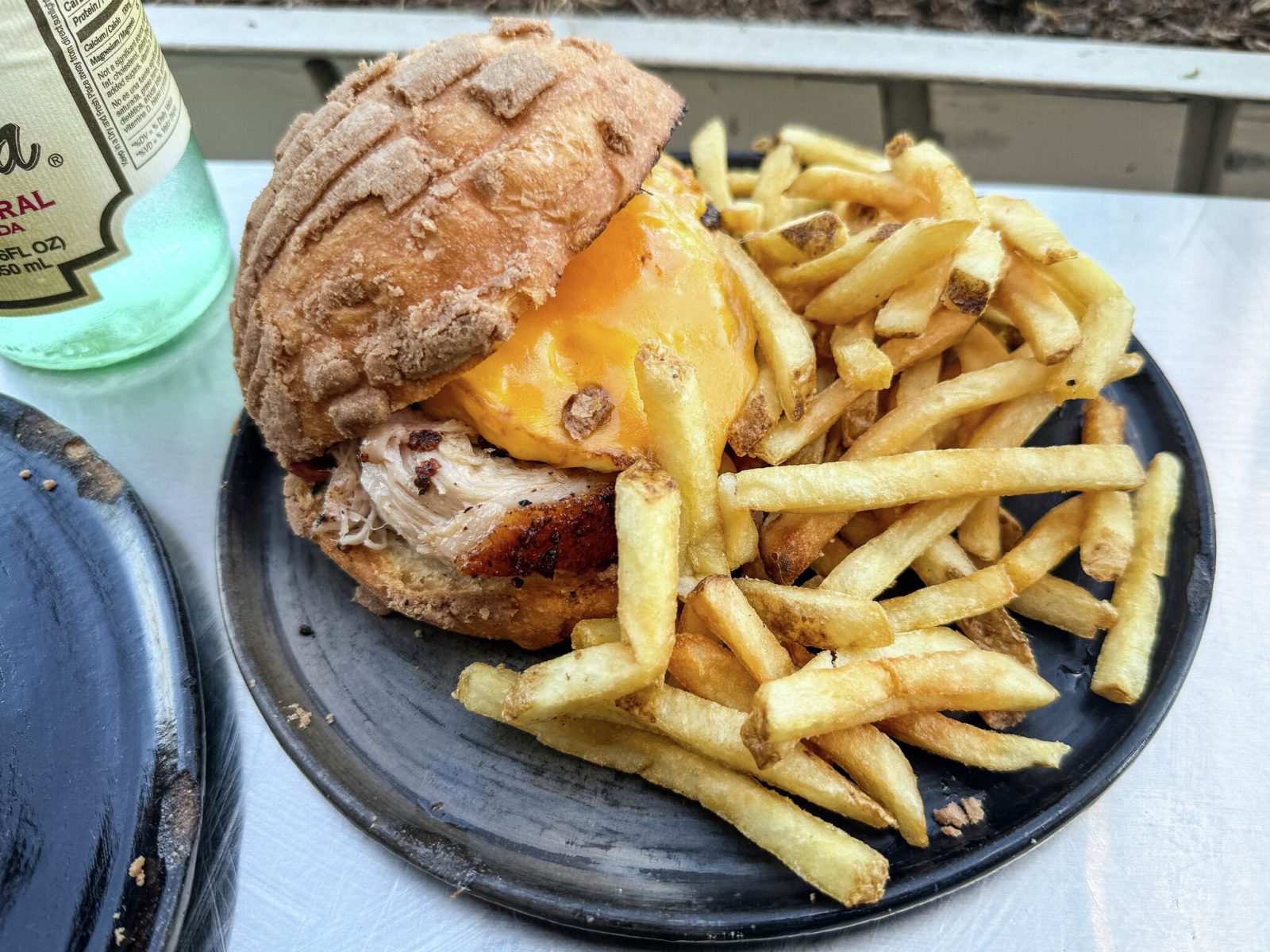

Chavo’s Concha (concha, pork belly, egg and cheddar cheese) at Chavo’s BBQ at Third Place


The holy grail for any restaurateur is owning the building where the restaurant operates.
Ownership solves a lot of problems, especially those involving landlords. While landlords want tenants to succeed, there is such a thing as being too successful. Packed dining rooms can create friction, often over parking.
Barbecue joints face an added wrinkle. Success usually means expanding operations — more smokers, bigger pit rooms — and landlords aren’t always thrilled about that. Smoke complaints from neighboring tenants are common.
Article continues below this ad
Of course, owning property comes with challenges. Anyone who owns a home knows the drill: maintenance, repairs and taxes.
But commercial leases introduce a different set of pressures. Most are structured as “triple net,” meaning tenants pay for repairs, property taxes and insurance in exchange for a lower base rent.
That arrangement works well in stable economic times, when costs are predictable. In periods of inflation, it quickly becomes more difficult to manage.
Article continues below this ad
If you’ve hired a plumber recently, you’ve seen how expensive even minor repairs can be. Now imagine those costs in a restaurant, where plumbing, kitchen equipment and HVAC systems are under constant strain and can fail frequently.
Property taxes are another growing concern. Rates and valuations have climbed across the region. In Tomball, Scott Moore Jr., co-owner of Tejas Chocolate & BBQ and Tejas Burger Joint, has become so frustrated with rising municipal property taxes that he is running for city council in the May elections.
Even factors outside a restaurateur’s control can create challenges. At Roegels Barbecue Co. on South Voss, Russell Roegels has leased his location for 25 years. The restaurant shares a parking lot with a neighboring building that, until recently, had never operated during lunch hours.
That changed when Tacos A Go Go opened next door and began serving lunch, creating a parking crunch.
“This is the first time since we’ve been here that we have a restaurant open for lunch next door,” Roegels says. “But, as always, we adapt. We’ve made a deal with Del Vista restaurant behind us to use their lot for lunch.”
Article continues below this ad
For newer barbecue operators — often millennial or Gen Z pitmasters — the barriers are even higher. Many lack the capital or credit needed to lease a space, let alone purchase property.
Instead, they’re turning to more flexible, lower-cost options like trailers and pop-ups.
That shift is reflected in the Houston Chronicle’s most recent best barbecue list, where three of the four new additions — Weaver’s BBQ, Midan’s BBQ and Space City BBQ — operate out of trailers.
Pop-ups are also gaining traction. Chavo’s BBQ, led by pitmaster Ivan Chavez, has built a following by setting up at coffee shops inside the Loop and at Third Place HTX, a collaborative kitchen and dining space in the Heights.
Spaces like Third Place offer access to professional kitchens and built-in audiences at a fraction of the cost of a traditional lease or even a trailer.
Article continues below this ad
As property taxes and maintenance costs become less predictable, the already difficult job of running a restaurant gets even harder. Still, a new generation of pitmasters is adapting — finding creative ways to navigate real estate challenges while continuing to push Houston’s barbecue scene forward.
2223 S. Voss; roegelsbarbecue.com
Open for lunch daily.
Chavo’s BBQ
Follow on social media for schedule and location; instagram.com/chavosbbq.











Leave a comment