
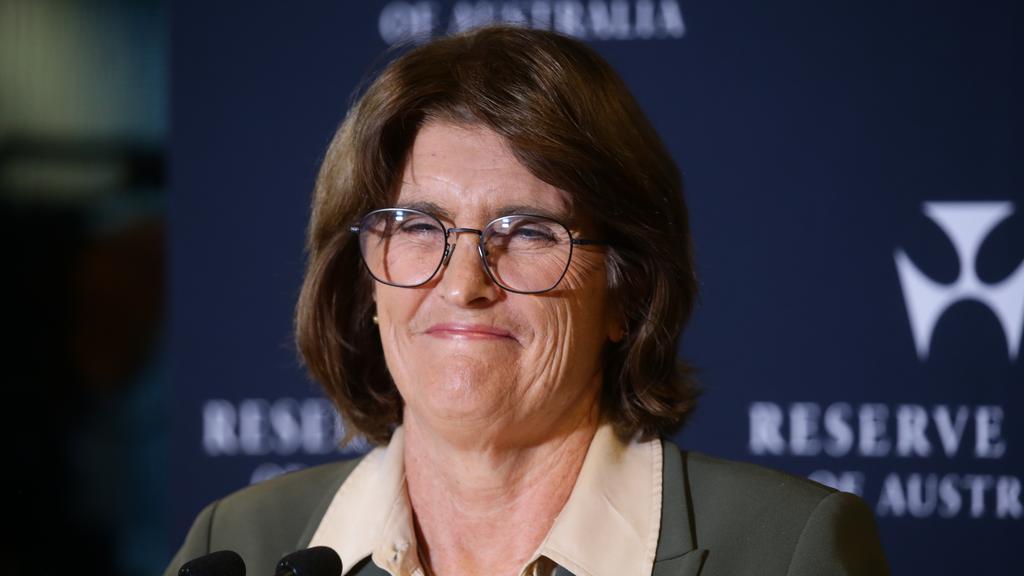
Homeowners are in for a much-needed rest from rate hikes over winter, with the Reserve Bank confirming the cash rate will remain at 4.35%.
The RBA said there would be no change to the cash rate this month after its monetary policy board met on Tuesday for its final meeting this financial year.
The reprieve from a fourth consecutive rate hike marks the first time this year that Aussies will be spared from rising mortgage repayments.
Despite this, the pain of 2026 isn’t quite over for borrowers, with one major bank among scattered expectations for another rate hike before the end of the year.
It comes as officials in the United States and Iran say they have agreed on a peace deal, confirming an agreement that would end the four-month long Iran War will be signed at the end of the week.
Disruption to crucial oil tanker passages since the war began in February is continuing to cause catastrophic economic strain and fuel price spikes in Australia and overseas, leaving the RBA struggling to accurately forecast how high interest rates might need to go to stabilise the economy.

Banks and economists are unsure how far governor Michele Bullock and the RBA will go with rate hikes. Picture: Martin Ollman.
REA Group executive manager of economics Angus Moore said the bank remains on high alert about hot inflation, despite the decision to hold rates steady.
“They are comfortable to wait and see how the effects of the interest rate hikes already in place flow through,” he said.
“Sunday’s announced peace deal, and the consequent fall in global oil prices, are going to take some pressure off headline inflation.
“While there is still a lot of uncertainty, the fall in oil prices will have given the RBA a little more comfort in holding.”
Oil prices have fallen since a peace deal was announced. Picture: Getty
Inflation peak approaching
Uncertainty over whether today’s decision could mark the end of the RBA’s 2026 tightening cycle is growing, with war-induced inflation expected to peak this month.
Headline inflation slowed in April from a near three-year high, with the Consumer Price Index rising 4.2%, down from 4.6% in the 12 months to March.
“While inflation remains above the RBA’s 2–3% target band, today’s pause will be a relief for borrowers and give households some breathing room,” Mortgage Choice chief executive Anthony Waldron said.
Forecasting from the RBA expects a peak of around 5% in June, with the full force of the high number not likely to be felt for a few more months. Worst-case Treasury modelling in the federal budget last month shows the government has forecast around an inflation peak above 7% in the event oil prices reach $200 per barrel.
The RBA expects headline inflation to peak this month. Picture: Hu Jingchen/Xinhua
In the meantime, the bank will be hoping its three earlier rate hikes do enough to help stabilise domestic pressures in the economy, encourage consumers to hold onto their money, and keep both rising unemployment and the labour market in check.
Home prices struggling
As high interest rates continue to dampen borrowing capacities, the housing market is feeling the effect, with home values falling for the second month in a row.
The PropTrack Home Price Index shows home prices nationally decreased 0.04% in May after declining 0.1% in April, marking a major shift from close to two years of steady month-to-month growth.
“The housing market has also slowed,” Mr Moore confirmed. “That softness is likely to continue through the rest of 2026, as the full effect of the rate hikes weigh on borrowing capacity and home prices.”
Median values are continuing to fall in the nation’s most expensive cities, with both Sydney (-0.2%) and Perth (-0.1%) slowing in May. While Brisbane and Adelaide recorded some growth, May marked the slowest month for value in both since late 2022.
While low consumer confidence driven by global uncertainty and high rates have led to the lacklustre index, discontent over federal budget tax changes and a natural seasonal decline are also playing a major part.
“Home price growth has clearly stalled as the effects of this year’s consecutive rate hikes flow through,” Mr Moore explained.
Home price growth has stalled in Australia after a strong 2024 and 2025. Picture: Getty
“With some pullback in investor demand post-budget, prices are likely to continue to be soft.”
Further rate holds and the possibility of rate cuts later next year is likely to help home values hold steady in the second half of the year, but the $12 trillion-strong market is set to see around 2% less growth overall than in 2025.
New (financial) year, new rules
This week’s RBA decision is the final one for the 2025-26 financial year and marks the end of a turbulent 12 months for monetary policy.
Aussies have been pulled along on a rate rollercoaster since last July, experiencing a rate cut and three rate hikes, alongside the re-emergence of the first sustained period of high inflation since the lengthy post-Covid-19 recovery.
With consumer confidence rocky and fuel and food prices high, households are entering winter cautiously.
“There are signs household spending growth has slowed down, after a surprisingly strong end to 2025,” Mr Moore said.
While the RBA’s forecasts for the next financial year have both headline and underlying inflation softening, controversial policy changes from the federal government are set to have a remarkable effect not just on households but more widely in the property market.
The 2026 Federal Budget delivered the largest tax shake-up for the market in decades, with the removal of the 50% capital gains tax discount and significant changes to negative gearing expected to see dramatic shifts in housing over the next year.
Investors are expected to pull back, while increasing incentives for first-home buyers at both a federal and state level and the extension of the foreign buyer ban are expected to shift the dial on who owns what across the market.
There is a longer break now before the RBA next meets on 11 August, which will give the bank sufficient time to see how effective its rate hikes have been so far.
The gap will also allow for more developments out of the Middle East and a more accurate picture on whether inflation has reached its peak.







Leave a comment