
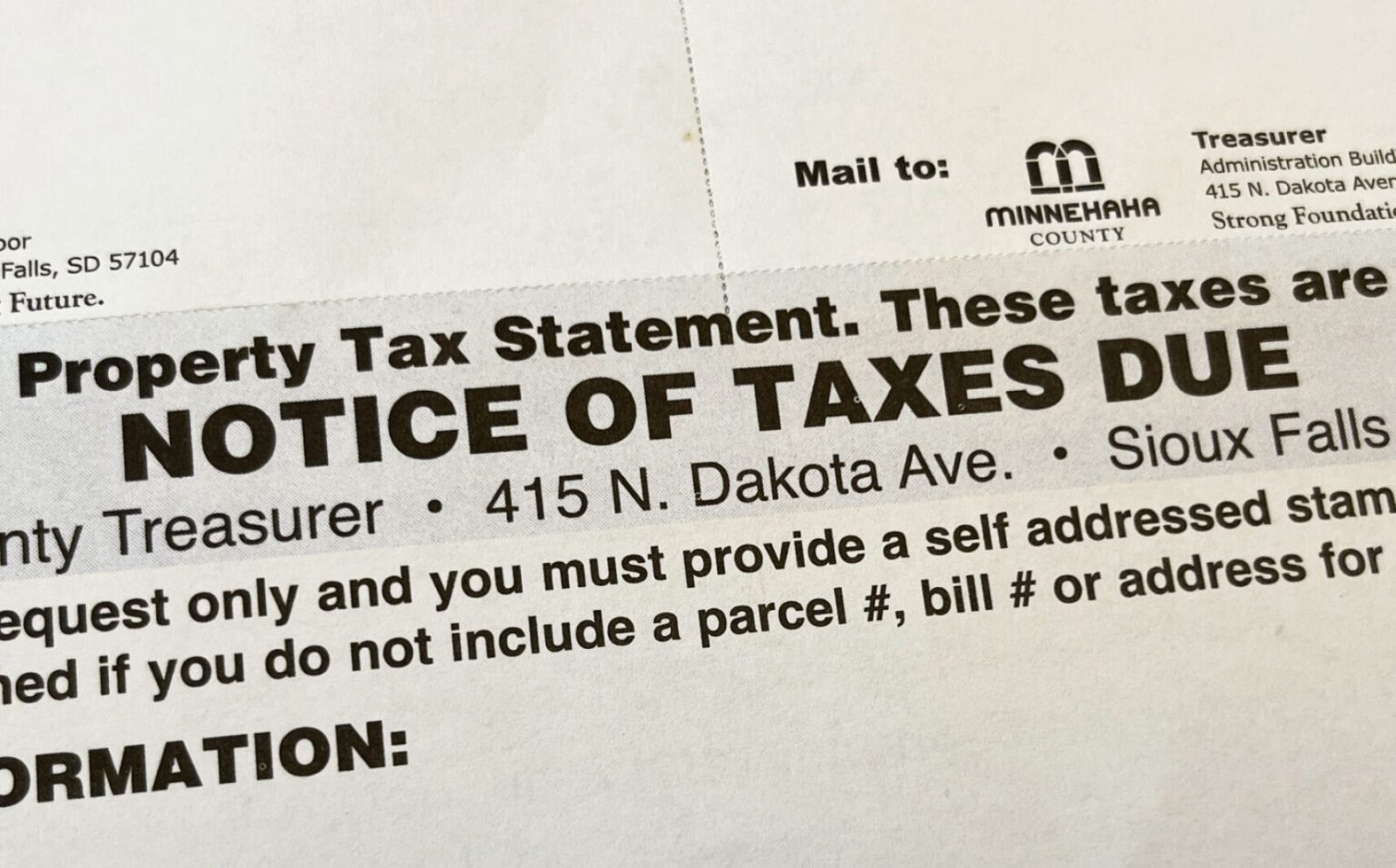
At least four South Dakota counties — including three in the Black Hills — have decided to implement sales taxes to lower property taxes for homeowners, while several more plan to consider it later or let voters decide in November.
The opportunity stems from a
that took effect July 1, giving counties in the state their first chance to impose a sales tax (the state and cities already have that authority). Counties can implement up to a half-percent sales tax, deposit the revenue into a property tax reduction fund and apply it as a credit on homeowners’ property tax bills. Counties account for 27% of
. Schools account for 55% and cities 13%.
Revenue beyond what’s needed to offset owner-occupied property taxes must be split evenly between commercial and agricultural property tax reduction. When a county commission decides to impose the sales tax, local residents have the option to petition the decision to a vote of the public.
Black Hills commissioners counting on tourism
A five-county region of the Black Hills generated $1.83 billion in tourism spending in 2024, according to the
.
Pennington County Commissioner Ron Weifenbach is counting on tourism spending to pay for a portion of his residents’ property tax bills. The Pennington County Commission unanimously passed an ordinance Tuesday to implement a half-percent sales tax. The tax is scheduled to take effect in January.
County commissioners for Meade and Custer counties also passed sales tax ordinances this month. Both taxes will take effect in January.
While county residents will pay the sales tax whenever they purchase something, Weifenbach said a large share of the sales tax will be paid for by visitors and tourists in the Black Hills area. Pennington County, which includes Rapid City, accounted for over half of the Black Hills region’s tourism spending in 2024.
“We’re doing something instead of nothing” in response to rising property taxes, Weifenbach told South Dakota Searchlight.
According to the
, the owner of a $325,000 home in Pennington County could save 22% on their property taxes.
The Custer County Commission unanimously approved its ordinance on Wednesday. Homeowners there are projected to
“It should be a no-brainer for Custer County,” Commission Chairman Jim Lintz told South Dakota Searchlight.
Custer County is in the Black Hills, home to Custer State Park, and is a popular tourist destination.
Meade County passed its ordinance on July 14 with a unanimous vote. Since the tax won’t take effect until January, the county will miss tax collections during the Sturgis Motorcycle Rally in August. Homeowners are projected to
on their tax bill.
The details of how the new taxes will lower property tax bills — including when credits will appear — have yet to be determined. Counties can choose to credit homeowners in January, when tax bills come out, or wait until they have a year of collections.
Fall River County commissioners, in the southern Black Hills, chose to put the question to voters in November, Auditor Sue Ganje
. If the measure passes, commissioners would then adopt an ordinance with July 1, 2027, as the earliest possible implementation date.
Lawrence County commissioners, in the northern Black Hills, plan to discuss the potential tax after they finalize their budget at the end of the month, commissioner Eric Jennings said.
Discussion takes shape in other counties across state
Codington County, which includes Watertown, passed its ordinance in a 4-1 vote on Tuesday. The sole vote against was from Tyler McElhany, who did not respond to a request for comment from South Dakota Searchlight. The sales tax will take effect in January.
Doug Allen, a member of the public, spoke against the ordinance, calling it a “regressive tax” because it would apply to necessities like food and clothing, hitting lower-income residents proportionally harder than wealthier ones.
“I’d love some property tax relief. I think we pay quite a bit,” Allen said. “But, that said, I think this is the wrong way to go about it.”
Codington County homeowners are projected to save 23% on their property taxes, according to the
.
Commissioner Lee Gabel spoke in favor.
“This causes us as county commissioners and officials to care more about sales and business in our county in a different way,” Gabel said, “as opposed to just valuations on property.”
Other commissions discussing the idea include Lincoln County (home to part of Sioux Falls), Brown County (home to Aberdeen) and Lyman County, in a rural area of central South Dakota crossed by Interstate 90.
Minnehaha County, which includes Sioux Falls, does not have any “imminent plans” to discuss the sales tax, Commission Administrator Tom Greco said.
Lake County commissioners declined to pursue a county sales tax earlier this month, according to reporting from the
.
Day County Auditor Tonya Lehman said the small northeastern county will “sit back and wait.” The largest city in Day County is Webster, with a population of roughly 1,730.
“My opinion is it won’t pay for itself at this point,” Lehman said, adding that the new tax would require new software and additional administrative expenses. “I would almost have to say we’d have to have more businesses in the county to be able to maintain it.”
Beyond the county sales tax option, lawmakers and Gov. Larry Rhoden approved
in March that will use revenue from a 0.3-percentage-point increase in the state sales tax next year to reduce school property taxes for homeowners statewide.
— This story was originally published on southdakotasearchlight.com.






Leave a comment